
Supervising Special Populations Practice Exam
$69.00
- Buy to unlock unlimited access to all Quiz questions.
- After purchase you can print a PDF of the whole quiz at any point. The PDF will contain the questions and the correct answers.
About this Exam
This Supervising Special Populations Practice Exam is a crucial study tool designed for educators, administrators, and aspiring special education supervisors. This certification exam validates the knowledge and skills necessary to effectively lead and manage educational programs for special populations, including students with disabilities, English language learners, and gifted students.
It is designed for professionals who want to demonstrate their expertise in special education law, IEP development, personnel supervision, and curriculum adaptation. By using this practice exam, you can assess your readiness and build the confidence needed to succeed in the actual certification process.
Ready to test your knowledge?
Buy Now to Access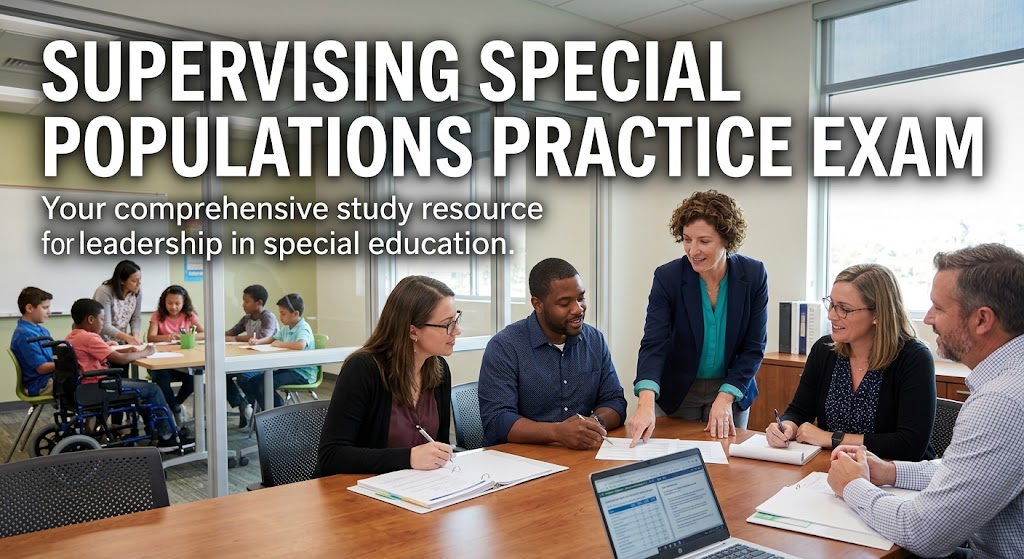
Additional Information
What the Course Entails and Exam Details
The course and exam cover a broad range of topics essential for effective supervision. Key areas include:
Legal Foundations: In-depth knowledge of federal and state laws (like IDEA), regulations, and ethical considerations.
IEP Management: Oversight of the Individualized Education Program process, from evaluation to implementation.
Instructional Supervision: Evaluating and supporting teachers in implementing evidence-based practices for diverse learners.
Program Evaluation: Using data to monitor program effectiveness and drive improvements.
Collaboration and Communication: Working effectively with families, community agencies, and school staff.
The specific syllabus may vary depending on the certifying body, but these core areas are universally critical.
What to Expect in the Final Exam
The final exam typically follows a standardized format, but you must check the specifics of your chosen testing organization.
Generally, you can expect a computer-based test with multiple-choice questions designed to assess both factual knowledge and your ability to apply concepts in supervisory scenarios. There is usually a set time limit (e.g., 2–3 hours) and a minimum passing score required to obtain certification. Specific rules regarding retakes, ID requirements, and prohibited items at the testing center will apply.
How to Study and Exam Centers
Preparation is the key to success. Here are actionable study strategies:
Take Multiple Practice Exams: Use this practice test to identify knowledge gaps and simulate the exam experience.
Review Legal Statutes: Dedicate significant time to studying IDEA and other relevant disability laws.
Study Case Studies: Analyze real-world supervisory scenarios to practice decision-making.
Utilize Official Study Guides: Leverage resources provided by the certifying organization.
The final exam is usually administered at authorized testing centers, such as Pearson VUE, or sometimes through secure online proctoring portals. You will need to register through the official website of the certification provider to select your preferred location and date.
Job Opportunities from the Course
Obtaining this certification can open doors to various leadership and supervisory roles in the field of education. Potential career paths include:
Special Education Supervisor
Director of Special Education
Coordinator of Special Populations
Special Education Case Manager Lead
Curriculum Specialist for Special Needs
Director of Student Services
Frequently Asked Questions
Reviews
5.0
Based on 0 reviews
Leave a Review
No reviews yet. Be the first to review!