
Success! In Clinical Laboratory Science – Urinalysis and Body Fluids (UA/BF) Practice Test
$69.00
- Buy to unlock unlimited access to all Quiz questions.
- After purchase you can print a PDF of the whole quiz at any point. The PDF will contain the questions and the correct answers.
About this Exam
The Success! In Clinical Laboratory Science – Urinalysis and Body Fluids (UA/BF) practice test is a comprehensive assessment tool designed for students and professionals in Clinical Laboratory Science (CLS), Medical Laboratory Technician (MLT), and Medical Laboratory Scientist (MLS) programs. This study resource provides a focused review of the critical concepts and laboratory techniques essential for analyzing urine and other non-blood body fluids. It is specifically created to help learners prepare effectively for both course finals and professional certification exams, such as those administered by the ASCP Board of Certification (BOC) or American Medical Technologists (AMT).
Ready to test your knowledge?
Buy Now to Access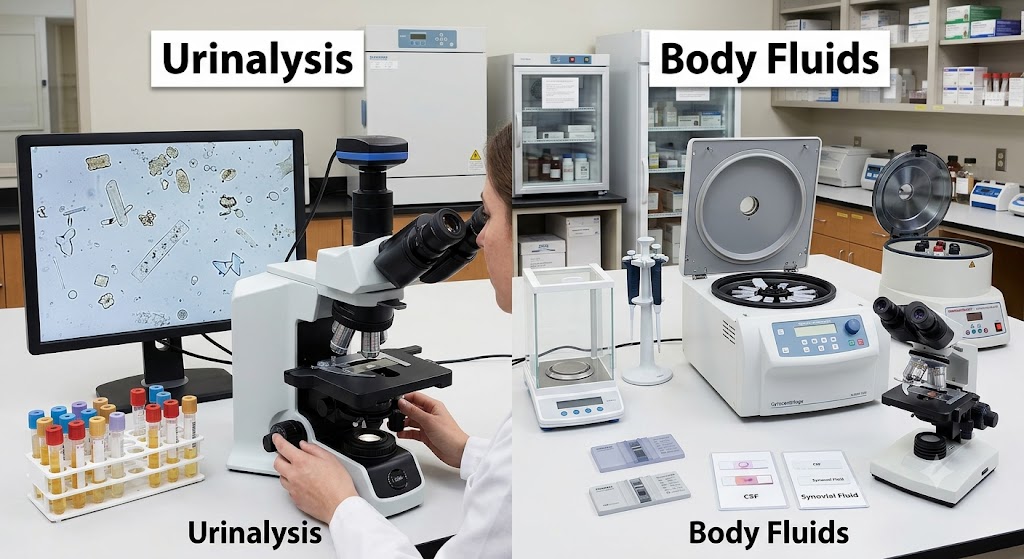
Additional Information
What the Course Entails and Exam Details
This dedicated section of study focuses on the principles and practice of analyzing various specimens. The practice test covers a wide array of topics, reflecting the syllabus of a standard CLS curriculum:
Urinalysis (UA): Comprehensive coverage includes specimen collection, physical examination (color, clarity, specific gravity), chemical examination (using reagent strips and confirmatory tests), and microscopic examination (identification of cells, casts, crystals, and microorganisms).
Body Fluids (BF): This section covers the analysis of cerebrospinal fluid (CSF), synovial fluid, serous fluids (pleural, peritoneal, pericardial), and seminal fluid. Focus is placed on cell counts (manual and automated), chemical analysis (glucose, protein, lactate), and microscopic identification of cellular elements and crystals.
Correlations with Disease: Students must understand the clinical significance of abnormal results and correlate findings with specific renal, metabolic, and infectious diseases.
Quality Assurance (QA) and Safety: Best practices for ensuring test accuracy, equipment maintenance, and adherence to laboratory safety protocols are emphasized.
What to Expect in the Final Exam
While the exact structure may vary by program, professional certification exams are typically comprehensive. This Success! practice test mirrors the format commonly found on major certification boards, which are predominantly comprised of multiple-choice questions (MCQs).
Actual certification exams (like the ASCP BOC) are often Computer Adaptive Tests (CAT). The exam automatically adjusts the difficulty of the next question based on whether you answered the previous one correctly. Test-takers can expect questions requiring simple recall, microscopic image interpretation (e.g., identifying specific crystals or casts), and analyzing clinical case scenarios. Students are usually given a strict time limit (e.g., 2.5 hours for a full certification exam) and must achieve a specific minimum passing score (such as 400 on the ASCP exam) to earn their credentials.
How to Study and Exam Centers
Preparation requires a dedicated, multifaceted approach. Follow these actionable strategies:
Utilize this Practice Test: Take the Success! practice test early to identify weak areas. Review the rationales provided for both correct and incorrect answers to deepen your understanding.
Visual Review: Mastering microscopic examination is key. Use textbooks (such as the Success! series), laboratory atlases, and online microscopy resources to study high-quality images of urine sediment and body fluid cells.
Active Learning: Create flashcards for normal reference ranges, critical values, and key diagnostic indicators for common disorders.
Take the Exam: Access to this specific practice test is typically provided via an access code included with the purchase of the Success! In Clinical Laboratory Science review textbook, accessible through the publisher's online learning platform.
Locating Testing Centers: For official professional certification exams (ASCP, AMT), you must apply and register online. These computerized exams are administered at specialized testing facilities, such as Pearson VUE centers, located globally. Applicants schedule their exam appointment at a location and time that suits them once they have received their authorization to test.
Job Opportunities from the Course
A strong command of Urinalysis and Body Fluids is essential for numerous career paths within the medical diagnostic field. Mastery of these skills is required for various roles, including:
Medical Laboratory Technician (MLT)
Medical Laboratory Scientist (MLS)
Clinical Laboratory Assistant (CLA)
Laboratory Technologist (Generalist)
Urine/Body Fluid Analysis Specialist
Research Assistant in medical and biomedical laboratories
Veterinary Laboratory Technician
Frequently Asked Questions
Reviews
5.0
Based on 0 reviews
Leave a Review
No reviews yet. Be the first to review!