
StudentRDH Pharmacology Practice Exam
$69.00
- Buy to unlock unlimited access to all Quiz questions.
- After purchase you can print a PDF of the whole quiz at any point. The PDF will contain the questions and the correct answers.
About this Exam
The StudentRDH Pharmacology Practice Exam offers dental hygiene students a comprehensive opportunity to assess and refine their understanding of core pharmacology concepts. This practice exam is specifically designed to simulate the types of questions and topics encountered on critical licensing examinations, such as the NBDHE (National Board Dental Hygiene Examination) pharmacology section. It is an invaluable resource for aspiring dental hygienists, ensuring they possess the necessary knowledge for safe and effective patient care.
Ready to test your knowledge?
Buy Now to Access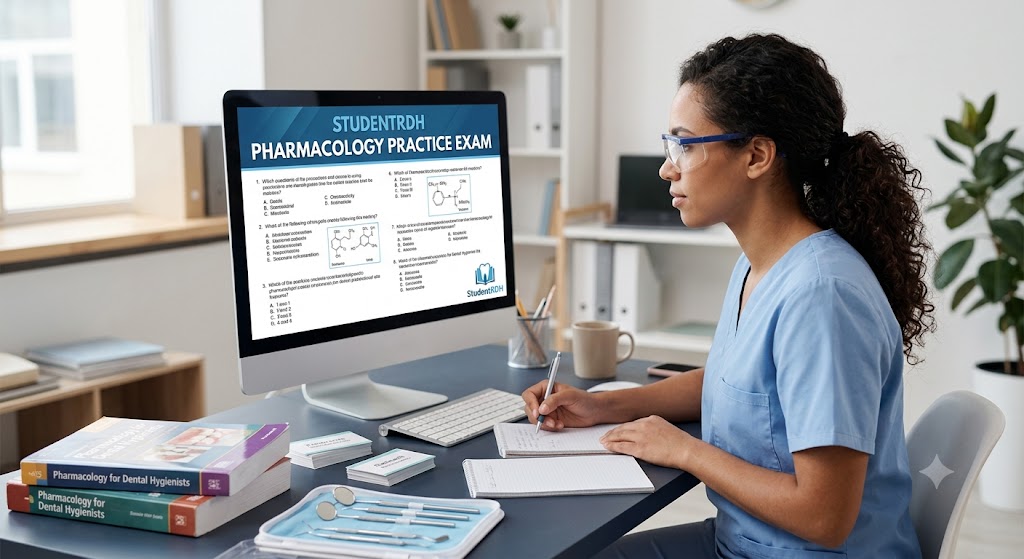
Additional Information
What the Course Entails and Exam Details
The underlying content covers a wide array of pharmacological principles, ranging from basic concepts to complex clinical applications within dental practice. Students can expect a focus on essential topics including: Pharmacokinetics and pharmacodynamics fundamentals. In-depth knowledge of critical drug classifications commonly used in or encountered during dental treatment. Detailed exploration of local anesthetics, including mechanisms of action, techniques, dosages, and potential complications. Thorough understanding of various analgesics, anti-infectives, and drugs managing systemic conditions like cardiovascular and respiratory diseases. Crucial emphasis is placed on clinical decision-making, patient assessment, understanding medical histories, identifying potential drug interactions, and managing emergencies.
What to Expect in the Final Exam
The StudentRDH Pharmacology Practice Exam closely mirrors the structure and format of official licensing examinations you will encounter. It primarily features multiple-choice questions designed to test both knowledge and critical application skills across various clinical scenarios. The specific format, including the number of questions and time allocation, will be detailed within the specific practice portal. Passing score requirements generally align with industry standards, typically requiring a score that demonstrates proficient competency, though specific passing scores can vary. Therefore, students are encouraged to check the exact scoring system of their target licensing body. Time management is crucial, as the practice exam will be timed to simulate real testing conditions. Specific regulations regarding identification, test security, and permitted materials will be strictly enforced, preparing you for the official exam environment.
How to Study and Exam Centers
Effective preparation hinges on repetitive practice and active learning strategies. Students are advised to dedicate sufficient time to taking numerous practice tests, including the StudentRDH Pharmacology Practice Exam. Don't just take the tests; meticulously review every incorrect answer and understand the rationale behind the correct choice. Develop flashcards or use spaced repetition software to reinforce knowledge of drug classes, names, mechanisms, and dosages. Reviewing course materials, textbooks, and forming study groups can also significantly enhance understanding and retention. Consistent, dedicated study sessions are far more effective than last-minute cramming. Regarding exam centers, the StudentRDH Pharmacology Practice Exam itself is conveniently administered online through secure, dedicated portals. This flexibility allows you to prepare on your own schedule from any location with internet access. For the official licensing examinations, students will typically register through organizations such as Prometric or Pearson VUE. These official exams are held at secure, physical testing centers across the country, requiring prior appointment scheduling and specific identification. Be sure to verify the precise procedures for your specific board or organization.
Job Opportunities from the Course
Successful completion of your dental hygiene program, alongside passing all required licensure examinations (for which this pharmacology practice exam is crucial preparation), unlocks numerous exciting career paths. While this practice exam itself is an educational tool, achieving licensure as a Registered Dental Hygienist (RDH) provides access to various opportunities, including:
Registered Dental Hygienist: Working primarily in private dental practices, performing clinical procedures and providing patient education.
Dental Hygiene Educator: Teaching in dental hygiene programs at colleges and universities.
Public Health Dental Hygienist: Working in community clinics, schools, or government agencies, focusing on public oral health.
Dental Sales Representative: Representing dental products, equipment, or pharmaceuticals to dental practices and organizations.
Corporate Dental Educator/Consultant: Working for dental companies, conducting training, or advising on product development.
Dental Hygiene Researcher: Conducting research in academia, government, or private industry related to oral health and dental hygiene practices.
Hygienist in Specialty Practices: Providing dental hygiene care within specialized fields like orthodontics, periodontics, or pediatrics.
Frequently Asked Questions
Reviews
5.0
Based on 0 reviews
Leave a Review
No reviews yet. Be the first to review!