
STEPP GI Disorders Practice Test
$69.00
- Buy to unlock unlimited access to all Quiz questions.
- After purchase you can print a PDF of the whole quiz at any point. The PDF will contain the questions and the correct answers.
About this Exam
The Gastroenterology (GI) Disorders Practice Test is an essential study tool designed for healthcare professionals, students, and aspiring specialists aiming to validate their expertise in digestive health. This comprehensive practice exam serves as a critical stepping stone for individuals preparing for official certification or looking to reinforce their clinical knowledge in gastroenterology.
Whether you are a nurse, medical assistant, or technician, this resource ensures you are equipped with the confidence and understanding necessary to excel in the field and provide exceptional patient care.
Ready to test your knowledge?
Buy Now to Access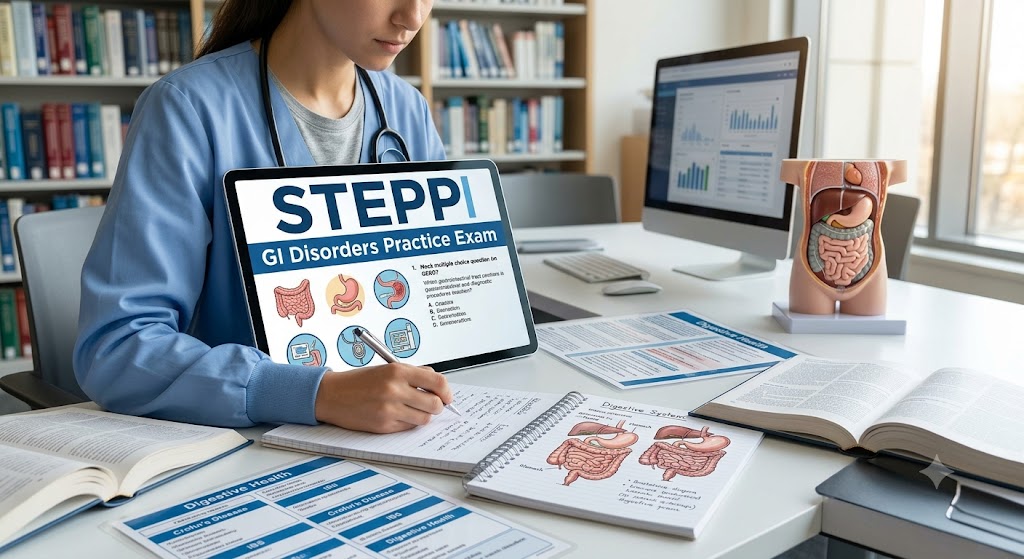
Additional Information
What the Course Entails and Exam Details
This practice test is meticulously crafted to mirror the depth and breadth of a standard curriculum in GI disorders. The core topics covered in this resource include:
Anatomy and Physiology: Detailed review of the structure and function of the upper and lower GI tract, liver, pancreas, and gallbladder.
Pathophysiology of Common Disorders: In-depth coverage of conditions such as GERD, peptic ulcer disease, Inflammatory Bowel Disease (IBD), Irritable Bowel Syndrome (IBS), celiac disease, and hepatitis.
Diagnostic Procedures: Understanding endoscopies, colonoscopies, imaging studies, and laboratory tests specific to GI health.
Treatment and Pharmacology: Overview of common surgical interventions, dietary management, and pharmacological treatments for digestive ailments.
What to Expect in the Final Exam
The simulation is designed to replicate the pressure and format of the official final certification exam. Here is what you should expect:
Format: The exam consists of 100 to 150 multiple-choice questions, designed to test both foundational knowledge and scenario-based application.
Time Limit: You will have approximately 2 to 3 hours to complete the test, emphasizing the need for efficient time management.
Passing Score: While specific requirements vary by certifying bodies, a score of 75% or higher is generally required to pass.
Rules: The final exam is typically proctored, whether taken online or at a physical center. No outside materials or electronic devices are permitted during the testing session.
How to Study and Exam Centers
Preparation is key to succeeding in the GI Disorders certification. We recommend combining the following strategies:
Utilize Practice Tests: Regularly taking timed practice tests is the most effective way to identify knowledge gaps and get accustomed to the question format.
Review Core Textbooks: Deeply study standard medical textbooks focusing on gastroenterology and pathophysiology.
Create Flashcards: Memorize key terminology, drug names, and diagnostic values using flashcards.
Study Groups: Discussing complex cases with peers can provide new insights and reinforce learning.
The official final exam is usually administered at authorized testing centers such as Pearson VUE or Prometric. Additionally, many certifying organizations now offer secure, proctored online exams that you can take from the comfort of your home. Be sure to check the specific requirements of your certifying body.
Job Opportunities from the Course
Earning a certification in GI disorders opens doors to a variety of rewarding career paths in specialized healthcare. Professionals with this expertise are in high demand in hospitals, outpatient clinics, and specialized digestive health centers.
Unlocking this certification can lead to job titles such as:
Gastroenterology Technician
GI Endoscopy Technician
Specialty Gastroenterology Nurse (GI RN)
Digestive Health Clinical Medical Assistant
GI Clinic Coordinator
Frequently Asked Questions
Reviews
5.0
Based on 0 reviews
Leave a Review
No reviews yet. Be the first to review!