
STCW Personal Survival Techniques Practice Test
$69.00
- Buy to unlock unlimited access to all Quiz questions.
- After purchase you can print a PDF of the whole quiz at any point. The PDF will contain the questions and the correct answers.
About this Exam
The STCW Personal Survival Techniques (PST) course is an indispensable component of the mandatory Standards of Training, Certification, and Watchkeeping (STCW) Basic Safety Training (BST) for seafarers. This intensive course equips individuals with the essential knowledge, skills, and confidence needed to survive at sea in the unfortunate event of ship abandonment. It is specifically designed for virtually all personnel who intend to work aboard commercial vessels, including cruise ships, cargo ships, tankers, superyachts, and offshore installations. This training aims to improve safety by providing theoretical understanding and practical training on life-saving equipment and survival procedures.
Ready to test your knowledge?
Buy Now to Access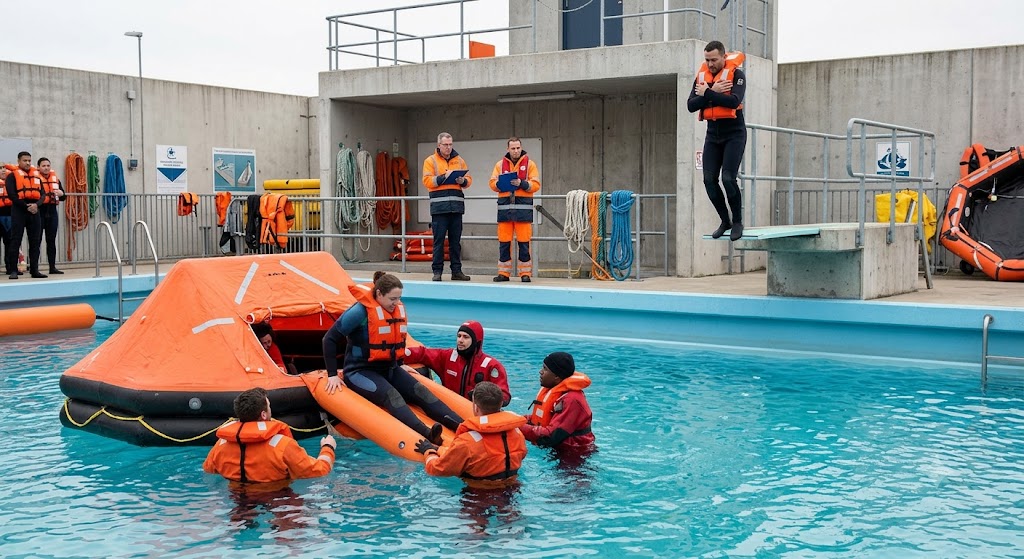
Additional Information
What the Course Entails and Exam Details
The STCW PST course involves both classroom-based instruction and practical training. The syllabus typically covers crucial topics such as different types of maritime emergencies, survival principles, abandoning ship procedures, hypothermia prevention and treatment, launching and entering life-rafts, and the proper use of life-saving appliances. You will learn about various survival equipment, including lifejackets, immersion suits, lifebuoys, lifeboats, and life-rafts, and their correct application. The practical aspect often takes place in a pool or controlled water environment where you will demonstrate the skills learned, such as donning survival gear, safely jumping from a height, righting a capsized life-raft, and practicing survival swimming techniques. The training aims to ensure that seafarers are well-prepared and capable of responding effectively in stressful situations.
What to Expect in the Final Exam
The STCW Personal Survival Techniques final exam generally consists of two distinct parts: a theoretical assessment and a practical demonstration of competence. The theoretical portion is typically a multiple-choice question (MCQ) format, testing your knowledge of survival procedures, equipment details, and emergency response protocols. There is often a minimum passing score required, which can vary but is generally within the 70-80% range. The practical part involves demonstrating the core skills you have practiced during the course. For example, you will likely be required to correctly don an immersion suit or lifejacket within a set time limit, safely abandon ship by jumping from a platform (often 3-4 meters high) into water, enter a life-raft from the water, and perform righting techniques on a capsized life-raft. Instructors and assessors will carefully observe and evaluate your proficiency in carrying out these tasks. Both the theoretical and practical components must be successfully passed to earn the certification.
How to Study and Exam Centers
The most effective way to prepare for the STCW PST exam is to actively participate and engage during the required training course. Thoroughly review the course materials provided by your training center, focusing on equipment instructions, safety protocols, and key survival terms. Look for online resources that offer practice multiple-choice questions similar to those found in the theoretical exam. Practicing with these practice tests can help build your confidence and identify areas where you may need more review. For the practical portion, try to visualize and mentally walk through each step of the required techniques. Remember, STCW training and exams are not typically conducted in standard computer testing centers. Instead, they are only delivered by maritime training schools and authorized training providers that are accredited by national maritime administrations (e.g., USCG in the United States, MCA in the United Kingdom, or relevant agencies in other countries). To obtain the certification, you must enroll in a course that includes both instruction and the final examination at one of these approved facilities.
Job Opportunities from the Course
Successful completion of the STCW PST course, as part of Basic Safety Training, is a mandatory requirement for almost all crew members working on commercial vessels. This certification is a critical credential that opens up numerous job opportunities within the global maritime industry, allowing individuals to pursue varied career paths at sea. Here are some examples of positions that typically require this certification:
Deckhand
Steward / Stewardess (on superyachts or cruise ships)
Ordinary Seaman (OS)
Cruise Ship Entertainment Staff
Marine Engineer
Security Officer
Cook / Chef (onboard vessels)
Housekeeping Staff (cruise ships)
Offshore Rig Worker
Engine Rating
Yacht Crew
Technicians and Specialized Crew on Offshore Vessels
Higher Officer Roles (as a prerequisite)
Frequently Asked Questions
Reviews
5.0
Based on 0 reviews
Leave a Review
No reviews yet. Be the first to review!