
SSI Wreck Diving Practice Exam
$69.00
- Buy to unlock unlimited access to all Quiz questions.
- After purchase you can print a PDF of the whole quiz at any point. The PDF will contain the questions and the correct answers.
About this Exam
The SSI Wreck Diving specialty is a thrilling and educational program designed for certified Open Water Divers who want to gain the skills and knowledge necessary to safely explore and enjoy dives around sunken ships, aircraft, and other artificial reefs. Wreck diving offers a unique combination of adventure, history, and the opportunity to witness diverse marine life that often colonizes these structures. This certification is perfect for divers looking for more than just a reef, for history enthusiasts, underwater photographers seeking iconic backdrops, and anyone on a path toward technical diving.
Ready to test your knowledge?
Buy Now to Access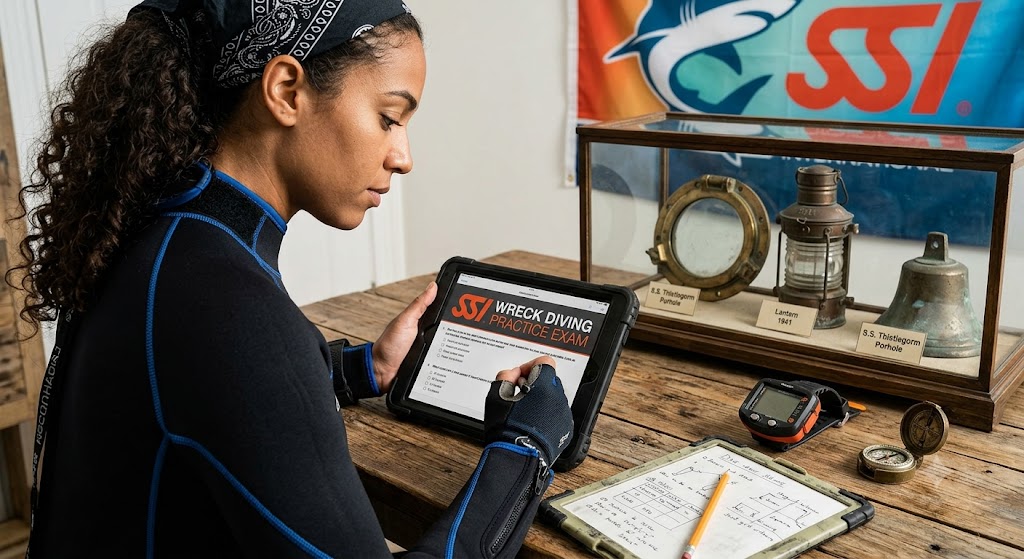
Additional Information
What the Course Entails and Exam Details
This comprehensive course typically covers six academic sessions and requires at least two open water training dives. You will dive deep into:
Wreck Site Selection and Research: Learn how to find information about wrecks, their history, and state.
Locating and Getting to the Wreck: Techniques for boat and shore diving to specific sites.
Wreck-Specific Equipment: Understand the purpose of specialty equipment like primary and backup lights, wreck reels, lines, and surface markers.
Dive Planning and Exploration Procedures: Creating safe, conservative plans and knowing how to navigate around the exterior of a wreck.
Safety Protocols and Emergency Procedures: Key measures to protect yourself from entanglement, disorientating silt, and other hazards, including proper buddy communication and emergency air management.
Advanced Wreck Diving: An overview of additional training required for limited penetration, including guideline management and light use inside the daylight zone.
What to Expect in the Final Exam
The final exam for the SSI Wreck Diving specialty is designed to verify that you have mastered the essential academic knowledge to dive safely. While specific formats can vary slightly, you can generally expect:
Format: The exam is typically a multiple-choice test consisting of approximately 50 questions.
Content: Questions will cover all the academic sections, focusing on safety protocols, equipment usage, navigation, planning, and specific hazards of wreck environments.
Passing Score: Most SSI specialties require a passing score of 80% to achieve certification.
Time Limit: While rarely strictly timed, you will have ample opportunity, usually 60 to 90 minutes, to complete the exam.
How to Study and Exam Centers
Preparation is the key to confidence. To prepare effectively:
Review Your Digital Material: Study the official SSI Wreck Diving digital manual and complete all the interactive quizzes on the MySSI app or website.
Take Practice Exams: Our simulated [SSI Wreck Diving Practice Exam] is the best way to simulate the real exam, identify your weak points, and get comfortable with the question types.
Engage with Your Instructor: Ask questions about tricky concepts. Instructors love to help clarify the nuances of safe wreck diving.
Simulate Exam Conditions: Find a quiet space and take the practice test without distractions, using only the same resources allowed during the actual exam.
The actual final exam is typically proctored through the SSI Training Center where you are taking your practical in-water training. However, all SSI academic final exams, including specialties, are now also available as online, on-demand exams. This means you can complete the final test virtually through your MySSI portal once you have completed the required digital learning. For technical support or special accommodation, you should always coordinate with your specific SSI dive school.
Job Opportunities from the Course
While a recreational specialty certification like Wreck Diving does not directly result in a professional job title, it serves as a crucial stepping stone and required knowledge for many exciting diving careers. The specialized skills and experience it builds open doors to numerous paths.
Below are career paths that this certification supports and helps you achieve:
Dive Instructor/Specialty Instructor: To teach others, you must first have the specialty. Wreck Instructor is a sought-after professional qualification.
Marine Archaeologist: This field requires extensive knowledge of historical research and the procedural skills necessary to conduct non-invasive work around wreck sites.
Underwater Photographer/Videographer: Wrecks provide an iconic canvas, and special lighting techniques are essential for high-quality imagery in dark environments.
Scientific Diver: While generic, scientific divers are often tasked with survey work around artificial reefs and shipwreck ecosystems.
Commercial Diver: While an occupational license is required, a fundamental understanding of structures, current, and restricted visibility is a strong asset for inland or offshore commercial work.
Public Safety Diver: Responders often operate in low-visibility environments to locate and recover evidence, where wreck skills are highly relevant.
By combining your Wreck Diving certification with other professional ratings like Divemaster and beyond, you can build a robust, adventurous career centered on underwater exploration and education.
Frequently Asked Questions
Reviews
5.0
Based on 0 reviews
Leave a Review
No reviews yet. Be the first to review!