
SSI Scuba Practice Exam
$69.00
- Buy to unlock unlimited access to all Quiz questions.
- After purchase you can print a PDF of the whole quiz at any point. The PDF will contain the questions and the correct answers.
About this Exam
The SSI Open Water Diver certification is your passport to underwater exploration. Recognized worldwide, this certification allows you to dive independently with a certified buddy to a depth of up to 18 meters (60 feet).
It is designed for aspiring divers who want to learn the fundamental knowledge and skills needed to safely enjoy the underwater world. Whether you dream of exploring vibrant coral reefs, historic shipwrecks, or fascinating marine life, passing the SSI Open Water Diver exam is your crucial first step.
Ready to test your knowledge?
Buy Now to Access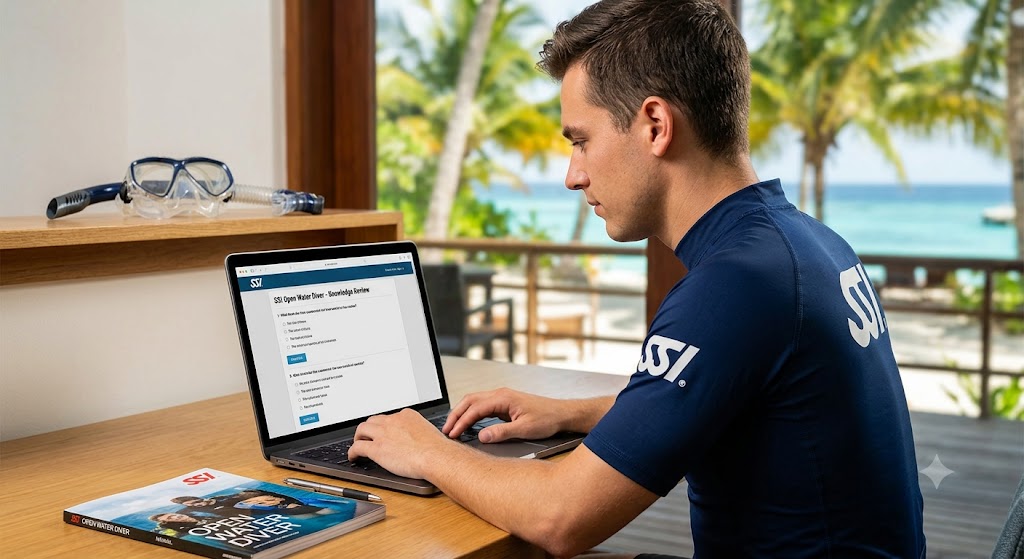
Additional Information
What the Course Entails and Exam Details
The SSI Open Water Diver course consists of three main phases: knowledge development, confined water dives (pool sessions), and open water check-out dives. The final exam primarily covers the knowledge development portion of the course.
Core topics covered in the SSI Open Water Diver manual and e-learning include:
The fundamental rules of scuba diving.
Understanding diving equipment and its proper use.
Diving physics, including the effects of pressure and how to manage air consumption.
Diving physiology, covering decompression theory and how the body responds to the underwater environment.
Dive planning and the use of the SSI Dive Tables or dive computers.
Safe diving practices and emergency procedures.
What to Expect in the Final Exam
The final SSI Open Water Diver exam is typically a closed-book, multiple-choice assessment designed to verify your understanding of the core diving principles learned during knowledge development.
Here is what you can expect:
Format: Multiple-choice questions.
Number of Questions: Usually around 50 questions.
Passing Score: You must achieve a minimum score of 80% to pass.
Time Limit: While usually generous, there is a reasonable time limit to complete the exam.
Proctoring: The official exam is usually administered and proctored by your SSI Instructor at your local Dive Center after you have completed all classroom or e-learning requirements.
How to Study and Exam Centers
The best way to prepare for the SSI final exam is through consistent study and the use of practice resources.
Effective study strategies include:
Complete all SSI E-learning or Manual Chapters: Thoroughly read every section and answer the review questions included at the end of each module.
Utilize the SSI App: Use the review questions and quizzes available directly within the MySSI app or online portal.
Take Practice Exams: Dedicate time to taking an [SSI Scuba Practice Exam] multiple times. This helps you familiarize yourself with the question format, identify areas where you need further review, and build confidence.
Review Your Mistakes: Don’t just look at the score; review every question you missed on your practice exams and go back to the source material to understand the correct concept.
Exam Centers: The official SSI final exam is not taken at independent testing centers like Pearson VUE. It is administered directly through authorized SSI Dive Centers and Resorts worldwide. You will typically take the exam at the facility where you are completing your in-water training, often under the supervision of your instructor.
Job Opportunities from the Course
Achieving your SSI Open Water Diver certification is the foundation for a potential career in the diving industry. While the Open Water certification itself is required for recreational diving, it is the mandatory first step toward professional-level ratings.
Opportunities that become accessible after gaining experience and proceeding to higher certifications (which require this foundational level) include:
SSI Dive Guide / PADI Divemaster: Leading certified divers on underwater tours.
SSI Open Water Instructor: Teaching others how to scuba dive.
Specialty Instructor: Teaching advanced courses like Wreck Diving, Deep Diving, or Enriched Air Nitrox.
Underwater Photographer/Videographer: Capturing marine life and dive experiences professionally.
Scientific Diver: Assisting with marine biology research, surveying reefs, or conducting underwater environmental studies (requires further specialized training).
Public Safety Diver: Working with law enforcement or fire departments in search and recovery operations (requires specialized training).
Commercial Diver: Performing underwater construction, inspection, and maintenance (requires specialized commercial diving school, but recreational certification often sparks this interest).
Frequently Asked Questions
Reviews
5.0
Based on 0 reviews
Leave a Review
No reviews yet. Be the first to review!