
SPED Child Study Team (CST) Practice Test
$69.00
- Buy to unlock unlimited access to all Quiz questions.
- After purchase you can print a PDF of the whole quiz at any point. The PDF will contain the questions and the correct answers.
About this Exam
The Special Education (SPED) Child Study Team (CST) process is the backbone of identifying and supporting students with diverse learning needs within the school system. A CST is a collaborative group of professionals—including special education teachers, school psychologists, social workers, and administrators—responsible for evaluating students referred for potential learning disabilities or special needs, and developing appropriate Individualized Education Programs (IEPs).
This comprehensive SPED Child Study Team (CST) Practice Exam is designed specifically for aspiring special education professionals, school psychologists, and current educators looking to deepen their understanding of this critical process. This exam is essential preparation for state licensure tests, district-level CST hiring assessments, or simply for professional development to ensure you are fully equipped to contribute effectively to a CST. It helps you familiarize yourself with the complex legal frameworks, evaluation procedures, and collaborative strategies essential for success in this role.
Ready to test your knowledge?
Buy Now to Access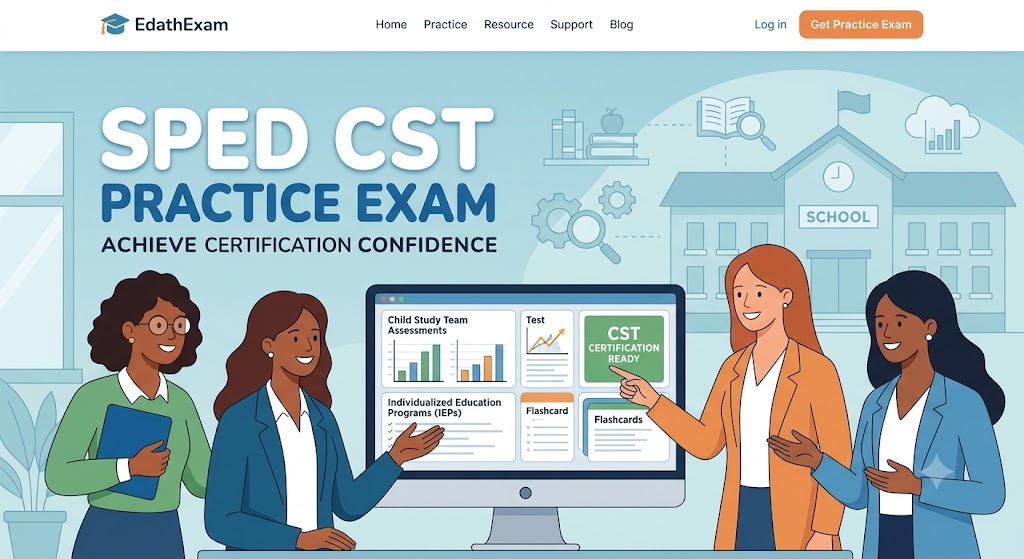
Additional Information
What the Course Entails and Exam Details
The core focus of this practice exam, and the professional role it prepares you for, revolves around the comprehensive evaluation and planning process for students with special needs.
This practice exam covers the following critical areas and skill sets derived from standard special education regulations and best practices:
Understanding SPED Law and Regulations: Deep knowledge of the Individuals with Disabilities Education Act (IDEA) and state-specific regulations governing the identification, evaluation, and placement processes.
The Referral and Evaluation Process: Detailed steps for receiving referrals, conducting comprehensive multidisciplinary evaluations, understanding eligibility criteria, and interpreting assessment data.
Assessment Tools and Interpretation: Familiarity with a wide range of academic, cognitive, behavioral, and functional assessment tools, and the ability to accurately interpret results to determine student needs.
IEP Development and Implementation: Proficiency in writing legally defensible and effective Individualized Education Programs (IEPs), including setting measurable goals, determining appropriate accommodations, modifications, and related services.
Collaboration and Communication: Best practices for effective communication and collaboration within the multidisciplinary team, including engaging parents and guardians throughout the process.
Behavioral Interventions and Support: Understanding Positive Behavioral Interventions and Supports (PBIS) and developing Functional Behavioral Assessments (FBAs) and Behavior Intervention Plans (BIPs).
What to Expect in the Final Exam
While specific exam formats vary by state and district, most standardized CST assessments are comprehensive and rigorous. The final exam typically features a mix of question formats:
Format: Primarily multiple-choice questions focusing on recall of laws and regulations, as well as scenario-based questions that require applying knowledge to real-world Child Study Team situations. Some exams may include case study analysis or short-answer responses.
Case Study Application: Be prepared to review hypothetical student profiles, evaluation data, and team discussions to determine eligibility or draft appropriate IEP goals.
Time Limit: Expect a timed exam, often ranging from 2 to 3 hours, requiring efficient time management.
Passing Score: The passing score generally ranges from 70% to 80%, depending on the specific certifying body or school district.
Focus: The questions will assess your ability to make legally sound and ethically responsible decisions that prioritize the best interests of the student.
How to Study and Exam Centers
Success on the SPED CST exam requires dedicated preparation combining thorough content review with practical application.
Effective Study Strategies:
Review Foundational Documents: Master the key components of IDEA (Individuals with Disabilities Education Act) and review your state’s specific special education administrative code.
Utilize This Practice Exam: Take the SPED CST Practice Exam multiple times. Use the results to identify weak areas and focus your ongoing studying.
Review Textbooks and Coursework: Revisit textbooks from your special education, school psychology, or educational leadership programs.
Study Case Examples: Practice interpreting actual (de-identified) or hypothetical assessment data and drafting sample IEP goals.
Form Study Groups: Collaborating with peers preparing for the same exam can provide different perspectives on complex scenarios.
Where to Take the Exam (Exam Centers):
School District Administered: Many CST assessments are administered directly by hiring school districts as part of the application process for special education or school psychologist positions.
State Department of Education: Official licensure exams for special education or related services are typically scheduled through state department of education portals and taken at authorized testing centers, such as Pearson VUE or ETS (Educational Testing Service) locations.
Job Opportunities from the Course
Gaining a deep understanding of the Child Study Team process and demonstrating that proficiency through certification or exam success opens doors to critical roles within the education system.
Completion of this preparation and subsequent success in official CST assessments unlocks the following job opportunities:
Special Education Teacher: Directly implements IEPs and collaborates closely with the CST on evaluations and plan revisions.
School Psychologist: A core member of the CST, responsible for psychological evaluations, data interpretation, and behavioral consultation.
School Social Worker: CST member providing essential expertise on family dynamics, community resources, and social-emotional assessments.
Learning Disabilities Teacher-Consultant (LDTC): Specializes in evaluating learning disabilities and advising teachers on instructional strategies (role often specific to NJ).
Director of Special Services / Special Education Administrator: Oversees the entire CST process, ensures legal compliance, and manages special education programming.
CST Coordinator / Case Manager: Manages the logistics, timelines, and documentation for the CST process for assigned students.
By rigorously preparing for the SPED Child Study Team (CST) Practice Exam, you are positioning yourself as a knowledgeable, compliant, and collaborative advocate for students with special needs, making you an invaluable asset to any educational team.
Frequently Asked Questions
Reviews
5.0
Based on 0 reviews
Leave a Review
No reviews yet. Be the first to review!