
SPCB Branch 3 Field Representative Practice Exam
$69.00
- Buy to unlock unlimited access to all Quiz questions.
- After purchase you can print a PDF of the whole quiz at any point. The PDF will contain the questions and the correct answers.
About this Exam
The SPCB Branch 3 Field Representative certification is designed for individuals looking to specialize in the inspection and control of wood-destroying organisms (WDO) within the structural pest control industry. In California and regions with similar frameworks, Branch 3 specifically focuses on identifying and managing termites, wood-boring beetles, and wood-decay fungi, all of which pose significant risks to structural integrity. A Field Representative plays a vital role in the initial property assessment, identifying signs of infestation, assessing damage, and reporting findings. This certification, generally obtained from the relevant State Structural Pest Control Board (SPCB) or equivalent authority, is a prerequisite for independently conducting inspections and discussing treatment or repair plans with clients for WDO-related issues.
Our [Exam Name] Practice Exam has been meticulously crafted to help aspiring field representatives validate their knowledge and refine their skills across all core competency areas. It is an invaluable study tool for anyone seeking to enter this specialized field or looking to enhance their existing foundational knowledge before attempting the official certification. The practice exam provides a realistic testing environment and immediate feedback, enabling you to identify your strengths and pinpoint areas that require further study.
Ready to test your knowledge?
Buy Now to Access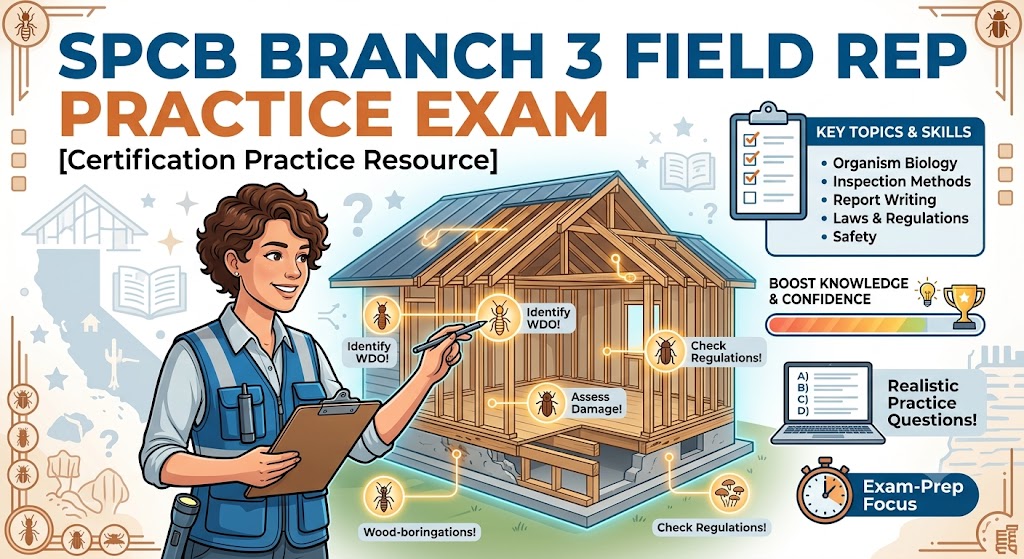
Additional Information
What the Course Entails and Exam Details
Preparing for the SPCB Branch 3 Field Representative exam requires a thorough understanding of the specific organisms, inspection procedures, relevant laws, and safety protocols. A typical comprehensive preparation course (and this practice exam) will cover:
Biology and Identification of Wood-Destroying Organisms (WDO): In-depth knowledge of different species of termites (e.g., drywood, subterranean), wood-boring beetles, Carpenter ants, and various types of wood-decay fungi. Understanding their lifecycle, behavior, and the distinct signs they leave.
Structural Inspection Techniques: Learning systematic approaches to inspect residential and commercial properties for WDOs. This includes understanding building construction, identifying critical inspection points (foundations, subfloors, attics, water sources, etc.), and properly interpreting signs of infestation, infection, or conducive conditions.
Report Writing and Recommendations: Grasping the crucial skill of creating accurate and thorough structural pest control reports. This involves detailing findings, specifying the location of organisms or damage, providing diagrams, and outlining necessary corrective treatments and structural repairs.
Laws and Regulations: Familiarity with the relevant state laws, structural pest control acts, rules, and licensing regulations that govern the operations of a WDO inspector/field representative (such as California's specific structural pest control codes). This section typically covers professional conduct, contract requirements, and reporting obligations.
Safety and Environmental Practices: Best practices for personal protective equipment (PPE), safe handling of inspection tools, recognizing potential safety hazards during an inspection, and being aware of the environmental considerations in pest control. Note: As a practice exam and informational resource, the content focuses on foundational knowledge and typical structure, but is not an official SPCB certification.
The official exam details (format, question counts, passing scores, time limits, and registration process) can vary slightly by jurisdiction. It is crucial to consult the official website and candidate handbook of your State’s Structural Pest Control Board (e.g., the Structural Pest Control Board of California) for the most accurate and up-to-date information.
What to Expect in the Final Exam
While you must verify specific details with your local SPCB, the final certification exam typically follows this general structure:
Format: The exam is usually a proctored, closed-book, multiple-choice assessment. Questions are designed to test both factual knowledge and the ability to apply that knowledge to practical, scenario-based situations commonly encountered by a field representative.
Content and Difficulty: The questions are comprehensive, covering all key areas detailed in the "What the Course Entails" section. Expect questions ranging from organism identification from images or descriptions, defining regulatory terms, and interpreting results from hypothetical inspection scenarios.
Number of Questions and Time Limit: A typical exam might consist of 100 to 150 questions and have a designated time limit, such as 2 to 3 hours, to allow for careful review.
Passing Score: The required passing score is generally around 70%. It is set to demonstrate a strong command of the material necessary to safely and competently perform the duties of a Branch 3 Field Representative.
Strict Proctoring and Rules: Expect a professional and standardized testing environment. This often includes ID verification, secure test centers or browser-locked online options, and the strict prohibition of any unauthorized study materials or electronic devices.
How to Study and Exam Centers
Preparation is key to succeeding on the SPCB Branch 3 Field Rep exam. Here are actionable strategies:
Official Materials and Study Guides: Obtain and thoroughly review the official candidate handbook, study guides, suggested reference texts, and any recommended training programs from your State's SPCB. These will outline the specific knowledge required.
Utilize Practice Exams: Incorporate high-quality practice exams, like the one this resource supports, into your study routine. They allow you to familiarize yourself with the question style, time yourself, and identify key weak points. Look for exams that provide detailed explanations for correct and incorrect answers.
Hands-on Application (if possible): While a practice exam is virtual, gaining practical, supervised field experience (perhaps as an apprentice or with a licensed operator) in WDO inspections will significantly solidify your understanding of organism identification and real-world structural issues.
Join Study Groups/Forums: Engaging with peers in study groups or professional forums can provide additional perspectives, clarification on tough concepts, and motivational support.
Focus on Identification & Regulations: Pay particular attention to distinguishing between different types of termites, beetles, and fungi, and understanding the nuances of the laws and reporting procedures for your specific state.
Exam Centers and Registration:
The exact locations and registration procedures are determined by your State's SPCB and are often administered through accredited third-party testing services (e.g., Pearson VUE, PSI Exams).
SPCB Approval: Typically, you must first submit an application and receive approval from the State Structural Pest Control Board before you can register for the exam. This often involves prerequisites like completing mandatory pre-licensing training.
Registration through Testing Service: Once approved, you will likely register and schedule your exam through the designated testing provider's online portal or call center.
Testing Methods: Examinations are primarily computer-based and are held at authorized physical testing centers conveniently located throughout the state. Some boards may offer secure online proctored exam options with specific technological and environmental requirements.
Confirm Details: Always check the current list of authorized test locations, fees, and registration deadlines on both the SPCB and testing provider websites. Ensure you allow ample time for the application and scheduling processes.
Job Opportunities from the Course
Successfully obtaining your SPCB Branch 3 Field Representative certification opens the door to a variety of specialized and vital career paths in the structural pest control and related fields. These potential job opportunities include:
Branch 3 Field Representative: The primary and most direct role, involving independent property inspections for wood-destroying organisms, damage assessment, and the creation of formal WDO reports and recommendations for treatment or repair.
Wood-Destroying Organisms (WDO) Inspector: A dedicated specialist focusing entirely on WDO inspections for residential and commercial real estate transactions, essential for property sales and refinancing.
Termite Specialist / Inspector: Focused expert in the biology, detection, and mitigation of all types of termites.
Structural Pest Control Technician (Branch 3 focus): While often an operator level requires separate licensing, understanding Branch 3 is crucial for technicians who apply WDO treatments under supervision, especially in companies with both inspector and applicator roles.
Sales Representative (Structural Pest Control / WDO): Leveraging deep knowledge of WDOs and industry practices to sell inspection, treatment, and repair services to property owners and real estate professionals.
Property & Facilities Management: Providing specialized WDO inspection and advisory services for large property portfolios or within a larger home inspection framework (with appropriate other certifications).
Structural Repair Specialist: Working with construction and repair firms to specialize in the structural repairs necessary after WDO damage, utilizing knowledge of typical infestation points.
With dedication, thorough preparation, and the support of resources like practice exams, you can unlock a successful and fulfilling future as an SPCB Branch 3 Field Representative! Good luck on your path to certification!
Frequently Asked Questions
Reviews
5.0
Based on 0 reviews
Leave a Review
No reviews yet. Be the first to review!