
South Carolina CDL General Knowledge Practice Test 3
$69.00
- Buy to unlock unlimited access to all Quiz questions.
- After purchase you can print a PDF of the whole quiz at any point. The PDF will contain the questions and the correct answers.
About this Exam
The South Carolina CDL General Knowledge exam is the cornerstone qualification for anyone aspiring to operate commercial vehicles in the state. This comprehensive test assesses a candidate's understanding of essential safe driving practices, commercial vehicle regulations, and equipment knowledge required to obtain a Commercial Learner’s Permit (CLP) for all CDL classes (A, B, and C).
This study guide, focusing on the content covered by Practice Test 3, is designed for future professional drivers. It is an invaluable resource for individuals preparing to enter the diverse field of commercial transportation, from long-haul trucking to local delivery and passenger transport.
Ready to test your knowledge?
Buy Now to Access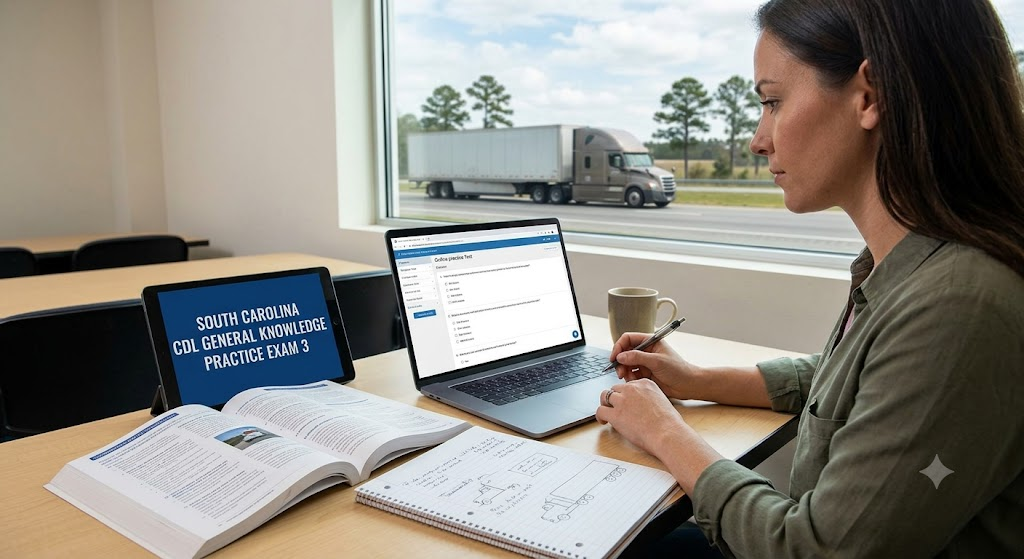
Additional Information
What the Course Entails and Exam Details
The actual South Carolina CDL General Knowledge exam covers a vast array of topics detailed in the official SCDMV Commercial Driver License Manual. Using Practice Test 3 allows you to focus on many of these critical areas through representative questions.
The core topics and skills covered in the real exam, and reflected in this practice material, include:
Vehicle Inspection: Learning to perform thorough pre-trip, en-route, and post-trip inspections to ensure vehicle safety.
Basic Control: Mastering the fundamentals of shifting gears, braking, and managing speed.
Seeing Hazards: Recognizing and reacting to potential dangers on the road.
Communicating with Others: Utilizing signals, horns, and other methods to convey intent to other drivers.
Controlling Speed: Understanding safe speed for various road and weather conditions.
Managing Space: Maintaining proper following distance and cushion around the vehicle.
Driving in Night & Fog: Navigating safely in low visibility.
Winter Driving & Hot Weather: Techniques for handling adverse weather extremes.
Railroad Crossings: Procedures for safely approaching and crossing railroad tracks.
Mountain Driving: Managing brakes and gear selection on steep grades.
Seeing Hazards: Developing observational skills to identify risks early.
Emergency Maneuvers & Skid Control: Steps to take in critical situations.
Accident Procedures & Fire Safety: Actions to perform after an incident and how to use a fire extinguisher.
Cargo Safety: Principles of loading, securing, and transporting various types of cargo.
While Practice Test 3 is a great tool, remember to study the full manual for a complete overview.
What to Expect in the Final Exam
When you take the official South Carolina CDL General Knowledge test at an SCDMV licensing office, it will be a formal knowledge assessment. Here are the key details you need to know:
Format: The exam consists of multiple-choice questions based entirely on the South Carolina CDL Manual.
Number of Questions: The test typically contains 50 questions.
Passing Score: You must achieve a minimum score of 80%, which means correctly answering at least 40 out of 50 questions.
Time Limit: While many state exams are untimed, you should confirm with your local SCDMV office. Generally, allow ample time (at least 60-90 minutes) to read and answer each question carefully.
Rules: Cheating, using smartphones, or accessing external notes or manuals during the exam is strictly prohibited and will result in disqualification.
Successfully passing this test is a mandatory step before you can take the skills (driving) test for your Commercial Driver’s License.
How to Study and Exam Centers
How to Study Effectively
Preparation is the absolute key to success on the CDL General Knowledge exam. Use these actionable strategies to master the material:
Obtain and Master the South Carolina CDL Manual: This is your primary source and ultimate guide. Download the official PDF or pick up a hard copy from any SCDMV office. Read it multiple times, focusing intently on the General Knowledge section.
Take Multiple Practice Tests: Using resources like this South Carolina CDL General Knowledge Practice Test 3 is crucial. Practice tests familiarize you with the question format, identify areas where you need further study, and build confidence. Aim to consistently score 90% or higher on various practice exams before attempting the real one.
Create Flashcards: Make flashcards for critical information like stopping distances, pre-trip inspection points, and regulation details.
Study Weak Areas: After each practice test, go back to the SCDMV manual and review the specific sections related to the questions you missed.
Use CDL Study Apps and Online Forums: Leverage external resources, educational apps, and online driver forums for additional explanations and peer support.
Simulate Exam Conditions: When taking practice tests, time yourself and eliminate all distractions to mimic the actual testing environment.
Where to Take the Exam
The final official CDL General Knowledge exam is administered exclusively at authorized South Carolina Department of Motor Vehicles (SCDMV) branch offices that offer commercial driver licensing services.
You can locate your nearest qualifying SCDMV location by visiting the official SCDMV website and checking their branch list, ensuring they provide "CDL Knowledge Tests."
Appointments are usually required or highly recommended for CDL services; schedule yours online or by calling the specific office directly.
Job Opportunities from the Course
Successfully passing the South Carolina CDL General Knowledge exam and obtaining your commercial learner's permit is the foundational step that unlocks numerous diverse and rewarding career paths in the transportation industry. Depending on the class of CDL you eventually earn (A, B, or C) and any endorsements you add (like for passengers or hazardous materials), this qualification is the gateway to jobs including:
Long-Haul Truck Driver (Over-the-Road - OTR): Transporting goods across states in large tractor-trailers (requires Class A CDL).
Local Delivery Driver: Operating box trucks or smaller commercial vehicles for local companies and delivery services (Class B or C).
Bus Driver (School, Transit, Charter): Transporting passengers safely (requires Class B or C CDL and Passenger endorsement).
Construction Vehicle Operator: Driving dump trucks, concrete mixers, and other heavy equipment (Class B).
Utility Vehicle Driver: Operating specialized trucks for utility companies.
Flatbed Driver: Specializing in securing and transporting large, bulky, or heavy loads.
Tanker Truck Driver: Transporting liquid or gaseous cargo (Class A or B and Tanker endorsement).
Hazardous Materials (HazMat) Hauler: Transporting specific regulated materials (Class A or B and HazMat endorsement).
This single exam is the primary hurdle that stands between you and starting a dynamic career on the road.
Frequently Asked Questions
Reviews
5.0
Based on 0 reviews
Leave a Review
No reviews yet. Be the first to review!