
SOS Mechanic Certification – Brakes Practice Exam
$69.00
- Buy to unlock unlimited access to all Quiz questions.
- After purchase you can print a PDF of the whole quiz at any point. The PDF will contain the questions and the correct answers.
About this Exam
The SOS Mechanic Certification for Brakes is a highly specialized and widely recognized credential that validates your expertise in automotive braking systems.
It is expertly designed for aspiring mechanics, current automotive technicians, and maintenance professionals who want to elevate their diagnostic and repair capabilities.
Earning this certification proves to employers and customers alike that you possess a deep, practical understanding of critical vehicle safety systems.
Whether you are just stepping into the garage or looking to become a master technician, mastering this practice exam is your first major step toward automotive excellence.
Ready to test your knowledge?
Buy Now to Access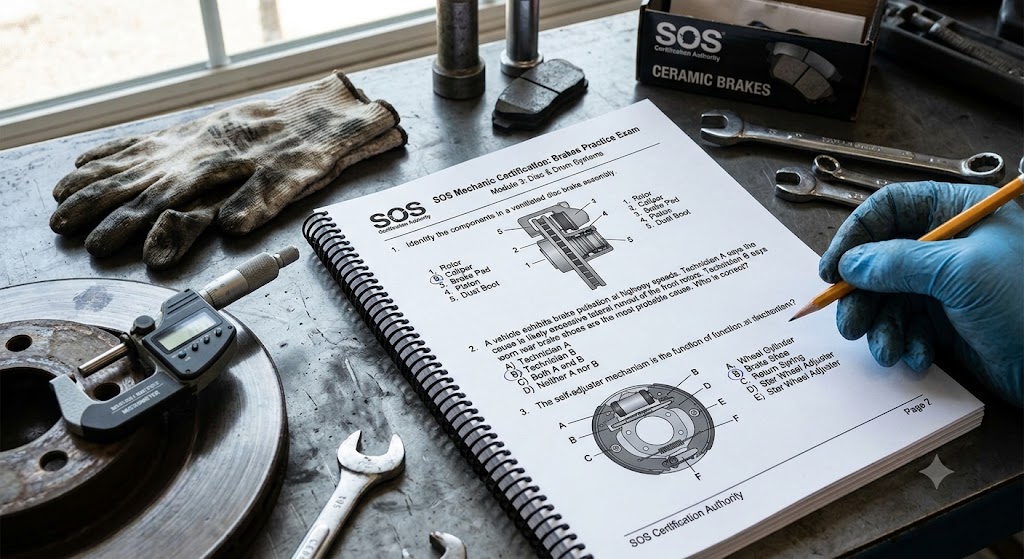
Additional Information
What the Course Entails and Exam Details
Preparing for the SOS Mechanic Brakes Certification requires a solid grasp of both modern and traditional braking mechanisms.
The core syllabus covers the complete diagnosis, service, and repair of hydraulic systems, drum brakes, and disc brakes.
You will also dive deeply into advanced electronic systems, including Anti-lock Braking Systems (ABS), traction control, and electronic parking brakes.
Furthermore, the curriculum emphasizes vital hands-on skills such as machining brake rotors and drums, accurately measuring component wear, and safely handling brake fluids and asbestos-containing materials.
Every topic is designed to ensure you can confidently troubleshoot complex issues and restore any vehicle's stopping power to factory standards.
What to Expect in the Final Exam
The final certification exam is a rigorous test of your theoretical knowledge and practical problem-solving skills.
Typically, the exam format consists of 50 to 75 multiple-choice questions that heavily feature scenario-based mechanical problems.
You will have a strict time limit, usually around 90 to 120 minutes, which means you must be able to read, analyze, and answer questions efficiently.
To achieve certification, candidates are generally required to hit a passing score of 70% or higher, depending on the specific testing board's annual standards.
It is important to note that the exam rules strictly prohibit the use of personal mobile devices, outside reference manuals, or calculators, as the test measures your internalized professional knowledge.
How to Study and Exam Centers
Success on the SOS Mechanic Brakes Exam comes from a strategic blend of hands-on repetition and targeted academic review.
Begin by reading the official OEM service manuals and studying detailed hydraulic flow diagrams to build a strong foundational knowledge.
Next, taking high-quality practice exams—just like this one—will help you familiarize yourself with the specific phrasing of the test questions and improve your time management.
When you are ready to test, exams are typically administered through secure, authorized testing partners like Pearson VUE or at accredited local automotive trade schools.
Many regions now also offer a securely proctored online exam portal, allowing you to take the test from the comfort of a quiet, controlled room in your own home.
Job Opportunities from the Course
Passing the SOS Mechanic Brakes exam and securing your certification unlocks a variety of lucrative and stable career paths within the automotive industry.
Here are the specific job titles you can confidently pursue:
Brake Specialist: Focus entirely on diagnosing, repairing, and replacing brake systems at specialized automotive shops.
General Automotive Technician: Work in dealerships or independent garages handling comprehensive vehicle maintenance with a certified edge in safety systems.
Master Mechanic: Use this certification as a stepping stone to complete your master certifications, commanding top-tier salary rates.
Fleet Maintenance Technician: Secure contracts with delivery companies, government agencies, or rental services ensuring their massive fleets remain safe on the road.
Automotive Service Advisor: Leverage your deep technical knowledge to bridge the gap between the mechanics in the garage and the paying customers at the front desk.
Frequently Asked Questions
Reviews
5.0
Based on 0 reviews
Leave a Review
No reviews yet. Be the first to review!