
Shooting Skills Hunter Education Quiz Practice Test
$69.00
- Buy to unlock unlimited access to all Quiz questions.
- After purchase you can print a PDF of the whole quiz at any point. The PDF will contain the questions and the correct answers.
About this Exam
The Shooting Skills Hunter Education Quiz Practice Test is a crucial educational tool designed to help aspiring hunters prepare for the official hunting certification exam. This practice test is specifically tailored for individuals—both youth and adults—who are seeking their mandatory hunter safety card or looking to refresh their knowledge before the hunting season begins. By focusing on the practical application of firearm safety, marksmanship, and ethical field conduct, this guide ensures that participants gain the confidence and competence necessary to hunt responsibly and safely.
Ready to test your knowledge?
Buy Now to Access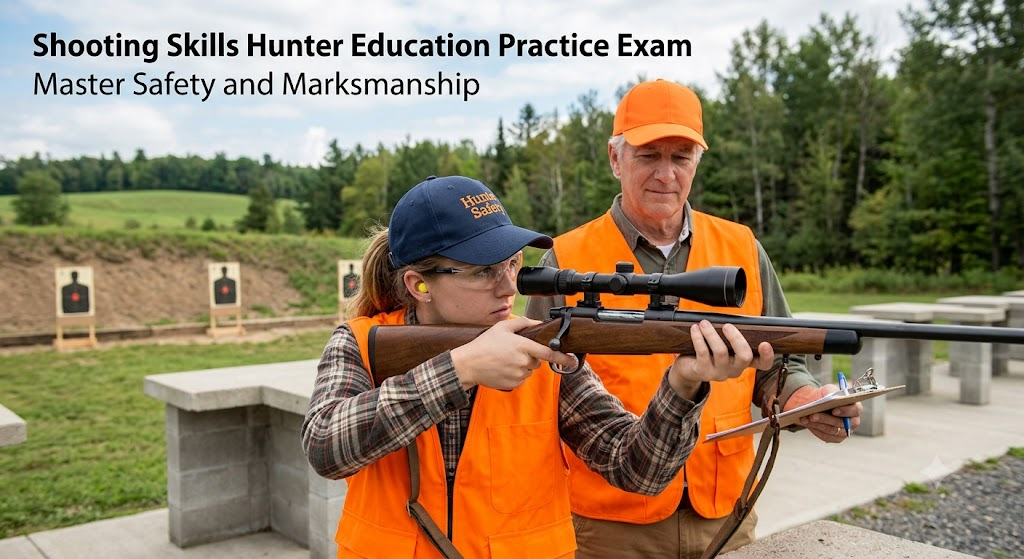
Additional Information
What the Course Entails and Exam Details
This comprehensive course covers the foundational principles of safe hunting and firearm operation. While state requirements may vary slightly, the curriculum generally entails:
The 4 Primary Rules of Firearm Safety: Memorizing and applying the core rules of muzzle control, treating every firearm as loaded, finger placement, and target identification.
Safe Handling in the Field: Mastering techniques for carrying firearms safely while walking alone or in a group, crossing obstacles like fences or streams, and transporting firearms in vehicles.
Firearm Mechanics and Ammunition: Understanding how various action types operate (bolt, pump, lever, break), how to load and unload them safely, and how to select the correct ammunition.
Marksmanship Fundamentals: Learning the essentials of good shooting, including proper stance or position, sight alignment, trigger squeeze, and breath control.
Shot Placement and Ethics: Understanding the vital organs of game animals for humane shots and recognizing ethical shot opportunities in the field.
What to Expect in the Final Exam
The final hunter education exam typically includes both a written and a practical component. This practice quiz focuses heavily on preparing you for the knowledge-based questions and the safety decision-making skills you will need.
Exam Format: The written exam is usually composed of 50 to 100 multiple-choice or true/false questions. Many states now offer this portion online.
Practical/Field Day: In most jurisdictions, completing the written portion is followed by a mandatory in-person Field Day. During this session, you must demonstrate safe firearm handling and may be required to participate in a live-fire exercise under instructor supervision.
Passing Score: Students generally must achieve a score of at least 80% on the written exam to receive their certification.
Time Limits: While online courses allow for self-paced learning, in-person written exams and Field Days are typically scheduled events with specific timeframes for completion.
How to Study and Exam Centers
Preparation is key to succeeding on the Hunter Education Exam. Use the following strategies to prepare:
Take Practice Quizzes: Repeatedly take the Shooting Skills Hunter Education Quiz Practice Test to identify areas where you need further review.
Study the Official Manual: Thoroughly read the state-approved hunter safety handbook provided by your wildlife management agency.
Practice Safe Handling (Dry Fire): With a completely unloaded firearm and under adult supervision if applicable, practice the safe handling and carry techniques discussed in the course materials.
Watch Educational Videos: Many state agencies and hunter safety organizations offer video tutorials that visually demonstrate safe field practices.
Where to Take the Exam:
Online Portals: Most states offer an approved online course (through vendors like Hunter-Ed.com or Kalkomey) that allows you to complete the written portion from home.
In-Person Courses: Traditional classroom courses are offered periodically by state wildlife agencies, typically held at local conservation clubs, sportsman's stores, or community centers. You must register for these specific locations in advance to complete your Field Day and practical testing.
Job Opportunities from the Course
While primarily designed for recreational hunters, completing this course and obtaining your certification demonstrates a commitment to safety that is highly valued in several outdoor careers. This certification can support paths toward the following roles:
Outdoor Guide or Outfitter: Leading clients on hunting and fishing expeditions.
Park Ranger or Interpreter: Managing natural resources and educating the public.
Wildlife Technician or Biologist: Conducting field research and managing wildlife populations (where firearm safety is mandatory).
Hunter Education Instructor: Certifying new hunters (often requires volunteer time or additional state training).
Conservation Officer (Game Warden): A law enforcement role requiring comprehensive firearm and hunter safety knowledge.
Sporting Goods Retail Specialist: Advising customers on hunting equipment and safety.
Frequently Asked Questions
Reviews
5.0
Based on 0 reviews
Leave a Review
No reviews yet. Be the first to review!