
ServSafe Quiz Minimum Internal Cooking Temperatures
$69.00
- Buy to unlock unlimited access to all Quiz questions.
- After purchase you can print a PDF of the whole quiz at any point. The PDF will contain the questions and the correct answers.
About this Exam
The Certified Nursing Assistant (CNA) certification is an essential credential for individuals seeking to enter the healthcare field and provide vital support to patients and residents. The National Nurse Aide Assessment Program (NNAAP®) is a widely recognized examination designed to evaluate the knowledge and skills required for entry-level nurse aides. This certification validates your competency in delivering safe, ethical, and high-quality care, making you a valuable asset in various healthcare settings, including long-term care facilities, hospitals, and home health agencies.
Ready to test your knowledge?
Buy Now to Access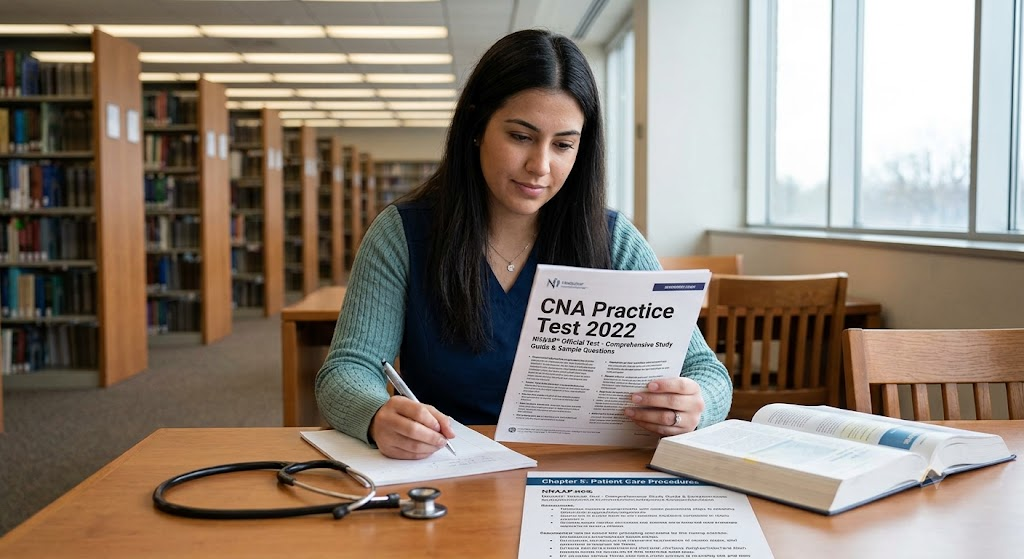
Additional Information
What the Course Entails and Exam Details
To prepare for the NNAAP® CNA exam, aspiring nurse aides typically undergo comprehensive training programs approved by their state's nursing board. These programs cover a broad range of topics essential for providing care to diverse patient populations. Core subject areas include:
Basic Nursing Skills: This includes monitoring vital signs, assisting with activities of daily living (ADLs) like bathing, dressing, and feeding, and ensuring proper nutrition and hydration.
Personal Care: Students learn techniques for hygiene care, including skincare, oral hygiene, and hair care.
Patient Rights and Ethics: This component emphasizes respect for patient autonomy, confidentiality, and understanding the ethical principles guiding nurse aide practice.
Communication and Interpersonal Skills: Effective communication with patients, families, and healthcare team members is crucial, and training focuses on verbal and non-verbal communication, active listening, and conflict resolution.
Safety and Emergency Procedures: Participants learn infection control practices, body mechanics for safe patient handling, and emergency response protocols.
Restorative Care: This focuses on promoting patient independence, mobility, and functional abilities through range-of-motion exercises and assistance with assistive devices.
Caring for Cognitively Impaired Residents: Specific training is often included to address the unique needs of individuals with dementia, Alzheimer's disease, and other cognitive impairments.
What to Expect in the Final Exam
The NNAAP® CNA exam consists of two main components: a written (or oral) examination and a skills evaluation. Both components must be passed to achieve certification.
Written Examination:
Format: The written exam typically consists of 70-100 multiple-choice questions. An oral exam option may be available for individuals with reading difficulties.
Content: The questions cover the various topics included in the CNA training program curriculum, focusing on knowledge and application of principles.
Time Limit: There is usually a two-hour time limit for the written exam.
Passing Score: The passing score varies by state but is typically around 70-80%.
Skills Evaluation:
Format: The skills evaluation involves demonstrating competence in performing various nurse aide skills. A certified evaluator observes and assesses the candidate's performance.
Content: Candidates are typically required to perform five randomly selected skills, including one mandatory skill (usually handwashing). Common skills included in the evaluation are measuring vital signs, transfer and positioning, personal care activities, and feeding.
Assessment: Each skill is evaluated based on a specific set of critical steps. Failing a critical step can result in failure of the skill.
Time Limit: Candidates are usually given about 25-30 minutes to complete the selected skills.
Specific Rules:
Candidates must present valid photo identification and social security cards at the testing site. Electronic devices and study materials are not allowed during the exam. Strict adherence to instructions from exam proctors and evaluators is essential.
How to Study and Exam Centers
Effective preparation is key to success in the NNAAP® CNA exam. Here are some actionable study strategies:
Thoroughly Review Class Materials: Review notes, textbooks, and handouts from your CNA training program frequently.
Use Official Study Guides: The NNAAP® provides candidate handbooks and sample questions that are essential for understanding the exam format and content.
Take Practice Exams: Utilize online practice tests and review questions to familiarize yourself with the types of questions and assess your knowledge base. Identify areas where you need further review.
Practice Skills: Dedicate significant time to practicing all the skills included in the training program. Ask instructors or fellow students for feedback.
Utilize Visual Aids: Review videos and diagrams demonstrating proper skill performance.
Form Study Groups: Collaborating with peers can help reinforce learning, discuss concepts, and practice skills together.
Manage Your Time: Create a study schedule and stick to it, allowing for sufficient time for both knowledge review and skills practice.
Get Adequate Rest and Nutrition: Prioritize well-being to maintain focus and concentration during your studies and the exam.
Where to Take the Exam:
Online Portals: Some states or testing agencies may offer parts of the application or practice materials through online portals. The written exam might be available in a computer-based format at designated testing centers.
Testing Centers (e.g., Pearson VUE): Many states contract with professional testing services like Pearson VUE to administer the written portion of the exam. Candidates register through the testing service's website and schedule their exam at a convenient location.
Physical Testing Centers/Authorized Schools: The skills evaluation is typically conducted at approved testing locations, such as community colleges, vocational schools, or healthcare facilities equipped for the purpose. Candidates schedule this portion through their training program or the state's testing agency.
Job Opportunities from the Course
Obtaining the NNAAP® CNA certification opens doors to a variety of rewarding career paths in the healthcare industry. Certified individuals can pursue opportunities such as:
Certified Nursing Assistant (CNA)
Nurse Aide
Nursing Assistant
Long-Term Care Aide
Patient Care Assistant
Geriatric Nursing Assistant
Home Health Aide (with additional state-specific requirements)
This certification provides a strong foundation for a fulfilling career in healthcare, with opportunities for advancement into roles like licensed practical nurse (LPN), registered nurse (RN), or other specialized healthcare fields.
Frequently Asked Questions
Reviews
5.0
Based on 0 reviews
Leave a Review
No reviews yet. Be the first to review!