
ServSafe Practice Test Chapter: 4 Flow of Food: An Introduction
$69.00
- Buy to unlock unlimited access to all Quiz questions.
- After purchase you can print a PDF of the whole quiz at any point. The PDF will contain the questions and the correct answers.
About this Exam
The ServSafe certification is the premier food safety training requirement for managers and handlers in the food service industry across the United States. Accredited by ANSI and the National Restaurant Association, this qualification validates that a food handler possesses the essential knowledge needed to prevent foodborne illness. This specific guide focuses on Chapter 4, "Flow of Food: An Introduction," which is foundational for anyone overseeing kitchen operations, including restaurant managers, executive chefs, and sous chefs. Mastering this section is critical for ensuring that safety protocols are maintained from the moment food enters the establishment until it is served to the customer.
Ready to test your knowledge?
Buy Now to Access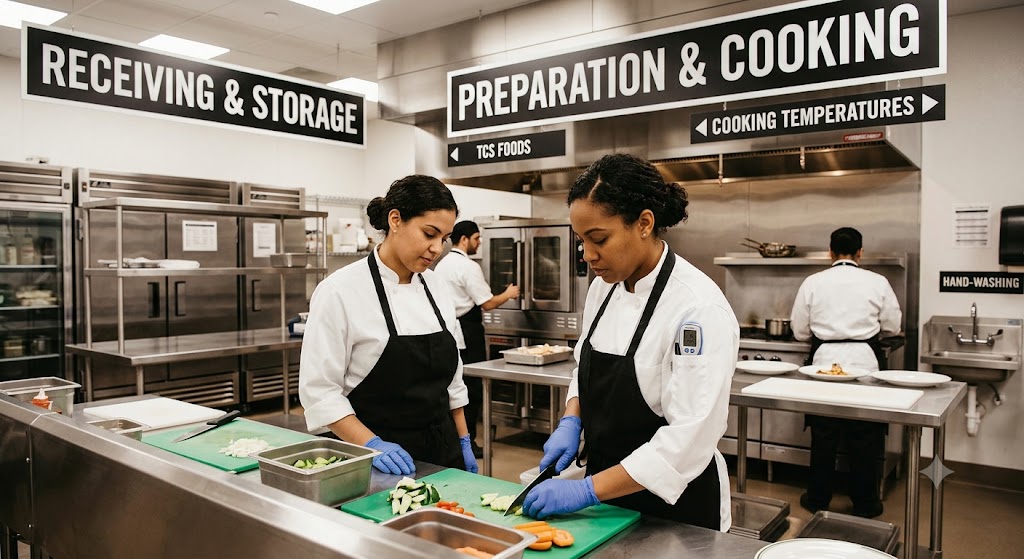
Additional Information
What the Course Entails and Exam Details
The "Flow of Food: An Introduction" chapter covers the core philosophy of active managerial control over the movement of food. The syllabus focuses on identifying and preventing hazards at every critical step. Key topics include understanding the specific path food takes through a facility, defining "TCS food" (Food that requires Time and Temperature Control for Safety), and mastering the parameters of the Temperature Danger Zone. Students will learn the fundamental methods for preventing cross-contamination, essential time and temperature monitoring techniques, and the proper use and calibration of different types of thermometers. This chapter sets the stage for specific, detailed protocols in subsequent lessons.
What to Expect in the Final Exam
This practice exam mimics the style and content of the official ServSafe Manager Certification Exam. While the actual full exam is a comprehensive test consisting of 90 multiple-choice questions, the questions derived from Chapter 4 focus specifically on hazardous situations, prevention methods, and monitoring tools. The final official exam is typically proctored, administered either on paper or online, with a strictly enforced time limit of two hours. To obtain certification, candidates must achieve a passing score of at least 70%. It is important to note that the official exam requires a certified ServSafe Proctor to be present, and candidates must adhere to strict identification requirements and standard testing rules.
How to Study and Exam Centers
Effective study for this section involves a mix of rote memorization and practical application. First, memorize the key temperatures: the Temperature Danger Zone (41°F to 135°F) and the "super danger zone" where pathogens grow most rapidly (70°F to 125°F). Utilize flashcards for the different types of thermometers (e.g., bimetallic stemmed, thermocouples, infrared) and their specific uses. Practice calibrating a thermometer using the ice-point method. After reviewing the material in the ServSafe Manager textbook, use this practice test to identify knowledge gaps, and thoroughly read the rationales for any incorrect answers.
For the final certification, you must locate an official, accredited testing center or a certified proctor. The official exam cannot be taken alone at home. Testing is often available through authorized local hospitality associations, specific culinary schools, or through the Pearson VUE testing center network. Many employers in the food service industry also host proctored exam sessions for their staff.
Job Opportunities from the Course
Obtaining your ServSafe Manager Certification is often a mandatory requirement for leadership roles within the food service industry. This qualification unlocks numerous career paths and job opportunities, as it demonstrates to employers a verified commitment to safety and regulatory compliance.
Potential job titles and career paths enabled by this certification include:
Restaurant General Manager
Kitchen Manager
Executive Chef
Sous Chef
Food and Beverage Director
Catering Manager
Dietary Manager (Healthcare facilities)
School Nutrition Program Director
Food Safety Inspector/Auditor
Frequently Asked Questions
Reviews
5.0
Based on 0 reviews
Leave a Review
No reviews yet. Be the first to review!