
ServSafe Practice Test Chapter 2- Forms of Contamination
$69.00
- Buy to unlock unlimited access to all Quiz questions.
- After purchase you can print a PDF of the whole quiz at any point. The PDF will contain the questions and the correct answers.
About this Exam
The ServSafe certification is a widely recognized food safety training and certificate program in the United States, essential for managers and staff in the foodservice industry. It is designed for individuals who handle, prepare, or serve food, ensuring they follow strict protocols to prevent foodborne illness. Obtaining a ServSafe certificate, particularly in food protection management, demonstrates a strong commitment to food safety standards, which is often a requirement for managerial roles and helpful for front-line workers to progress in their careers.
Ready to test your knowledge?
Buy Now to Access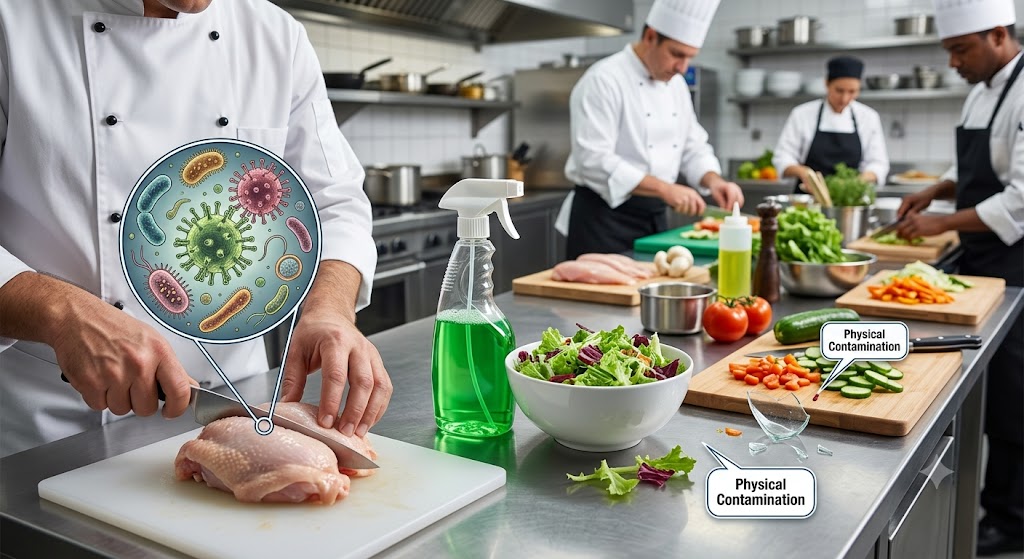
Additional Information
What the Course Entails and Exam Details
Chapter 2 of the ServSafe Manager curriculum focuses specifically on the "Forms of Contamination" that can lead to foodborne illness. Students learn to identify, prevent, and control biological, chemical, and physical hazards. Biological contaminants covered include pathogens such as bacteria, viruses, parasites, and fungi, alongside the conditions that promote their growth (FATTOM: Food, Acidity, Time, Temperature, Oxygen, and Moisture).
The course details the symptoms of major foodborne illnesses and highlights common highly contagious pathogens that require workers to be excluded from the establishment. It also discusses chemical contamination from sources like cleaners, sanitizers, and polishes, as well as physical contamination from objects like glass, metal shavings, bandages, and bone fragments. Lastly, it covers deliberate contamination and the basic concepts of a food defense program, along with managing food allergens to protect sensitive individuals.
What to Expect in the Final Exam
The final ServSafe Manager certification exam is a rigorous assessment of food safety knowledge. It generally consists of 90 to 100 multiple-choice questions. To achieve the certification, a passing score of at least 75% is required. Test-takers are typically allotted 2 hours to complete the examination. The exam can be taken online or in a print format, both of which are proctored assessments. Strict rules are in place during the exam, and any form of cheating or unauthorized materials are strictly prohibited to maintain the integrity of the certification.
How to Study and Exam Centers
Effective study strategies are crucial for success in the ServSafe exam. Consistent review of the official ServSafe Manager textbook and taking numerous practice tests is recommended to build familiarity with the question format and identify areas needing improvement. Actionable strategies include creating flashcards for key terms, definitions, and contamination types, especially focusing on symptoms and sources of different pathogens. Students can often benefit from structured review sessions and official ServSafe online training modules.
The ServSafe exam must be administered by a certified ServSafe Proctor or an authorized testing organization. Many individuals take the exam at physical testing centers or institutions such as culinary schools, community colleges, or professional training providers that are authorized to administer it. Pearson VUE centers also offer the ServSafe exam, providing a widespread and accessible option for online, computer-based testing. Candidates can schedule their exams through the official ServSafe website, which helps locate authorized test locations or proctors near them.
Job Opportunities from the Course
Earning a ServSafe certification unlocks various career paths within the diverse foodservice industry. It is often a mandatory requirement for leadership roles and strongly enhances a candidate's profile for many positions. Career paths include:
Restaurant Manager
Kitchen Manager
Head Chef or Executive Chef
Food and Beverage Director
Hotel Foodservice Manager
Health Inspector
Food Safety Auditor
Compliance Officer
Catering Manager
Foodservice Coordinator in schools, hospitals, or corporate dining
Frequently Asked Questions
Reviews
5.0
Based on 0 reviews
Leave a Review
No reviews yet. Be the first to review!