
ServSafe Practice Test (Chapter 1- Providing Safe Food) 2026
$69.00
- Buy to unlock unlimited access to all Quiz questions.
- After purchase you can print a PDF of the whole quiz at any point. The PDF will contain the questions and the correct answers.
About this Exam
The ServSafe program is a nationally recognized food safety training and certification program developed by the National Restaurant Association. This certification is essential for anyone working in the food service industry, specifically targeting managers, supervisors, and food handlers who need to adhere to high food safety standards. This specific practice exam focuses exclusively on Chapter 1, "Providing Safe Food," which establishes the foundational concepts of preventing foodborne illness. By achieving this certification, you demonstrate a clear understanding of the risks associated with food handling and the crucial steps needed to maintain a safe and compliant food service environment.
Ready to test your knowledge?
Buy Now to Access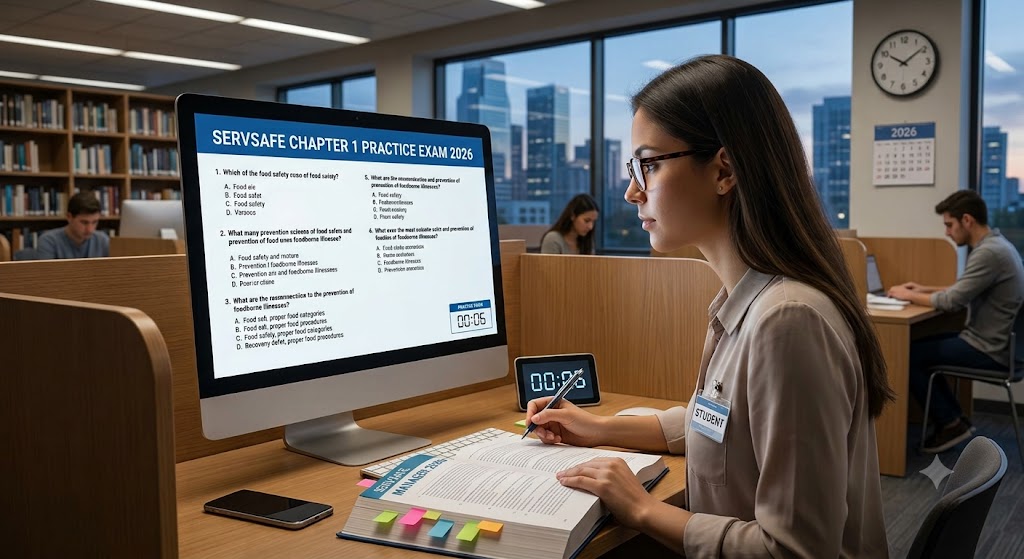
Additional Information
What the Course Entails and Exam Details
The foundational course, as well as this targeted practice exam, covers several critical core topics essential for food safety. The curriculum is designed to help students master the following areas in Chapter 1:
Understanding the threat of foodborne illness, including how they occur and their economic impact.
Identifying and defining potential hazards to food safety, categorized into biological, chemical, and physical contaminants.
Recognizing the role of risk factors like time-temperature abuse, cross-contamination, and poor personal hygiene.
Recognizing populations at high risk for contracting a foodborne illness and why they require special care.
Differentiating between a foodborne illness, an outbreak, and the process for responding to a potential outbreak situation.
What to Expect in the Final Exam
It is important to understand that this practice test is a preparatory tool and does not replace the official certification exam. The final ServSafe Manager Certification Exam is a separate, proctored assessment. The practice exam mimics the format of the official test, providing multiple-choice questions focusing specifically on Chapter 1 material to gauge your readiness. The actual official ServSafe Manager Exam consists of 90 multiple-choice questions, which must be completed within a strict two-hour time limit. To pass and earn your certification, you must achieve a minimum score of 75%. Candidates are required to take the official exam under the supervision of a certified proctor, either in-person or using an approved remote proctoring service.
How to Study and Exam Centers
To succeed on the exam, you need to employ actionable study strategies and utilize reliable resources. First and foremost, you should thoroughly review the official ServSafe Manager textbook and any materials provided in your course. Utilize online practice tools, such as the diagnostic exams offered by ServSafe, to identify and focus on your weaker areas. Retake this Chapter 1 practice exam until you consistently achieve a score above the passing threshold, making sure to understand the rationales for both correct and incorrect answers rather than just memorizing them. For the official certification exam, you can find local test centers or authorized instructors through the ServSafe website. Physical testing is often facilitated at various locations, including community colleges and specific professional testing facilities, while online options might be available with approved remote proctoring partners.
Job Opportunities from the Course
Obtaining the ServSafe Manager certification (which begins with understanding Chapter 1) is a significant credential that can open doors and validate your expertise in food safety. This certification is beneficial or mandatory for numerous career paths, unlocking diverse job opportunities, including:
Restaurant Manager
Kitchen Manager
Executive Chef
Catering Manager
Food Service Supervisor
School Nutrition Director
Dietary Manager
Health Inspector
Frequently Asked Questions
Reviews
5.0
Based on 0 reviews
Leave a Review
No reviews yet. Be the first to review!