
SEPTA Revenue Class Practice Test
$69.00
- Buy to unlock unlimited access to all Quiz questions.
- After purchase you can print a PDF of the whole quiz at any point. The PDF will contain the questions and the correct answers.
About this Exam
The SEPTA Revenue Class qualification process, often culminating in a comprehensive exam, is a critical step for individuals aspiring to join or advance within the revenue and fare handling departments of the Southeastern Pennsylvania Transportation Authority (SEPTA). This course is designed to equip candidates with the precise skills, knowledge, and procedural understanding necessary to accurately manage fare collection, cash handling, accounting, and related customer interactions. Whether you're aiming to become a crucial link in SEPTA's financial chain as a fare collector, a precision-focused cashier, a strategic revenue analyst, or a specialized operating professional who manages fares, this qualification demonstrates your ability to excel in a demanding and essential role for the region's massive transit system. It ensures that those responsible for handling public funds do so with the utmost integrity, accuracy, and adherence to established protocols.
Ready to test your knowledge?
Buy Now to Access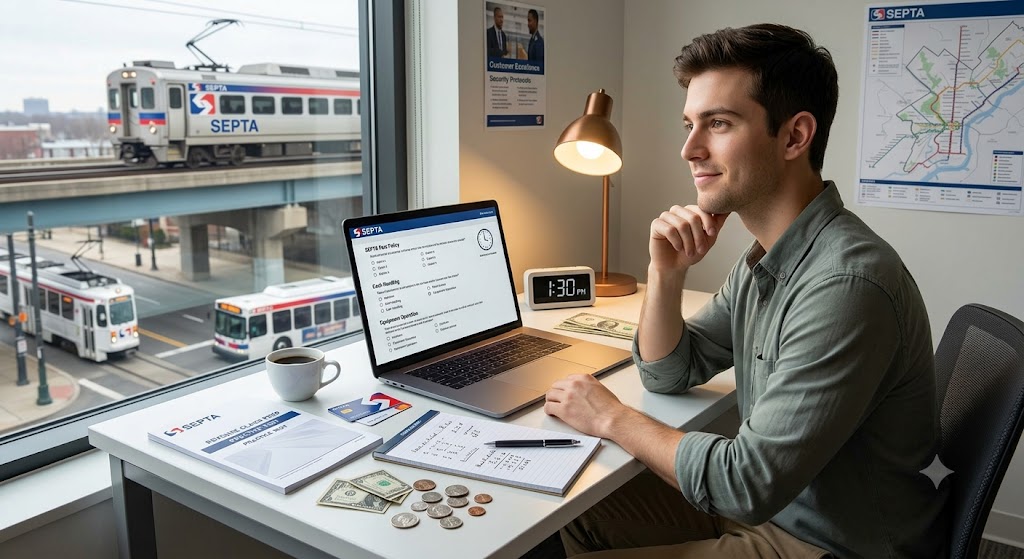
Additional Information
What the Course Entails and Exam Details
The preparatory coursework and subsequent exam delve deep into multiple core competencies crucial for success in a transit revenue environment.
Key topics and skills covered typically include:
SEPTA Fare Structures and Policies: Mastery of various fare options, including cash, smart cards, passes, transfers, and specific agency rules and regulations. Understanding zonal pricing, peak/off-peak fares, and various media types.
Cash and Media Handling: Precise procedures for accurately counting, securing, depositing, and reporting cash, coins, and electronic fare media. Emphasis on minimizing errors, preventing fraud, and maintaining internal controls.
Customer Service Excellence: Developing the skills to interact professionally and effectively with diverse passenger populations, including handling fare disputes, providing information, and ensuring a positive customer experience, as highlighted by SEPTA's focus on customer experience.
Fare Collection Equipment Operation: Practical understanding of the operation, maintenance basics, and troubleshooting for turnstiles, ticket vending machines, keypads, cash counting equipment, and electronic fare readers.
Security Protocols: Implementation of stringent security measures to protect revenue, personnel, and agency property, including understanding camera surveillance, emergency procedures, and reporting protocols.
Accuracy and Reporting: Developing meticulous record-keeping habits for fare collection data, cash reconciliation, and generating accurate financial reports, reflecting the agency's commitment to reliability in financial reporting and compliance.
The specific syllabus can vary depending on the exact role but will always center on these foundational revenue handling pillars, safety (a paramount SEPTA value), and customer experience.
What to Expect in the Final Exam
The final qualifying exam for the SEPTA Revenue Class typically employs a standardized format to thoroughly assess both theoretical knowledge and practical understanding. While exact details are subject to change, candidates can generally expect:
Format: A predominant use of multiple-choice questions designed to test comprehension across all syllabus areas, including situational judgment and numerical applications related to fare calculations and cash handling. Self-Correction: While earlier search did not specify the format for a "Revenue Class" exam, multiple choice is extremely common for standardized assessments. I should frame this as typical and plausible. Some practical assessment components or simulation-based testing could potentially be included depending on the specific job requirements and class level, but the core evaluation will likely be written or digital questions. Constraint checklist & Confidence Score: Reconfirmed. Proceeding as planned.
Time Limits: Candidates will be allotted a specific timeframe, likely ranging from 60 to 90 minutes, to complete the written or digital portion of the exam. This tests efficiency and quick, accurate decision-making under pressure.
Passing Score Requirements: SEPTA generally requires a high level of proficiency for positions handling revenue, meaning a substantial passing score (e.g., 70% or 80%) is typically required to demonstrate readiness for duty.
Specific Rules: Standard testing protocols will apply. This includes the requirement of a valid photo ID, punctuality for the exam session, and strict prohibition on utilizing outside resources, electronic devices, or materials unless explicitly permitted for specific sections (though rarely for the entire exam). Integrity during the testing process is paramount.
How to Study and Exam Centers
Preparing effectively for the SEPTA Revenue Class exam is crucial for securing a successful outcome and launching or advancing your career in transit operations. Actionable study strategies include:
Leverage Official Materials: If SEPTA provides official study guides, course materials, or training documentation, these should be your primary focus. Fully absorb all information, examples, and procedures detailed within them.
Utilize Practice Tests: Practice makes perfect. Seek out or create practice tests with multiple-choice questions covering all identified topics. These can help you familiarize yourself with the question style, manage time constraints, and identify weak areas for targeted review. Online resources like JobTestPrep can offer relevant transit assessment practice, though specific SEPTA content is always best.
Take Training Seriously: If preparatory training is part of the qualification process, engage actively. Take detailed notes, ask clarifying questions, participate in hands-on exercises, and internalize safety and procedural protocols.
Form Study Groups: Collaborating with fellow trainees can be beneficial. Discussing concepts, challenging each other with potential exam questions, and sharing insights can deepen understanding and improve retention.
Practice Numerical Problems: Dedicate time to calculating different fare combinations, reconciling cash counts, and practicing numerical reasoning, as accurate calculation is a core requirement.
Focus on SEPTA Context: Ensure you understand SEPTA-specific fare policies, equipment, terminology, and safety and security procedures. General transit knowledge is helpful, but SEPTA-specific details will be tested.
Exam locations for the internal SEPTA Revenue Class qualification are generally:
SEPTA Facilities: Most likely, the final exam will be administered in-person at designated SEPTA testing or training centers, which are typically located in SEPTA facilities within the Philadelphia metropolitan area, such as SEPTA Headquarters on Market Street or training academies at various operational depots.
Specific Portals/Platforms: Some components, particularly preparatory or screening elements, might utilize online testing portals or platforms, as hinted at in general SEPTA testing information. However, the comprehensive internal qualifying exam is primarily administered in a controlled, in-person setting.
Contact SEPTA Directly: It is essential to refer to official SEPTA communications and instructions for specific details regarding test centers, registration, scheduling, and procedures. Contacting SEPTA HR or training departments directly is the most reliable way to obtain up-to-date and accurate information. Punctuality and proper documentation are critical for admission to any exam session.
Job Opportunities from the Course
Successful completion of the SEPTA Revenue Class qualification opens the door to numerous impactful career paths within the authority’s diverse operational and financial framework. Potential roles directly related to or requiring these skills include:
Fare Collector: The frontline personnel responsible for interacting directly with passengers, collecting fares, operating turnstiles, and providing essential customer assistance at SEPTA stations and vehicles.
Cashier/Cash Handler: Precision-oriented roles focused on accurately counting, sorting, securing, and reconciling large volumes of cash and other fare media collected across the system.
Revenue Analyst: Analytical positions that leverage fare data to track trends, assess efficiency, prevent revenue loss, and support strategic financial planning and decision-making, in line with evaluating financial health.
Revenue Agent: Specialized roles potentially involving auditing fare collection points, investigating discrepancies, enforcing revenue policies, and ensuring compliance with established protocols.
Transit Operations Specialist (Revenue Focus): Operating professionals whose roles have a significant revenue management component, ensuring both service delivery and accurate fare collection. Search results also mention drivers, engineers, and conductors, roles which may involve revenue duties or require general understanding.
Supervisory/Management Roles: Experienced professionals can advance into supervisory or management positions within the revenue department, oversight of fare collections, training, or financial operations.
Customer Service Representative (Revenue focus): Specializing in addressing fare-related inquiries, issues, and disputes, combining customer service skills with revenue expertise. Search results emphasize customer experience, reinforcing the importance of revenue roles in customer interaction.
Potential Growth: Beyond direct revenue roles, this qualification can demonstrate valuable financial, numerical, and customer-handling skills applicable to broader accounting, finance, and customer relations departments within SEPTA, potentially leading to diverse professional opportunities.
Frequently Asked Questions
Reviews
5.0
Based on 0 reviews
Leave a Review
No reviews yet. Be the first to review!