
SEPTA Conductor/Engineer Trainee Practice Test
$69.00
- Buy to unlock unlimited access to all Quiz questions.
- After purchase you can print a PDF of the whole quiz at any point. The PDF will contain the questions and the correct answers.
About this Exam
This comprehensive practice exam is designed for individuals aspiring to launch a rewarding career with the Southeastern Pennsylvania Transportation Authority (SEPTA) as either a Regional Rail Conductor or a Locomotive Engineer. It serves as a vital tool for the highly competitive "Trainee" intake process. This test is specifically tailored for candidates who wish to join SEPTA’s operational core, ensuring they possess the foundational knowledge, critical thinking skills, and safety-conscious mindset required to succeed in the rigorous formal training programs and ultimately responsibility for the safety of thousands of passengers.
Ready to test your knowledge?
Buy Now to Access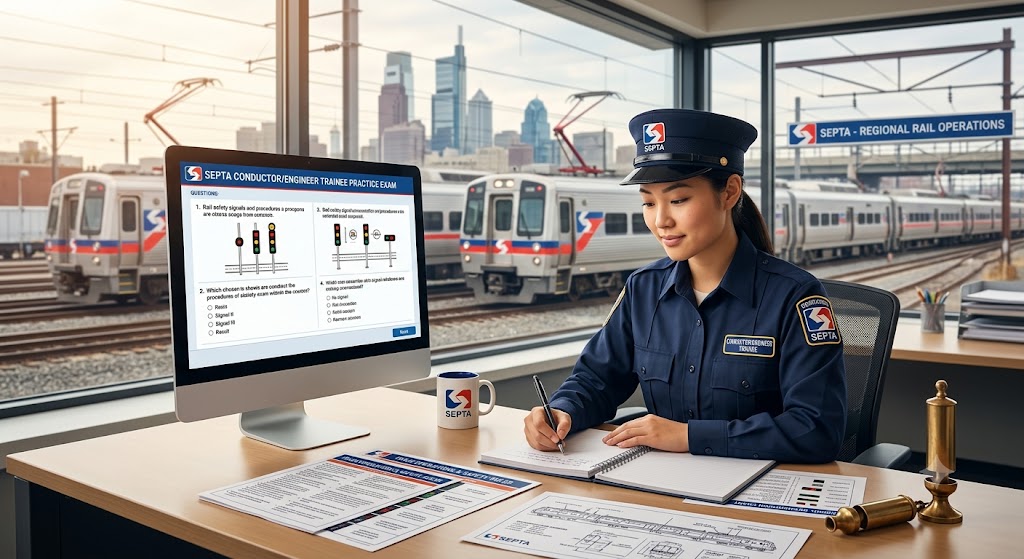
Additional Information
What the Course Entails and Exam Details
The material covered by this practice exam mirrors the core concepts that all trainee candidates must master during their initial phase of selection and instruction. It focuses on the fundamental principles of Regional Rail operations, rather than deep-dive practical application (which is covered after being hired as a trainee). Key syllabus topics include an in-depth understanding of basic train operating rules, standard operating procedures (SOPs), essential railway terminology, comprehensive safety guidelines (with a strong emphasis on signal system recognition), an overview of basic mechanical principles relevant to rail vehicles, and SEPTA's customer service excellence standards. The final trainee entrance exam is a prerequisite checkpoint that candidates must pass to gain entry into the specialized, hands-on conductor or engineer training schools.
What to Expect in the Final Exam
The official exam to enter the SEPTA Trainee program is a highly structured, time-limited, and proctored assessment. Candidates should expect a significant portion, if not the entire test, to consist of multiple-choice questions designed to test both factual recall and the application of rules to simulated real-world scenarios. Due to the critical safety nature of the roles, the minimum passing score is high, often requiring a near-perfect understanding of safety and signal rules. Strict time limits are enforced, challenging your ability to think accurately and efficiently under pressure. Testing rules are rigorous: it is typically a closed-book exam administered in a controlled environment, and no outside assistance or materials are permitted. Successfully passing this written entrance exam is one component, alongside physical assessments and background checks, needed to secure a trainee position.
How to Study and Exam Centers
The most effective way to prepare for this high-stakes exam is through a structured, repetitive study plan.
First, gain a thorough grasp of the materials provided in your SEPTA applicant information pack. If official SEPTA Regional Rail Rulebooks or safety handouts are accessible, they are your primary study resources.
Utilize our [SEPTA Conductor/Engineer Trainee Practice Exam] iteratively. Take the practice test in a single, timed sitting to simulate the pressure of the actual exam day. Use the results to pinpoint specific weak areas—such as confusing different signal aspects or misinterpreting brake system operations—and dedicate focused study time to those topics. Creating flashcards for signal meanings and definitions is highly recommended. For the entrance exam, testing is not done on large public portals like Pearson VUE; instead, candidates are typically directed to take their exam at authorized physical testing centers or dedicated SEPTA training facilities within the Greater Philadelphia region. Scheduling information and specific locations are provided directly to qualified applicants through SEPTA's human resources department.
Job Opportunities from the Course
Successfully passing the Trainee entrance process and completing the subsequent rigorous training and certification programs unlocks a direct path to stable, well-paying, and prestigious career opportunities within SEPTA. Specific job titles that this certification path ultimately leads to include:
SEPTA Regional Rail Conductor
SEPTA Locomotive Engineer
Assistant Conductor (a typical initial operational role)
Potential for future progression into Train Dispatcher or Transit Supervisor roles
Career opportunities in Operations Management and Safety & Training departments.
Frequently Asked Questions
Reviews
5.0
Based on 0 reviews
Leave a Review
No reviews yet. Be the first to review!