
SEP Air Canada Flight Attendant Practice Test
$69.00
- Buy to unlock unlimited access to all Quiz questions.
- After purchase you can print a PDF of the whole quiz at any point. The PDF will contain the questions and the correct answers.
About this Exam
The Safety Emergency Procedures (SEP) qualification is a mandatory, rigorous training program that all Air Canada Flight Attendant trainees must successfully complete before flying. This comprehensive exam validates critical knowledge of safety protocols, emergency responses, first aid, and aircraft systems essential for the cabin crew role. It is designed specifically for newly hired individuals entering Air Canada's intensive initial training. The SEP qualification is the cornerstone of ensuring passenger and crew safety across the airline's global network.
Ready to test your knowledge?
Buy Now to Access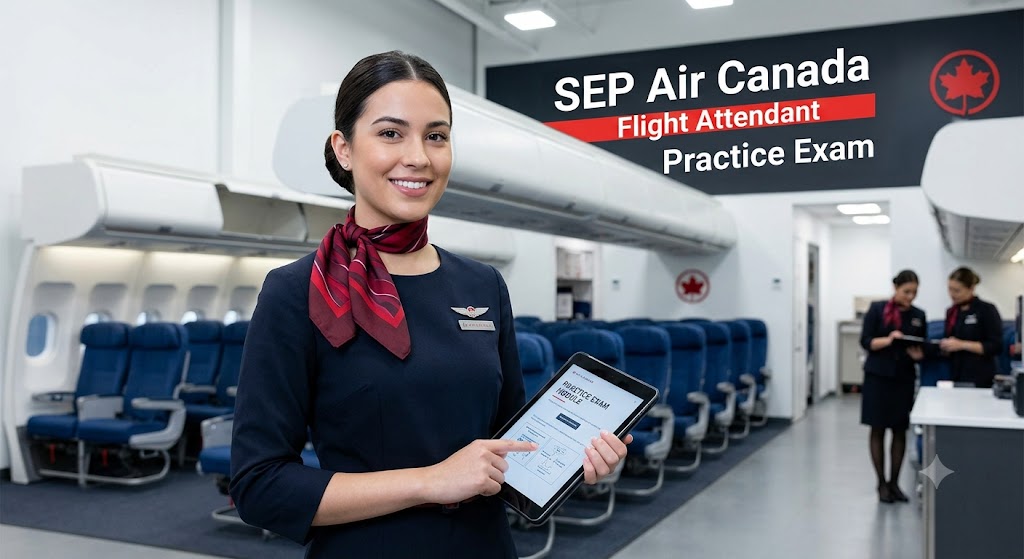
Additional Information
What the Course Entails and Exam Details
The SEP syllabus covers an extensive range of subjects focused on both theoretical understanding and practical application. Core topics include:
Standard Operating Procedures (SOPs): Detailed procedures for all phases of flight, including boarding, turbulence, and pre-landing checks.
Emergency Procedures: Response protocols for dynamic situations such as ditching (water landing), planned and unplanned evacuations, firefighting, decompression, and smoke on board.
Aviation First Aid: Training in medical emergencies, CPR/AED usage, treating injuries, and handling in-flight illness.
Aircraft Equipment Familiarization: In-depth knowledge of safety equipment, including life vests, oxygen systems, emergency exits, communication systems, and firefighting tools specific to Air Canada's fleet.
Crew Resource Management (CRM): Principles of communication, leadership, decision-making, and teamwork within the cabin and flight deck environments.
What to Expect in the Final Exam
The final SEP evaluation for Air Canada Flight Attendant trainees is divided into several rigorous components:
Written Examination: A comprehensive multiple-choice and short-answer exam testing knowledge of regulations, procedures, and safety protocols. A very high passing score (often 90% or above) is required.
Practical Drill Evaluations: Trainees must physically demonstrate competency in critical scenarios, known as "drill-outs." This includes executing evacuation commands, operating aircraft doors in normal and emergency modes, utilizing firefighting equipment, and performing aviation first aid in a simulated cabin environment.
Strict Performance Standards: Candidates are evaluated on accuracy, speed, and confidence during these drills. Failure to meet standards in any practical evaluation may result in elimination from the training program.
How to Study and Exam Centers
Preparation for the SEP qualification requires dedicated effort and active engagement. Trainees are provided with comprehensive manuals which serve as the primary study resource. Actionable study strategies include:
Active Recall and Spaced Repetition: Regularly test knowledge of safety procedures and first aid protocols using flashcards or practice quizzes.
Simulation and Mock Drills: Practice evacuation commands and firefighting techniques physically to build muscle memory.
Group Study: Collaborate with fellow trainees to review material, practice scenarios, and reinforce learning through peer discussion.
Focus on Detail: Pay close attention to subtle differences in procedures for various aircraft types.
Exam Location: The official Air Canada SEP qualification exams are not administered at external testing centers like Pearson VUE. These rigorous evaluations take place directly within Air Canada's dedicated initial training facilities, typically located in major hubs such as Montreal, Toronto, and Vancouver. The practice tests available online or in study groups are unofficial tools designed to help candidates prepare for this high-stakes in-house examination.
Job Opportunities from the Course
Successfully completing the Air Canada initial training program, including earning the SEP qualification, unlocks career opportunities within the airline. Potential job titles include:
Air Canada Flight Attendant
In-Flight Service Cabin Crew
Flight Attendant (Air Canada Rouge)
Lead Flight Attendant / Cabin Service Director (Career Progression)
Flight Attendant Instructor / Trainer (Career Progression)
Frequently Asked Questions
Reviews
5.0
Based on 0 reviews
Leave a Review
No reviews yet. Be the first to review!