
SDI Introduction to Physical Science (SC1-101) Practice Test
$69.00
- Buy to unlock unlimited access to all Quiz questions.
- After purchase you can print a PDF of the whole quiz at any point. The PDF will contain the questions and the correct answers.
About this Exam
The SDI Introduction to Physical Science (SC1-101) is a foundational course designed to equip students with a fundamental understanding of the natural world. This comprehensive introduction bridges the gap between basic scientific principles and more advanced studies in physics, chemistry, and earth science. It is an ideal starting point for students curious about the mechanisms driving everyday physical phenomena.
The course is strategically designed for individuals seeking to enhance their scientific literacy, as well as those looking to fulfill educational prerequisites for technical, medical, or engineering programs. It is particularly beneficial for students who want a structured approach to grasping complex scientific concepts. Whether you are re-entering education or exploring a potential new career path, SC1-101 provides the clarity and knowledge base required for future success in physical science fields.
Ready to test your knowledge?
Buy Now to Access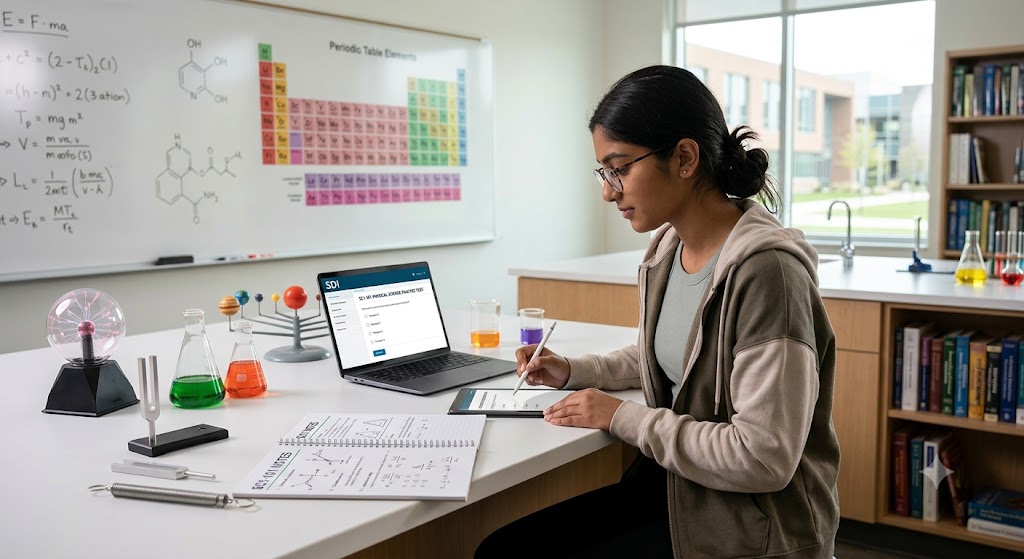
Additional Information
What the Course Entails and Exam Details
The SDI SC1-101 course covers a broad spectrum of physical science topics, ensuring a well-rounded foundation. The syllabus is meticulously structured to build upon key concepts, making complex theories accessible. Students can expect to engage with core subjects such as the properties and states of matter, principles of energy, and the laws of motion and forces. The course also explores interactions of matter, simple machines, waves (including sound and light), electricity, magnetism, atomic structure, the periodic table, basic chemical reactions, and foundational concepts of earth science and meteorology.
The concluding SC1-101 Final Exam is a comprehensive evaluation of the student's mastery of these topics. It tests not only factual recall but also the ability to apply scientific principles to solve problems. Preparation for this exam is critical, as it serves as an official validation of the knowledge gained throughout the course.
What to Expect in the Final Exam
The final exam for SDI Introduction to Physical Science (SC1-101) is primarily structured in an objective, online format, typically consisting of multiple-choice questions. This style focuses on clarity and broad content coverage within a defined time frame. While the exact number of questions may vary slightly, students should be prepared for a focused session lasting between 60 and 90 minutes.
The passing score for this examination is set to demonstrate a clear grasp of the fundamental physical science concepts covered in the course. It is generally a percentile around 70% to 75%. The exam is proctored, which means certain rules must be followed, such as the prohibition of external aids or communication during the testing session. Specific details regarding the minimum passing grade and strict testing protocols are clearly outlined upon registration for the course and prior to starting the final exam, ensuring students are fully informed of all requirements.
How to Study and Exam Centers
Effective preparation for the SC1-101 exam requires a structured approach. Students are encouraged to leverage all provided course materials, including textbooks, study guides, video lectures, and interactive modules. Consistent review and active note-taking are vital. A highly effective strategy is to dedicate focused study sessions to each major topic area, using practice tests (like this one) to assess comprehension and identify weak points. Joining study groups and asking instructors questions can also provide valuable insights and clarify complex concepts. Developing flashcards for key terms and formulas is another proven technique.
The SC1-101 exam is typically administered through the official online learning platform or testing portal associated with the institution offering the course. This offers a convenient and accessible way for students to take the test from anywhere with a reliable internet connection. Detailed instructions on how to access and schedule the final exam will be provided directly within the student’s course dashboard or specific exam guidelines. While specific physical exam centers like Pearson VUE might be used for other certifications, this course's final assessment is predominantly managed internally through the online portal, streamlining the process for students globally.
Job Opportunities from the Course
A strong foundation in physical science is an asset across a diverse range of careers, particularly those in technical fields and quality control. Successful completion of the SDI SC1-101 course and passing its practice exam demonstrates a level of scientific competency highly valued in many industries.
Job opportunities accessible with this foundational knowledge include:
Laboratory Assistant: Assisting with experiments, managing equipment, and maintaining data in research or diagnostic labs.
Quality Control Technician: Ensuring products meet established quality standards in manufacturing, engineering, or chemical production settings.
Field Technician (Geological/Environmental): Collecting data, samples, and monitoring environmental conditions.
Engineering Aide/Technician: Supporting engineering projects by performing basic calculations, tests, and data analysis.
Manufacturing Production Technician: Operating and monitoring machines involved in technical manufacturing processes.
Science Educator/Tutor (Entry Level): Assisting with physical science instruction in educational settings.
Meteorological Aide: Supporting meteorologists by gathering and analyzing weather data.
Research Assistant (Physics/Chemistry): Contributing to scientific studies and experimental data collection in academic or private labs.
Frequently Asked Questions
Reviews
5.0
Based on 0 reviews
Leave a Review
No reviews yet. Be the first to review!