
SDI Dry Suit Diver Practice Test
$69.00
- Buy to unlock unlimited access to all Quiz questions.
- After purchase you can print a PDF of the whole quiz at any point. The PDF will contain the questions and the correct answers.
About this Exam
The SDI Dry Suit Diver certification is a specialty course designed for certified open water divers who want to significantly extend their diving season and explore colder waters. It is the perfect next step for divers looking to stay warm and comfortable when diving in temperatures where a standard wetsuit is insufficient.
By learning to use a dry suit, you unlock opportunities for ice diving, wreck diving in chilly locations, and observing unique cold-water marine life. This course, and the associated practice test, are engineered to ensure you have the knowledge and confidence to handle the specific operational and safety procedures required for dry suit diving. Whether you are a recreational diver aiming to enhance your skills or a professional expanding your resume, mastering dry suit techniques is essential.
Ready to test your knowledge?
Buy Now to Access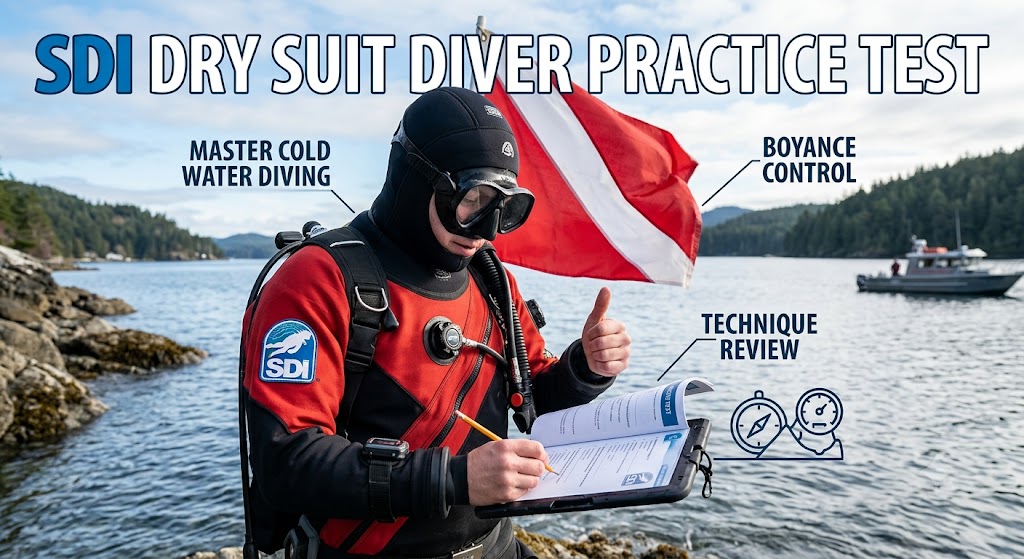
Additional Information
What the Course Entails and Exam Details
This specialty course provides thorough training in all aspects of dry suit diving. The physical skills focus on perfect buoyancy control, managing air within the suit, and handling potential emergencies.
The core topics covered in the curriculum, and consequently on the final exam, include:
Dry Suit Construction: Understanding different types of materials, seals (latex vs. silicone), zippers (metal vs. plastic), and their benefits.
Insulation and Undergarments: Choosing the correct insulation based on water temperature and planned activity levels.
Valves and Buoyancy: Comprehensive knowledge of inflation and deflation valves and mastering buoyancy when using a dry suit as your primary buoyancy device.
Safety and Emergency Procedures: How to recover from an uncontrolled ascent, managing a "suit-stuck-on" situation, and air management techniques.
Maintenance and Repair: Field repairs, cleaning, and long-term storage to keep your investment functioning correctly.
The comprehensive knowledge base ensures that by the time you face the exam, you have a solid grasp of how to dive safely and effectively in a dry suit.
What to Expect in the Final Exam
The final exam for the SDI Dry Suit Diver course is designed to verify your theoretical understanding of the course materials. It is generally a multiple-choice examination consisting of numerous questions testing your knowledge across all course sections.
A passing score of 80% is typically required to progress to the practical application phase. The time limit is sufficient to answer all questions deliberately, and the format focuses on applying practical dry suit knowledge.
Unlike a written test for a master's degree, this exam is practical in nature, assessing if you understand how to dive a dry suit safely rather than theoretical minutiae. You must complete the academic portion (which includes this exam) successfully before you can begin the open water dives required for certification.
How to Study and Exam Centers
The best way to prepare is to utilize the official SDI course materials. Study the dry suit diving manual thoroughly and take any knowledge review quizzes included at the end of each chapter. Practicing with an SDI Dry Suit Diver Practice Test is one of the most effective methods to identify areas where your knowledge needs reinforcement.
These practice tests familiarize you with the wording of real questions and the structure of the exam, helping to build confidence and reduce anxiety.
Once you are ready to take the actual exam, you must contact an authorized SDI Dive Center. They will facilitate the process for you. Depending on the dive center and your location, you may have the option to take the exam in a physical classroom setting or through the convenient SDI eLearning portal. The portal allows you to complete the academics online before arriving for your practical training, making the entire certification process efficient and focused on diving.
Job Opportunities from the Course
A Dry Suit Diver specialty is highly valuable and often a prerequisite for advanced diving positions and scientific careers, particularly in cooler regions. While not a standalone job certification, it unlocks several specialized career paths:
Commercial Diver: Many forms of inshore and offshore commercial diving require dry suit capability for operations in varied climates.
Scientific and Research Diver: Scientists studying polar regions, deep lakes, or cold currents must be proficient dry suit divers.
Dive Instructor and Divemaster: You will be qualified to lead tours and teach students in colder climates, significantly expanding your employability.
Wreck Diver: Exploring deep, cold-water wrecks requires the thermal protection that only a dry suit provides.
Public Safety Diver: Police and rescue teams often operate in non-ideal conditions and cold water, making dry suit certification critical.
Aqualung or Dry Suit Maintenance Technician: Understanding the physics and construction of dry suits is foundational for a career in equipment repair and sales.
Frequently Asked Questions
Reviews
5.0
Based on 0 reviews
Leave a Review
No reviews yet. Be the first to review!