
Science Olympiad Heredity Practice Test
$69.00
- Buy to unlock unlimited access to all Quiz questions.
- After purchase you can print a PDF of the whole quiz at any point. The PDF will contain the questions and the correct answers.
About this Exam
The Science Olympiad is a premier, nationwide science competition for students in middle school and high school, involving events that cover almost all fields of science. This specific practice test focuses on the "Heredity" event, which is designed for students interested in genetics, inheritance, and molecular biology.
This practice exam serves as a crucial resource for teams preparing to compete. It offers a standardized set of challenges that test a student's ability to solve genetics problems, understand complex biological concepts, and analyze experimental data. By engaging with these questions, participants can identify their strengths and weaknesses, ensuring they are thoroughly prepared for the intensity of the official Science Olympiad tournament.
Ready to test your knowledge?
Buy Now to Access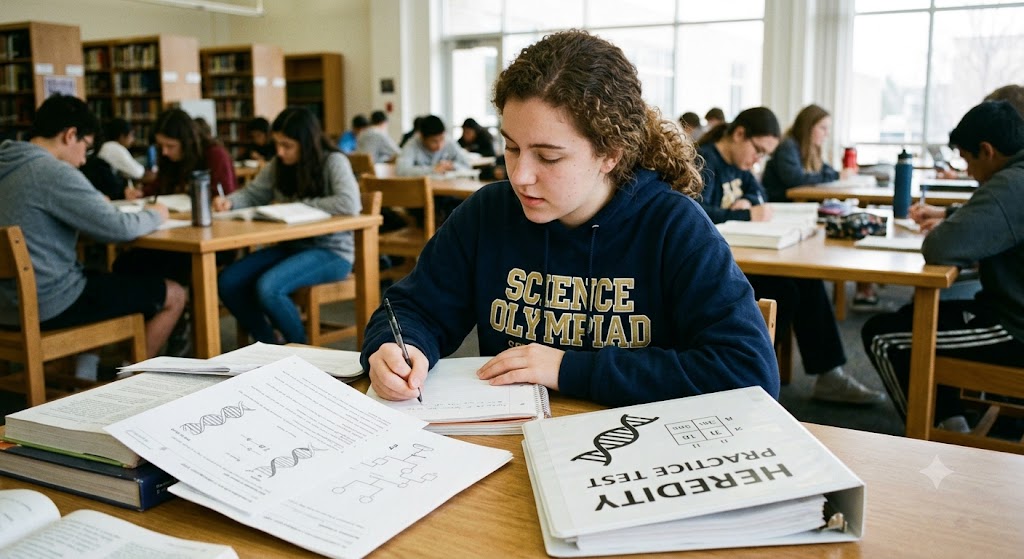
Additional Information
What the Course Entails and Exam Details
While "Heredity" is not a formal course, students who participate must master a specific curriculum. The official Science Olympiad rules for the year outline the exact topics covered, which generally include fundamental principles of inheritance and molecular genetics.
Key topics included in this curriculum often are:
Mendelian genetics (monohybrid, dihybrid crosses)
Extensions of Mendelian genetics (incomplete dominance, codominance, multiple alleles)
Sex-linked inheritance and pedigrees
DNA structure and replication
Protein synthesis (transcription and translation)
Mutations and genetic disorders
Modern genetic techniques (e.g., electrophoresis, CRISPR, genetic engineering)
The exam itself requires critical thinking and problem-solving skills rather than just rote memorization. Students must demonstrate proficiency in analyzing family trees, predicting offspring probabilities, and interpreting complex genetic sequences and experiments.
What to Expect in the Final Exam
A final Science Olympiad tournament exam for the Heredity event usually lasts between 45 and 50 minutes. The format of the test varies by level (regional, state, or national) but frequently incorporates different question types to assess a deeper understanding of the subject.
The exam often consists of:
Multiple-Choice Questions: Assessing core knowledge and rapid recall of definitions and basic concepts.
Problem-Solving Scenarios: Requiring students to perform calculations and genetic crosses (Punches squares, chi-square analysis) under time pressure.
Data Analysis and Interpretation: Evaluating experimental results, interpreting graphs, and drawing conclusions from scientific figures.
Laboratory Components: Some levels might include a small hands-on portion or an station-based lab where teams rotate and perform tasks like DNA model building or analyzing restriction digests.
The scoring is based on correctness, and there are typically no negative points for wrong answers. The total score determines the event ranking, with the top teams advancing to the next level of competition.
How to Study and Exam Centers
Preparation is paramount for success in Science Olympiad. Effective study strategies include a combination of content review and practical application. Students should utilize the official rules, textbooks like Campbell Biology, and reliable online educational resources.
The most effective method, however, is practicing with old tests. Solving previous years' Science Olympiad questions helps familiarize students with the difficulty level and question styles they can expect. It is also highly recommended that students build a comprehensive "binder" of notes and materials, as many events allow a reference sheet or binder during the test.
Exam centers for Science Olympiad competitions are not centralized like Pearson VUE. Instead, tournaments are hosted by authorized organizations, often including prominent universities, colleges, and some high schools across the country. Each registered team must travel to their designated tournament location. This makes understanding the location of regional, state, and national tournaments essential for registered teams.
Job Opportunities from the Course
Participating in Science Olympiad and excelling in the Heredity event provides a solid foundation in the life sciences. It inspires students to pursue higher education and future careers in several high-demand fields. While the practice test itself does not lead directly to a job, it is a significant step toward future roles such as:
Genetic Counselor
Research Scientist in Genetics or Biotech
Biologist
Molecular Biology Technologist
Medical Doctor (MD) or Pediatric Geneticist
Veterinarian specializing in genetics
Genetic Engineer
Pharmacist
Scientific Writer/Editor
Frequently Asked Questions
Reviews
5.0
Based on 0 reviews
Leave a Review
No reviews yet. Be the first to review!