
Science Olympiad Green Generation Practice Test
$69.00
- Buy to unlock unlimited access to all Quiz questions.
- After purchase you can print a PDF of the whole quiz at any point. The PDF will contain the questions and the correct answers.
About this Exam
Science Olympiad Green Generation is a challenging event designed to test students' knowledge and problem-solving abilities in environmental science, sustainability, and ecological principles. Participating students explore the complex interactions between human activities and the natural world, focusing on solutions to environmental problems. This event is a great fit for students with a passion for ecology, environmental policy, and green technology, pushing them to think critically about the future of our planet. It prepares competitors for regional, state, and national Science Olympiad tournaments.
Ready to test your knowledge?
Buy Now to Access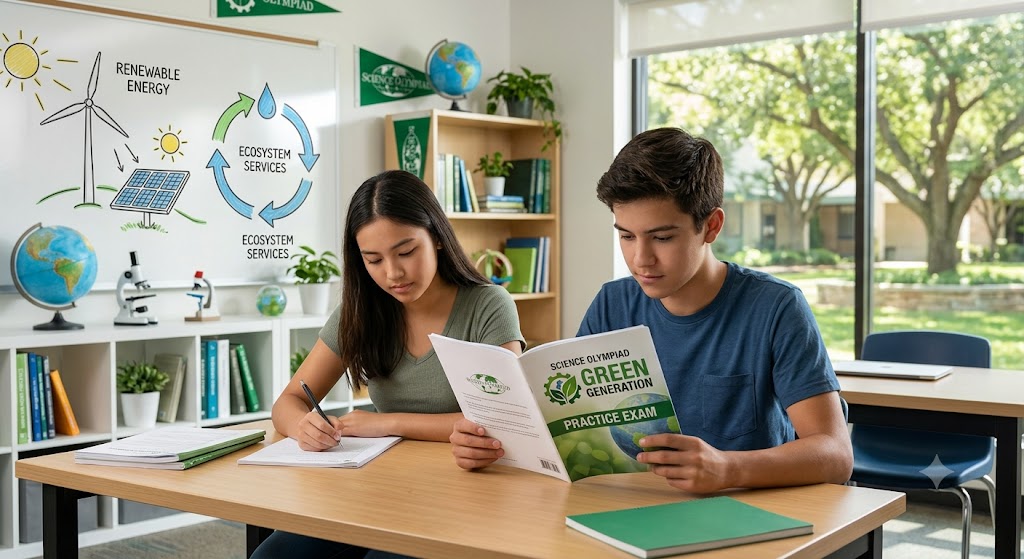
Additional Information
What the Course Entails and Exam Details
The Green Generation event focuses on diverse aspects of environmental science and sustainability. The course typically covers major topics such as renewable energy sources, waste management strategies, and sustainable agriculture practices. Students delve into critical issues like climate change, air and water pollution, habitat destruction, and biodiversity loss. They also learn about environmental regulations, policy frameworks, and the development of green technologies. The event demands a strong understanding of concepts ranging from ecology and geography to chemistry and biology in the context of human impacts. It emphasizes critical thinking, data analysis, and the application of scientific principles to real-world environmental challenges. The exact topics can vary slightly each year based on Science Olympiad rules.
What to Expect in the Final Exam
The final Green Generation competition usually takes the form of a detailed written exam, often completed by a team of two students. The test includes multiple-choice questions, short-answer responses, and potentially problem-solving scenarios. Students may need to analyze charts, interpret ecological data, and apply their knowledge of environmental science concepts. There is typically no single passing score for Science Olympiad; teams earn points based on their correct answers, with rankings determined by cumulative scores. Time limits are standard, often ranging from 45 to 60 minutes. Competitors are usually permitted one double-sided page of notes and certain basic calculators, although precise rules can vary each year, and it's essential to consult the official Science Olympiad Green Generation rulebook for the specific requirements. The exam assesses both factual recall and the ability to think critically about complex environmental issues.
How to Study and Exam Centers
Preparing for Green Generation requires both strong knowledge base and strategic practice. Utilize textbooks on environmental science and biology to build your understanding of core concepts. Deep dive into topics like green technology, sustainability reports, and current environmental news to stay updated. Accessing official Science Olympiad Green Generation rulebooks and past exams is crucial for understanding the format and types of questions. Taking practice tests specifically designed for Science Olympiad events, like this Green Generation practice test, can significantly improve timing and accuracy. Focus on critical thinking and data interpretation skills. Working with a study partner can enhance collaborative problem-solving. The actual competition occurs at authorized regional, state, and national Science Olympiad tournaments hosted by universities and other academic institutions throughout the season. These are the physical "exam centers" where you will represent your school.
Job Opportunities from the Course
While Science Olympiad is a competition, the knowledge and skills developed through Green Generation are highly relevant to many career paths. Excelling in this event demonstrates a strong passion for sustainability and a deep understanding of environmental issues, opening doors to various opportunities in the growing green economy. Potential careers include:
Environmental Scientist Sustainability Coordinator Renewable Energy Engineer Environmental Policy Analyst Ecologist Conservation Scientist Urban Planner specializing in sustainability Environmental Educator Green Building Consultant Resource Management Specialist
Frequently Asked Questions
Reviews
5.0
Based on 0 reviews
Leave a Review
No reviews yet. Be the first to review!