
SCA Comprehensive Religion Practice Test
$69.00
- Buy to unlock unlimited access to all Quiz questions.
- After purchase you can print a PDF of the whole quiz at any point. The PDF will contain the questions and the correct answers.
About this Exam
The SCA Standardized Clinical Knowledge Test (SCKT) is a comprehensive examination designed for professionals in the field of spiritual care, specifically health care chaplains. Developed by the Spiritual Care Association (SCA), this test is a fundamental step for those seeking to become Credentialed Chaplains (CC) or Board Certified Chaplains (BCC). It represents a significant shift towards evidence-based, quality indicators and standardized competency assessments in chaplaincy. This certification ensures that practitioners possess the essential clinical knowledge and skills to provide effective, respectful, and high-quality spiritual care to individuals of all beliefs and cultural backgrounds within various institutional and community settings, including hospitals, hospice, and palliative care.
Ready to test your knowledge?
Buy Now to Access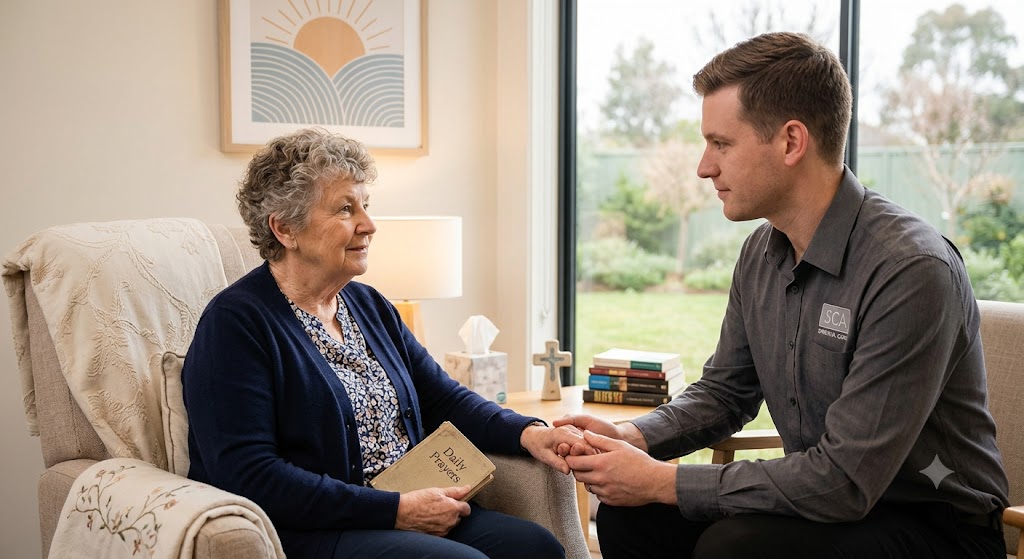
Additional Information
What the Course Entails and Exam Details
This examination is not based on a single "course" but is a comprehensive assessment of the core knowledge required for a professional chaplain. The test content is derived from specific learning objectives and covers key areas including, but not limited to:
Assessment Models: Mastery of spiritual assessment and diagnosis tools to identify a patient’s spiritual distress, resources, and risk factors.
Cultural Competence: A deep understanding of diverse world religious, spiritual, and existential belief systems and their common practices, ensuring culturally appropriate care.
Health Care Ethics: Knowledge of medical ethics and professional conduct in a multi-disciplinary environment.
Legal and Regulatory Standards: Familiarity with HIPAA regulations, advance care directives, and patient privacy.
Clinical Interventions: The ability to plan and implement evidence-based, compassionate interventions to support patients, families, and staff, especially during crisis and end-of-life situations.
Grief and Bereavement: Detailed knowledge of grief, mourning, and the dying process.
What to Expect in the Final Exam
The SCA Standardized Clinical Knowledge Test is a timed, computer-based exam. Candidates for the Credentialed Chaplain (CC) and Board Certified Chaplain (BCC) certifications take slightly different versions of the test.
Exam Format: Both tests consist entirely of multiple-choice questions designed to measure clinical judgment and application of knowledge.
Number of Questions: The CC exam typically has 85 questions, while the APBCC (Advanced Practice Board Certified Chaplain) version has 100 questions.
Time Limits: Candidates generally have 100 minutes to complete the CC exam and 120 minutes for the APBCC exam.
Passing Score: For the Credentialed Chaplain (CC) test, a passing score is 65%. For the Board Certified Chaplain (BCC) and Advanced Practice Board Certified Chaplain (APBCC) tests, a higher standard is required, with a passing score of 75%.
How to Study and Exam Centers
Preparation for the SCKT requires a strong foundation in both spiritual care and clinical practice. Here are actionable study strategies:
Official SCA Preparation Course: The Spiritual Care Association offers a course, "Preparation for Standardized Clinical Knowledge Test," which is highly recommended for an in-depth review.
Core Documents: Download and thoroughly study the SCA’s key documents, including the "Quality Indicators," "Scope of Practice," and "Core Knowledge." The test is directly aligned with these guidelines.
World Religions Review: Refresh your knowledge of the common beliefs, practices, and needs of major religious and spiritual traditions, especially regarding health care and end-of-life directives.
Simulated Patient Prep: If your path also requires the SCA’s "Simulated Patient Exam," practice conducting spiritual assessments remotely.
Exam Centers: The SCA Standardized Clinical Knowledge Test is administered online through a secure proctoring portal. Candidates do not need to visit a physical testing center like Pearson VUE or a specific school. After your documentation is accepted, you will receive login credentials, and you have six months from that date to take the timed, online exam from a location of your choice that meets the technical and security requirements.
Job Opportunities from the Course
Earning SCA certification as a Credentialed or Board Certified Chaplain significantly enhances your professional standing and opens doors to diverse career paths in the rapidly expanding field of spiritual care. Potential job opportunities and roles include:
Credentialed Chaplain (CC): Providing essential spiritual support in various health care and community institutions.
Board Certified Chaplain (BCC): Holding a widely recognized standard of excellence, qualifying for leadership and advanced roles.
Hospital Chaplain: Working within an interdisciplinary team to care for patients, families, and staff in acute care settings.
Hospice and Palliative Care Chaplain: Providing specialized, compassionate care at the end of life and throughout serious illness.
Director of Spiritual Care: Leading spiritual care departments within large health care systems.
Spiritual Care Educator: Training future chaplains in academic or clinical settings.
Staff Support Chaplain: Focus on the wellbeing and spiritual needs of healthcare workers.
Frequently Asked Questions
Reviews
5.0
Based on 0 reviews
Leave a Review
No reviews yet. Be the first to review!