
SCA Barista Intermediate Practice Test
$69.00
- Buy to unlock unlimited access to all Quiz questions.
- After purchase you can print a PDF of the whole quiz at any point. The PDF will contain the questions and the correct answers.
About this Exam
The SCA Barista Intermediate certification is a significant milestone for serious coffee professionals. This qualification is part of the Specialty Coffee Association (SCA) Coffee Skills Program and is designed for baristas who already possess the fundamental skills and want to deepen their understanding of coffee preparation. It focuses on the core skills required to set a grinder, brew espresso, and foam milk to SCA quality standards, moving beyond basic operation to a more technical and consistent application. This certification validates your ability to troubleshoot problems, refine techniques, and understand the intricate variables that affect coffee quality in a commercial environment.
Ready to test your knowledge?
Buy Now to Access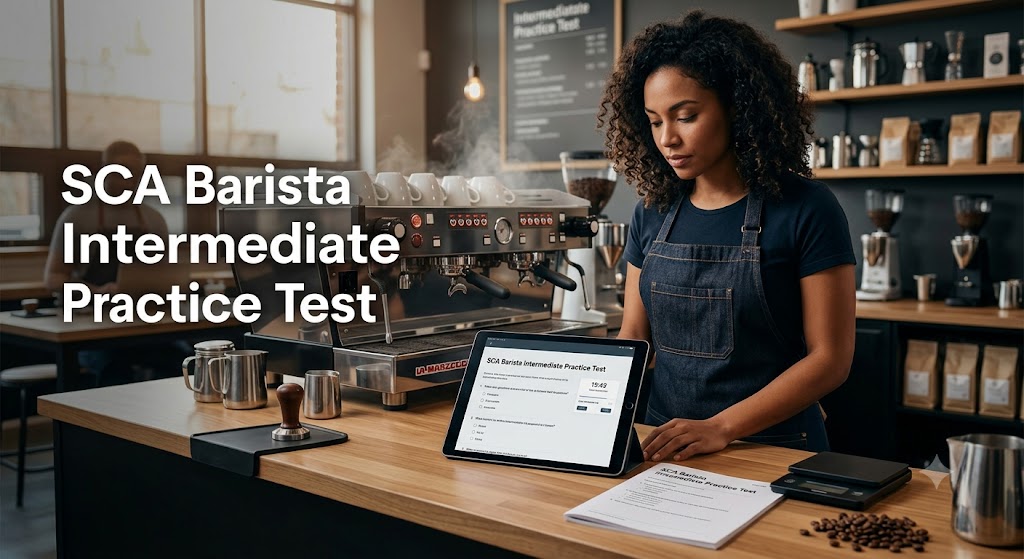
Additional Information
What the Course Entails and Exam Details
The SCA Barista Intermediate curriculum is structured around elevating your technical proficiency and theoretical knowledge. You will delve into sophisticated topics that go beyond initial training, including:
Deeper Grinder Adjustment: Mastering precise grinder calibration based on flavor analysis.
Advanced Milk Techniques: Perfecting microfoam consistency for latte art and texture.
Espresso Extraction: A scientific approach to variables like yield, time, and temperature.
Workflow Optimization: Developing efficient station layouts and speed.
Basic Maintenance: Daily care and troubleshooting of espresso machinery.
Customer Service: Balancing technical speed with positive customer interaction.
This comprehensive approach ensures that certified intermediates can function effectively as key members of a specialty coffee team.
What to Expect in the Final Exam
The final assessment for the SCA Barista Intermediate module consists of two distinct components that test both your understanding and application of the curriculum.
Written Exam: This component typically involves a multiple-choice digital or paper exam. You can expect questions focusing on coffee science, extraction theory, advanced milk chemistry, equipment maintenance, and workflow principles. A passing score of 70% or higher is generally required to pass the written section.
Practical Exam: This is the core of the assessment, where you must demonstrate your technical skills under observation. You will be tested on your ability to set up a grinder and espresso machine to produce specific flavor profiles within given time limits. You will also need to demonstrate consistent milk texturing and latte art capabilities (usually achieving two identical free-pour patterns). The practical exam is timed, emphasizing efficiency as well as accuracy.
You must pass both sections of the exam to earn your SCA Barista Intermediate certification.
How to Study and Exam Centers
Preparation for the SCA Barista Intermediate exam requires a blend of focused study and practical repetition. Here are some actionable strategies:
Utilize the SCA Curriculum: Pay close attention to the official SCA learning objectives provided during your intermediate-level course. This is your primary study guide.
Practical Practice (Highly Critical): Dedicate significant time to hands-on practice. Mimic exam conditions by timing your grinder calibration and milk steaming routines. Focus on consistency.
Study Theory: Use textbooks on coffee science and extraction theory. Understand why variables change flavor, not just how to change them.
Form a Study Group: Practicing with fellow baristas allows for peer feedback and troubleshooting.
The exam must be taken through an Authorized SCA Trainer (AST) at an SCA Certified Premier Training Campus or an authorized independent school. These centers are equipped with the standard tools and environments necessary for both the written and practical examinations. You can find accredited ASTs and training campuses worldwide through the SCA website's course calendar or member directory.
Job Opportunities from the Course
Earning your SCA Barista Intermediate certification significantly enhances your professional profile and opens up various advanced career paths within the specialty coffee industry.
Senior Barista: A key role requiring consistent, high-quality production and troubleshooting skills.
Lead Barista / Head Barista: Responsibility for supervising staff, training, and maintaining quality control.
Cafe Manager: Overseeing daily operations, including technical standards and workflow.
Roastery Quality Control Assistant: Applying your understanding of extraction to sample roasting and production analysis.
Coffee Trainer / Educator (Assistant): Assisting ASTs or leading internal training programs for new staff.
Frequently Asked Questions
Reviews
5.0
Based on 0 reviews
Leave a Review
No reviews yet. Be the first to review!