
SARTECH III Certification Practice Exam
$69.00
- Buy to unlock unlimited access to all Quiz questions.
- After purchase you can print a PDF of the whole quiz at any point. The PDF will contain the questions and the correct answers.
About this Exam
The SARTECH III Certification is the recognized entry-level standard for all personnel entering the dynamic field of Search and Rescue (SAR). Designed as the foundational step in a multi-level certification process by the National Association for Search and Rescue (NASAR), this certification is recommended for anyone who intends to participate in SAR missions, from volunteer searchers to career first responders. It validates the essential knowledge required to function safely and effectively within a standard SAR team structure during land-based search operations. Earning your SARTECH III confirms that you understand the fundamental responsibilities, skills, and equipment necessary for a successful rescue or search mission, serving as a critical common starting point for your SAR career.
Ready to test your knowledge?
Buy Now to Access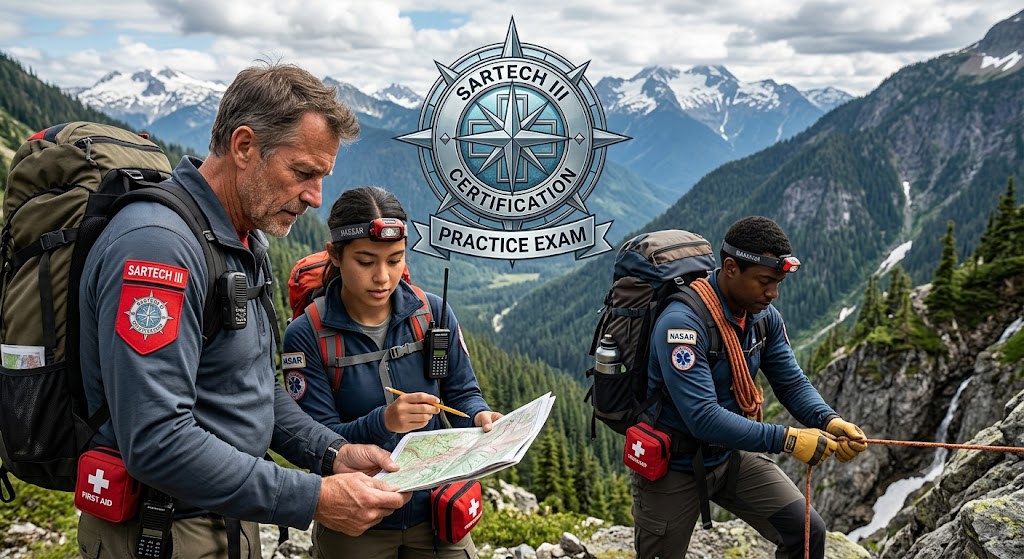
Additional Information
What the Course Entails and Exam Details
To prepare for the SARTECH III examination, candidates typically complete the Introduction to Search and Rescue (ISAR) course. This 16-hour program, a mixture of classroom instruction and field exercises, provides the core curriculum. The examination itself evaluates your comprehensive understanding of this curriculum. It covers a diverse range of topics: proper SAR management and organizational structure, essential equipment and the 24-hour pack, analyzing lost subject behavior to predict movement, roles of the search manager and personnel, and basic team-building concepts. A significant portion is dedicated to land navigation, including basic map and compass reading, the integration of both, and basic rescue techniques like standard rescue knots, rope utilization for low-angle rescue, and fundamental patient packaging for wilderness extraction. The certification is the official record of your proficiency in this base of knowledge.
What to Expect in the Final Exam
While the ISAR course includes field exercises to practice these skills, the final SARTECH III certification exam is a comprehensive, written assessment. This knowledge-based test, often delivered online through an authorized NASAR portal or in-person at a testing event, focuses on validated knowledge from the ISAR curriculum. Candidates should prepare for multiple-choice questions that require application, not just recall. For example, you might be asked to solve navigation problems, identify correct knot applications, or analyze a search scenario to determine appropriate management actions. The passing score is typically 80% or higher. There is a generous time limit of approximately 2-3 hours to complete the randomized examination, allowing you to carefully read and consider each question. NASAR typically offers a second attempt if you do not pass on your first try.
How to Study and Exam Centers
Effective preparation is key to success on the SARTECH III exam. Begin by thoroughly studying the official NASAR textbook, Introduction to Search and Rescue, which serves as the definitive guide. Attend an official ISAR course delivered by a NASAR-authorized instructor; the instructor will explain nuance, provide real-world examples, and lead the required field exercises, ensuring your skills are validated before the written exam. Utilize multiple practice exams to familiarize yourself with the question formats and to identify areas where your knowledge may be lacking. Create a study group with fellow course participants to discuss complex topics like lost subject behavior or navigation. Exam Centers and locations are determined by authorized instructors and organizations. To find a class or an exam, visit the official NASAR website to search the events calendar, contact your local state search and rescue coordinator, or check with authorized training schools and emergency response agencies. Your instructor is always your primary resource for exact testing locations.
Job Opportunities from the Course
Obtaining the SARTECH III Certification is a professional milestone that significantly enhances your career path and volunteer capabilities in the emergency services sector. For those already in a related field, it is a crucial credential that demonstrates specialized skill and a commitment to inter-agency coordination. For aspiring professionals, it unlocks entry-level positions and provides a competitive advantage. Here is a clear list of specific job opportunities and career paths this certification unlocks:
Volunteer Ground Searcher (for local, state, or federal SAR teams)
Land-Based Search and Rescue Technician (at an operational level)
Search and Rescue Team Member
Career or Volunteer Firefighter (with enhanced SAR capability)
Emergency Medical Technician (EMT) (with SAR focus)
Law Enforcement Officer (patrol or specialist, for missing person cases)
Emergency Management Coordinator (with SAR knowledge)
Park Ranger or Warden (with field responder expertise)
Outdoor Educator / Wilderness Guide (with validated safety skills)
Military Personnel (in specialized or support SAR roles)
Frequently Asked Questions
Reviews
5.0
Based on 0 reviews
Leave a Review
No reviews yet. Be the first to review!