
Safety and Ground Operations & Servicing Practice Test
$69.00
- Buy to unlock unlimited access to all Quiz questions.
- After purchase you can print a PDF of the whole quiz at any point. The PDF will contain the questions and the correct answers.
About this Exam
The Safety and Ground Operations & Servicing Practice Test is a crucial assessment for individuals seeking certification in the vital field of aviation ground handling. This exam is meticulously designed for ramp agents, fueling personnel, baggage handlers, and all ground support staff who are responsible for the safe and efficient turnaround of aircraft. It validates a candidate's understanding of essential safety protocols, regulatory compliance, and operational best practices, ensuring they are prepared to work effectively in a high-stakes, fast-paced environment. By passing this exam, professionals demonstrate their commitment to maintaining the highest safety standards on the airfield.
Ready to test your knowledge?
Buy Now to Access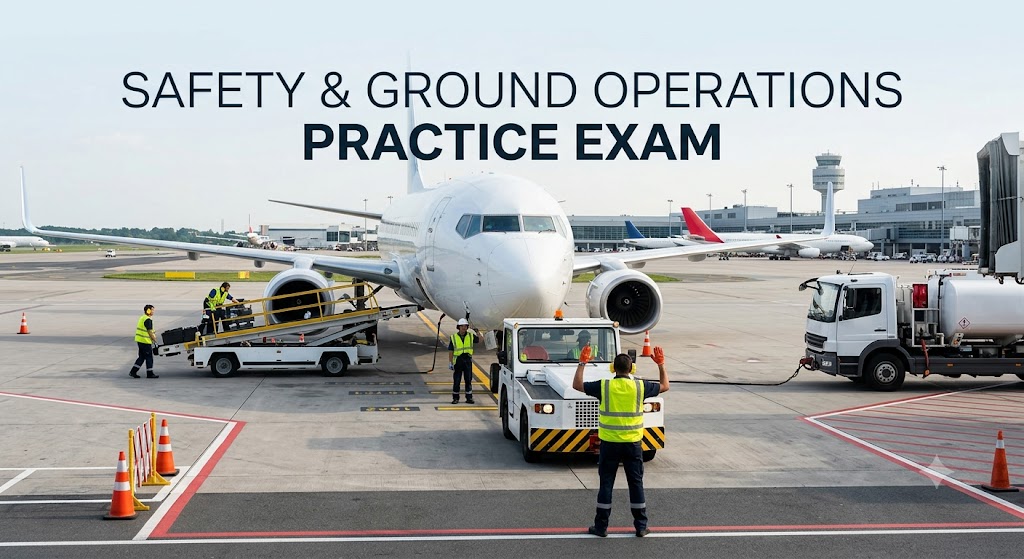
Additional Information
What the Course Entails and Exam Details
This comprehensive practice test covers a wide array of core topics essential for ground operations safety. The curriculum typically includes: Aircraft Marshalling and Hand Signals Ramp Safety and Hazard Recognition Fire Safety and Emergency Procedures Aircraft Fueling and Defueling Practices Baggage and Cargo Handling Procedures Ground Support Equipment (GSE) Operation and Maintenance Pushback and Towing Procedures De-icing and Anti-icing Operations Regulatory Compliance (e.g., FAA, EASA, IATA)
What to Expect in the Final Exam
The final certification exam typically mirrors the structure of this practice test. It is often a comprehensive, multiple-choice assessment designed to test both theoretical knowledge and practical understanding. Candidates can generally expect: Format: A digital or computer-based examination. Number of Questions: Ranging from 50 to 100 questions. Time Limit: Usually between 90 minutes and 2 hours. Passing Score: Often required to achieve 80% or higher to demonstrate proficiency. Specific Rules: Strict adherence to testing center policies, often prohibiting the use of outside materials.
How to Study and Exam Centers
Preparation is key to success on the Safety and Ground Operations & Servicing exam. We recommend following a structured study plan: Utilize this comprehensive practice test repeatedly to identify knowledge gaps. Review official training manuals and regulatory documents (such as IATA Airport Handling Manual). Engage in practical training and hands-on experience whenever possible. Focus on understanding why specific safety protocols exist, not just memorizing the rules. Study with peers and discuss real-world scenarios. Exam centers are typically authorized training organizations (ATOs), specific airline training academies, or approved assessment centers globally. Some components or prerequisites may be offered online. Candidates should verify the official testing locations and procedures through their specific certification body or employer.
Job Opportunities from the Course
A successful certification in Safety and Ground Operations & Servicing opens doors to numerous career paths within the aviation industry. Professionals can pursue roles such as: Ramp Agent / Ground Handler Aircraft Fueler Baggage Handler Gate Agent Ground Support Equipment (GSE) Mechanic Lead Ground Handler / Supervisor Ramp Coordinator Airport Operations Specialist
Frequently Asked Questions
Reviews
5.0
Based on 0 reviews
Leave a Review
No reviews yet. Be the first to review!