
SACE Stage 2 Accounting Practice Exam
$69.00
- Buy to unlock unlimited access to all Quiz questions.
- After purchase you can print a PDF of the whole quiz at any point. The PDF will contain the questions and the correct answers.
About this Exam
Welcome to your essential guide for the SACE Stage 2 Accounting Practice Exam. SACE Stage 2 Accounting is a vital subject within the South Australian Certificate of Education (SACE) curriculum, specifically designed for Year 12 students in South Australia. This course is ideal for students with an interest in business, finance, economics, or those planning to pursue a career as an accountant or commerce professional. It provides the foundational skills necessary to understand and manage the financial aspects of an organization, focusing on practical accounting processes and financial decision-making for small businesses.
Ready to test your knowledge?
Buy Now to Access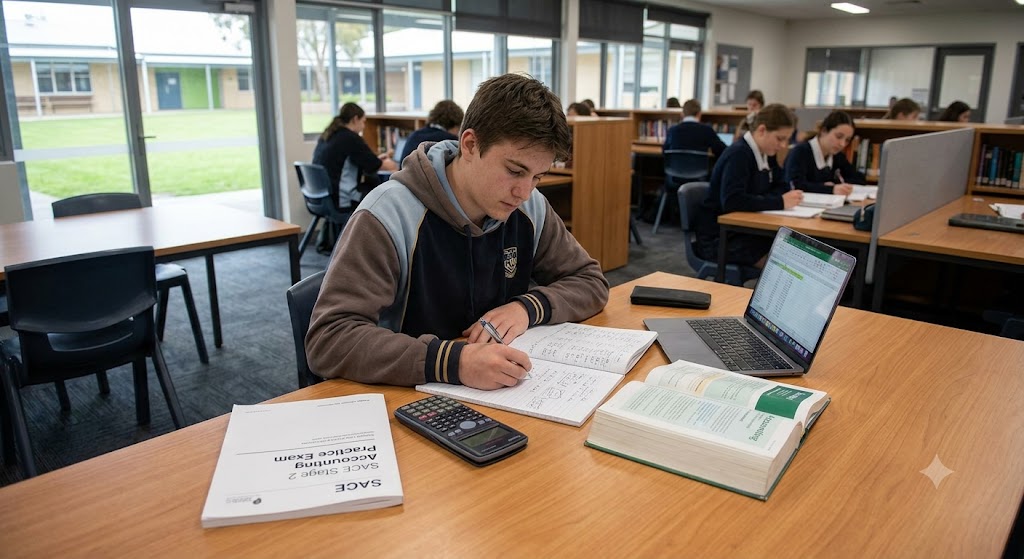
Additional Information
What the Course Entails and Exam Details
This course provides students with a strong understanding of essential accounting principles and practices. Key topics and syllabus areas typically covered in SACE Stage 2 Accounting include:
The Role of Accounting: Understanding the function of accounting in business and society.
Financial Reports for Non-Reporting Entities: Preparing and analyzing essential reports, such as Income Statements (Trading and Profit & Loss Acounts) and Balance Sheets.
The Accounting Framework: Applying concepts like double-entry accounting, accrual accounting, and accounting standards.
Analysis and Interpretation: Evaluating business performance using financial indicators and making informed recommendations.
Management Accounting: Introducing concepts such as budgeting and cost-volume-profit analysis to support business planning.
What to Expect in the Final Exam
The final SACE Stage 2 Accounting assessment typically consists of a written examination. While specific formats can vary slightly by year, students should generally expect the following:
Format: A combination of short-answer questions and practical, problem-solving scenarios where you will need to prepare financial documents or ledger entries.
Time Limit: The standard written examination is generally 2 hours in duration.
Assessment Weighting: The final external exam typically accounts for 30% of the overall SACE Stage 2 grade for Accounting, with the remaining 70?ing school-assessed coursework (e.g., tests, projects).
Focus: The exam emphasizes the application of accounting knowledge and principles to realistic business scenarios, rather than just rote recall.
How to Study and Exam Centers
Effective preparation is key to success in the SACE Stage 2 Accounting exam. Consider these actionable strategies:
Practice, Practice, Practice: Utilize this SACE Stage 2 Accounting Practice Exam and seek out past SACE exam papers available through the SACE Board website. These are the single best way to familiarize yourself with the question style and time constraints.
Review the Subject Outline: Ensure you have a comprehensive understanding of all topics listed in the current year's SACE subject outline for Accounting.
Master the Basics: Have a rock-solid grasp of core concepts like the accounting equation, debits and credits, and the structure of financial reports.
Seek Feedback: Don't hesitate to ask your teacher for feedback on practice questions or areas where you are struggling.
Where to Take the Exam (Exam Centers):
For students currently enrolled in a South Australian high school, the final SACE Stage 2 exams, including Accounting, are typically administered directly by your school. Your school serves as the authorized SACE examination center.
Registration and coordination are managed through your school's SACE coordinator. They will provide all necessary information regarding dates, times, and specific rules for the exam.
Job Opportunities from the Course
A strong performance in SACE Stage 2 Accounting opens doors to both further study and immediate career opportunities. This qualification serves as a valuable foundation for the following pathways:
University Pathway: The most common route is entering a university Bachelor of Commerce, Bachelor of Accounting, or Bachelor of Finance degree.
Chartered Accountant (CA) or CPA: This is a fundamental stepping stone toward achieving professional accreditation.
Bookkeeper: Entry-level roles managing financial records for small to medium-sized businesses.
Accounts Clerk: Assisting in the maintenance of financial records within larger organizations.
Business Owner/Entrepreneur: Provides essential financial literacy for anyone running their own business.
Payroll Officer: Specializing in managing employee pay and entitlements.
Frequently Asked Questions
Reviews
5.0
Based on 0 reviews
Leave a Review
No reviews yet. Be the first to review!