
SACAA AME Practice Test & Exam Prep | South Africa
$69.00
- Buy to unlock unlimited access to all Quiz questions.
- After purchase you can print a PDF of the whole quiz at any point. The PDF will contain the questions and the correct answers.
About this Exam
The South African Civil Aviation Authority (SACAA) Aircraft Maintenance Engineer (AME) certification is the cornerstone credential for professionals aiming to work in aircraft maintenance, repair, and overhaul within South Africa. This rigorous qualification validates an individual's technical knowledge and competence to perform and certify work on aircraft, ensuring they meet strict airworthiness standards. It is designed for aspiring aircraft technicians, engineering graduates, and existing mechanics who are seeking legal authority to release aircraft into service. Successfully passing the AME examinations demonstrates the mandatory understanding required for this critical role in aviation safety. Preparation through comprehensive study and practice exams is vital for navigating the demanding syllabus and achieving licensure.
Ready to test your knowledge?
Buy Now to Access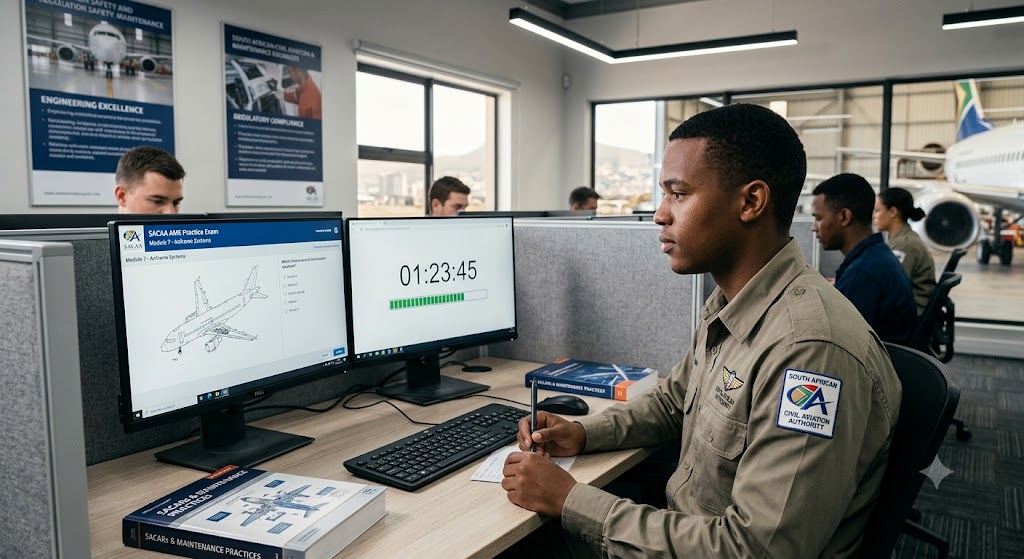
Additional Information
What the Course Entails and Exam Details
The path to an AME license involves training at an approved Aviation Training Organization (ATO) and passing multiple theoretical examinations across various engineering disciplines.
The core syllabus and topics typically covered include:
Civil Aviation Regulations (SACARs): A critical component, focused on understanding the laws and rules governing aviation maintenance in South Africa.
Airframes and Systems: Covering structures, flight controls, hydraulics, pneumatic systems, landing gear, environmental systems, and more.
Powerplants (Engines): Detailed study of piston engines, turbine engines, and associated systems.
Avionics (Electrical, Instrument, Radio, Navigation): Understanding complex electronic systems, instrumentation, and communication equipment in modern aircraft.
Maintenance Practices: Fundamental engineering principles, human factors, safety, inspection techniques, and documentation.
Materials and Hardware: The properties, selection, and application of materials and parts in aviation.
A standard "course" focuses on mastering these complex technical areas in preparation for specific SACAA exam modules tailored to the desired category of license (e.g., Airframe, Engine, Avionics). Practice exams are essential to gauge readiness and familiarity with the content.
What to Expect in the Final Exam
The final SACAA AME examinations are typically structured as separate modules corresponding to the technical disciplines (Airframes, Engines, etc.) required for your specific license category. The following is a general expectation:
Format: The theoretical examinations are primarily multiple-choice questions (MCQs), assessing a deep understanding of the regulations and engineering principles. There may also be some short-answer components. (Note: Separate practical skill tests or "Trade Tests" are required to obtain the license, in addition to passing these exams.)
Time Limits: Each exam module has a strict time limit, which can range from approximately 90 minutes to over two hours per subject. Efficient time management is critical.
Passing Score: To pass a theoretical examination module, candidates must typically achieve a high score, often 75% or higher, reflecting the standard of knowledge required for flight safety.
Specific Rules: Candidates must show valid identification, are not allowed unauthorized electronic devices or reference materials unless specified for an open-book exam, and must adhere to strict proctoring procedures. The exams are generally computer-based at authorized centers.
How to Study and Exam Centers
Effective preparation for the SACAA AME exam demands dedicated study, practical experience, and strategic revision. Candidates should follow these actionable strategies:
Use Official Sources: Base your study on the official SACAA syllabi, Advisory Circulars (AICs), and South African Civil Aviation Regulations (SACARs). These are the authoritative sources.
Approved Training: Enroll in an ATO offering AME training, as these programs are designed to cover the necessary material in a structured way.
Comprehensive Textbooks: Utilize reputable aviation engineering and maintenance textbooks corresponding to the exam modules.
Practice with Practice Tests: This is crucial. Engage extensively with practice exam databases that simulate the style, content, and difficulty of the actual questions. Track your performance and identify weak areas for focused revision. Simulating exam conditions will build confidence and improve timing.
Focus on Regulations: Do not underestimate the importance of the SACARs and Part 147 and 66 regulations. Thorough knowledge is mandatory.
Regarding exam centers, the theoretical examinations are administered through authorized testing venues throughout South Africa. These can include:
SACAA Authorized Testing Centers: Facilities dedicated to conducting the official electronic examinations.
Approved Aviation Training Organizations (ATOs): Many ATOs are authorized to host the computer-based exams for their students.
Candidates must book their exams in advance, typically through the SACAA's designated online portal or by following the schedule published by the authority.
Job Opportunities from the Course
A SACAA AME license opens doors to excellent career paths in South Africa and internationally. Holders of this prestigious qualification are highly sought after by aviation employers.
A comprehensive list of job opportunities includes:
Licensed Aircraft Maintenance Engineer (AME) - For airlines, charter companies, or cargo operators.
Aviation Technician / Mechanic - Specializing in airframes, engines, or avionics.
Maintenance Planner / Scheduler - Coordinating and organizing aircraft maintenance programs.
Quality Assurance Inspector (Aviation) - Ensuring compliance with safety regulations and quality standards within a Maintenance Repair Organization (MRO).
Field Service Engineer (Aviation) - Providing technical support and repairs at various locations.
Aviation Technical Instructor - Teaching maintenance topics at Aviation Training Organizations.
Aviation Surveyor / Inspector - For regulatory bodies, aircraft leasing companies, or insurance firms.
Technical Sales Representative - For aircraft parts, engines, and services.
Management Roles in Aviation - Progressing into maintenance management or operational leadership positions.
Holders of the license have the specialized skills and authority that are fundamental to the safety and reliability of the aviation industry, offering a career with significant opportunities for growth.
Frequently Asked Questions
Reviews
5.0
Based on 0 reviews
Leave a Review
No reviews yet. Be the first to review!