
SACA Electrical System Installation 1 (C‑206) Practice Exam
$69.00
- Buy to unlock unlimited access to all Quiz questions.
- After purchase you can print a PDF of the whole quiz at any point. The PDF will contain the questions and the correct answers.
About this Exam
The Smart Automation Certification Alliance (SACA) Electrical System Installation 1 (C-206) is a vital certification for individuals aiming to launch or advance a career in modern industrial environments. This specialized credential focuses on the fundamental skills required to safely and effectively install, maintain, and troubleshoot industrial electrical systems, with a particular emphasis on the integration of Industry 4.0 technologies. This course is designed for a broad audience, including aspiring industrial electricians, maintenance technicians, electro-mechanical specialists, and students enrolled in technical and engineering programs. By earning this certification, you demonstrate a standardized level of competency highly sought after by employers who utilize advanced automation and connected systems. The SACA C-206 certification is your gateway to becoming a key player in the operation and reliability of 21st-century production facilities.
Ready to test your knowledge?
Buy Now to Access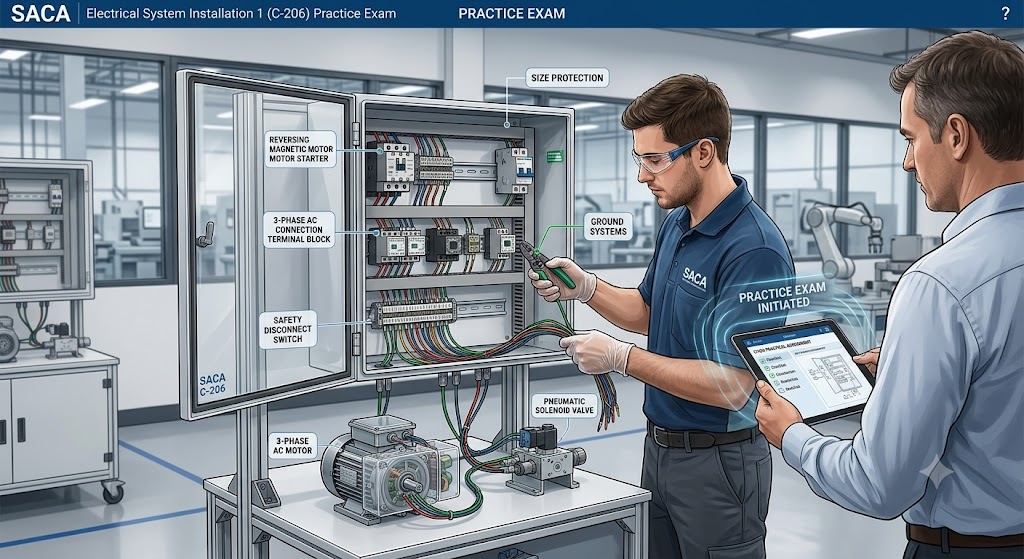
Additional Information
What the Course Entails and Exam Details
The SACA C-206 course provides a robust foundation, covering the installation and testing of critical electrical motor control circuits and related industrial systems. Key areas of focus include:
Industrial Control Panels: Comprehensive training on installing and wiring components within standard control cabinets, adhering to established safety rules and industry best practices.
Motor Control Circuits: Practical instruction on connecting, adjusting, and operating circuits using essential components like 3-phase AC motors, reversing magnetic motor starters with overloads, control relays, timer relays, pushbutton switches, selector switches, limit switches, and pressure switches.
Related Systems: Hands-on experience with associated technologies, such as electro-pneumatic solenoid valves, indicators, and safety disconnect switches.
Installation & Commissioning Skills: Mastery of technical tasks, including sizing circuit protection, proper use of Personal Protective Equipment (PPE), reading complex electrical wiring installation diagrams, and installing components on DIN rails.
System Integrity: In-depth training on installing and testing effective grounding systems, selecting and preparing appropriate wiring, and ensuring proper routing within raceways and conduits.
The exam process is rigorous and dual-faceted. It consists of a standard written knowledge assessment and a practical hands-on evaluation to ensure both theoretical understanding and field readiness.
What to Expect in the Final Exam
The SACA C-206 Final Exam validates your complete competency through two distinct parts. Successfully passing both allows you to earn the full SACA Gold Certification for Electrical System Installation 1.
1. The Written (Online) Knowledge Assessment: This is the first step, designed to test your understanding of electrical principles, diagram interpretation, safety protocols, component function, and sizing calculations. This exam is delivered securely through the SACA online testing portal and is a prerequisite for receiving the "Silver Credential." It features multiple-choice and true/false questions.
2. The Hands-on Practical Assessment: Following the written exam, you must demonstrate your technical skills by performing a series of standardized tasks on SACA-approved equipment. A certified proctor will evaluate your ability to correctly install, test, and commission electrical and motor control circuits, including wiring, grounding, and troubleshooting. The proctor reports the results, and upon successful completion, you are awarded the "Gold Credential."
Specific details regarding the passing score, time limits for each section, and an official list of approved equipment are provided through the SACA membership portal.
How to Study and Exam Centers
Preparation is key to succeeding on both the written and practical portions of the SACA C-206 exam. Here are highly effective strategies to consider:
Utilize SACA Study Resources: Leverage the official SACA curriculum, interactive online courses, and detailed study guides. Pay close attention to practice questions that cover topics like wire color-coding (e.g., Red for AC control, Green for Ground), ladder logic interpretation, component identification, and NEMA enclosure ratings.
Focus on the SACA Standards: SACA certifications are built on standardized competencies, not specific equipment brands. Ensure your knowledge aligns with the performance standards outlined in the course materials, not just a particular manufacturer's manual.
Practice Hands-On Tasks: The practical exam is typically considered the more challenging component. Gain as much hands-on experience as possible in a controlled lab environment. Practice installing, wiring, and testing all the circuits covered in the course syllabus, including motor starters, control relays, and various sensors.
Identify an Authorized Testing Center: While the written exam can be taken through an online portal via a proctor, the practical assessment must be performed at a physical, SACA-authorized member organization. These are typically technical colleges, community colleges, or designated high schools equipped with the necessary approved training systems. SACA does not typically use third-party test vendors like Pearson VUE; instead, testing is facilitated by member institutions to ensure consistency with the hands-on requirements.
Job Opportunities from the Course
Earning the SACA Electrical System Installation 1 (C-206) certification unlocks a clear pathway to several in-demand, high-growth career opportunities. Employers across advanced manufacturing, logistics, and automated industries specifically seek candidates with validated SACA credentials. Potential job titles and career paths include:
Industrial Electrician
Industrial Maintenance Technician
Electro-Mechanical Technician
Electrical Systems Specialist
Control Systems Specialist
Automation Technician
Field Service Technician
Mechatronics Technician
Frequently Asked Questions
Reviews
5.0
Based on 0 reviews
Leave a Review
No reviews yet. Be the first to review!