
SACA Basic Robot Systems Operations (C‑103) Practice Test
$69.00
- Buy to unlock unlimited access to all Quiz questions.
- After purchase you can print a PDF of the whole quiz at any point. The PDF will contain the questions and the correct answers.
About this Exam
The Smart Automation Certification Alliance (SACA) C‑103 Basic Robot Systems Operations certification is an essential credential for individuals launching a career in modern manufacturing and automation. This certification validates foundational skills and knowledge required to safely operate and interact with industrial robot systems. It is specifically designed for entry-level robotic operators, manufacturing technicians, maintenance personnel, and students seeking to enter the high-demand field of Advanced Manufacturing and Industry 4.0. The C‑103 credential serves as a powerful signal to employers that you possess the core competencies needed to work effectively with automated robotic workcells.
Ready to test your knowledge?
Buy Now to Access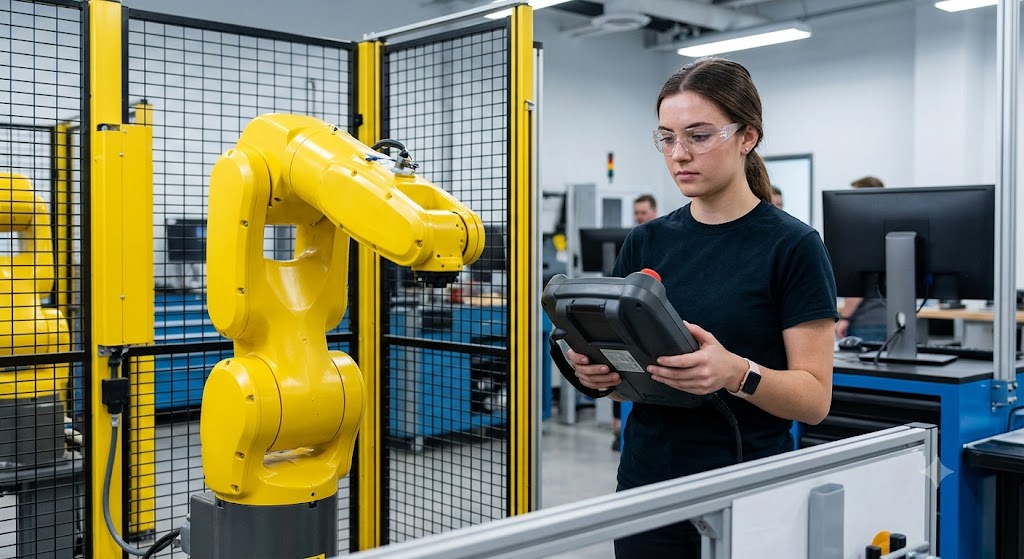
Additional Information
What the Course Entails and Exam Details
The SACA C‑103 course covers the theoretical principles and practical skills necessary for the basic operation of industrial robots. The curriculum focuses on preparing candidates to work safely and efficiently in an automated environment.
Key areas of study include:
Robot Safety Procedures: Mastery of lockout/tagout (LOTO), emergency stop protocols, safety interlocks, and working within established safe zones.
Robot System Components: Identification and understanding of the function of major components, including the manipulator, controller, teach pendant, end-effectors, and power supply.
Basic Robot Terminology: Comprehensive knowledge of axes, joints, frames, payloads, and work envelopes.
Robot Jogging and Motion Control: Practical proficiency in manually moving the robot using various coordinate systems (e.g., Joint, World, Tool, and User frames).
Common Industrial Applications: Familiarity with how robots are applied in tasks such as pick and place, material handling, welding, and machine tending.
Basic Program Execution: The ability to load, start, monitor, and safely stop pre-written robot programs.
What to Expect in the Final Exam
The SACA C‑103 certification exam is a comprehensive assessment designed to evaluate both your knowledge and practical skills. To achieve certification, candidates must typically pass two distinct components.
First, you will complete a written, knowledge-based assessment. This section consists of multiple-choice questions that test your understanding of technical concepts, safety regulations, and operational procedures.
Second, you must successfully complete a performance-based assessment. This crucial component requires you to demonstrate your practical abilities by performing specific hands-on tasks on a live industrial robot system. These tasks may include safely powering up the system, jogging the robot to specified locations, and executing standard program operations under the observation of a certified evaluator.
The minimum passing score is generally 70% for each component, although specific institutions may have slightly different requirements. Time limits are strictly enforced, with candidates usually allocated specific durations for the written and practical portions (e.g., 60–90 minutes each).
How to Study and Exam Centers
Effective preparation is the key to success on the SACA C‑103 exam. A combination of theoretical study and practical practice is highly recommended.
Review Official SACA Materials: Utilize the official study guides, curriculum outlines, and recommended textbooks provided by SACA.
Engage in Hands-On Practice: This is the most critical step. Spend as much time as possible working with an actual industrial robot system under the guidance of a qualified instructor. If a physical robot is unavailable, professional simulation software can provide valuable, realistic experience.
Take Practice Exams: Leverage resources like our practice test to familiarize yourself with the types of questions and the overall format of the written assessment.
Master Safety Protocols: Memorize and practice all safety procedures until they become second nature.
SACA certification exams must be taken at a SACA Authorized Testing Center. These centers are typically established within educational institutions, such as community colleges, technical schools, high schools with advanced manufacturing programs, or at recognized industry training facilities. While some preliminary knowledge-based modules may be available through online portals, the practical performance assessment must be completed in person on designated equipment at an authorized location.
Job Opportunities from the Course
Earning the SACA C‑103 certification unlocks a range of entry-level career paths in sectors that utilize automated technology.
This credential is highly valued for the following roles:
Robotic System Operator
Automation Technician
Manufacturing Technician
Entry-Level Robotics Technician
Industrial Maintenance Technician (with focus on robotics)
Production Associate (in automated environments)
Machine Tending Operator
Frequently Asked Questions
Reviews
5.0
Based on 0 reviews
Leave a Review
No reviews yet. Be the first to review!