
SA1 Operating Systems Lecture Practice Test
$69.00
- Buy to unlock unlimited access to all Quiz questions.
- After purchase you can print a PDF of the whole quiz at any point. The PDF will contain the questions and the correct answers.
About this Exam
The SA1 Operating Systems Lecture Practice Test is an essential assessment tool designed for students and IT professionals completing their introductory studies in operating systems. This practice exam is tailored to help learners gauge their understanding of fundamental OS concepts, system architecture, and resource management before taking their final course evaluation. It is ideal for individuals looking to build a strong foundation for a career in system administration, IT support, or software development.
Ready to test your knowledge?
Buy Now to Access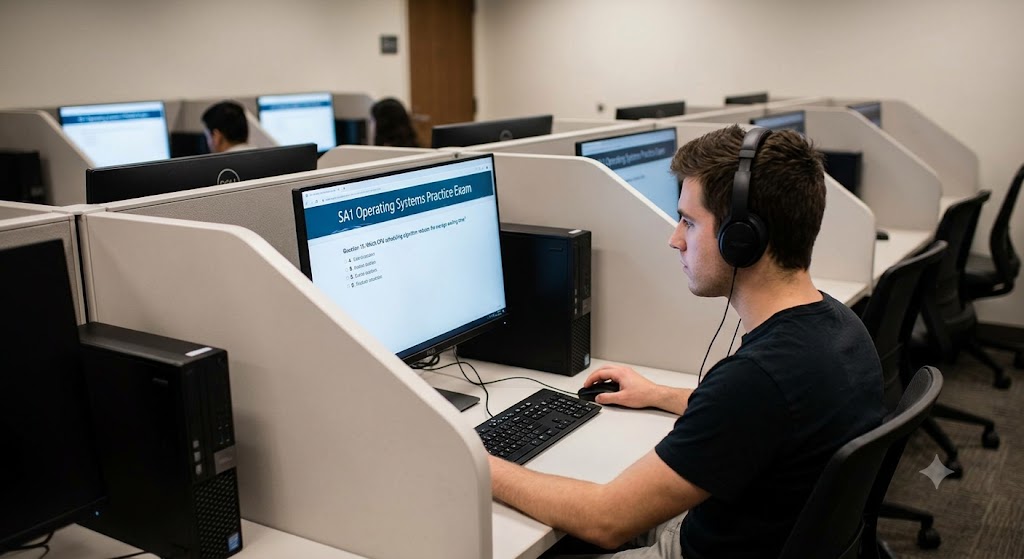
Additional Information
What the Course Entails and Exam Details
The SA1 Operating Systems course covers the core components that enable computer hardware and software to work together efficiently. Students will delve into key topics such as process management (including scheduling and synchronization), memory management strategies (paging, segmentation, and virtual memory), file system structures, and input/output systems. This practice test mirrors the scope of the course, challenging candidates on these critical infrastructure principles.
What to Expect in the Final Exam
The final examination for the SA1 Operating Systems Lecture typically consists of a timed, multiple-choice format administered through a secure online learning portal or an authorized testing center. Students can expect a rigorous evaluation consisting of approximately 50 to 70 questions that test both theoretical knowledge and problem-solving scenarios related to OS operations. The time limit is generally between 60 and 90 minutes, with a passing score usually set around 70%.
How to Study and Exam Centers
To prepare effectively for the SA1 Operating Systems Practice Exam, students should prioritize reviewing their comprehensive lecture notes, textbook chapters, and any laboratory exercises completed during the course. Focus heavily on visualizing concepts like CPU scheduling algorithms and memory allocation. Utilizing this practice test is a crucial step in identifying knowledge gaps and becoming familiar with the exam’s pacing and question structure. The actual final exam is usually hosted by the degree-granting institution or the training organization providing the lecture series.
Job Opportunities from the Course
A strong command of operating system fundamentals, validated by successfully passing this course and practice exam, opens doors to various entry-level and intermediate IT roles. The knowledge gained is essential for understanding how applications interact with hardware, making it a critical skill set for numerous career paths. Here are specific job opportunities unlocked by mastering these concepts:
IT Support Specialist: Troubleshooting OS-related issues for end-users.
Junior Systems Administrator: Managing user accounts, system security, and basic server operations.
Help Desk Analyst: Providing technical assistance and diagnosing software and hardware problems.
Network Technician: Configuring network interfaces and understanding OS-level networking components.
Junior DevOps Engineer: Applying OS knowledge to automate deployment and manage infrastructure.
Quality Assurance (QA) Tester: Understanding OS behavior to effectively test software compatibility.
Frequently Asked Questions
Reviews
5.0
Based on 0 reviews
Leave a Review
No reviews yet. Be the first to review!