
Rule 310 Dust-Generating Operations Practice Test
$69.00
- Buy to unlock unlimited access to all Quiz questions.
- After purchase you can print a PDF of the whole quiz at any point. The PDF will contain the questions and the correct answers.
About this Exam
This Rule 310 Dust-Generating Operations Practice Exam is designed for construction site supervisors, environmental compliance officers, and any personnel responsible for managing dust emissions on commercial or residential development projects, particularly in jurisdictions like Maricopa County, Arizona.
It helps professionals prepare for official certification tests required to demonstrate knowledge of fugitive dust control regulations. This comprehensive practice tool ensures you understand your legal obligations and best practices for minimizing particulate matter during soil disturbance activities.
Ready to test your knowledge?
Buy Now to Access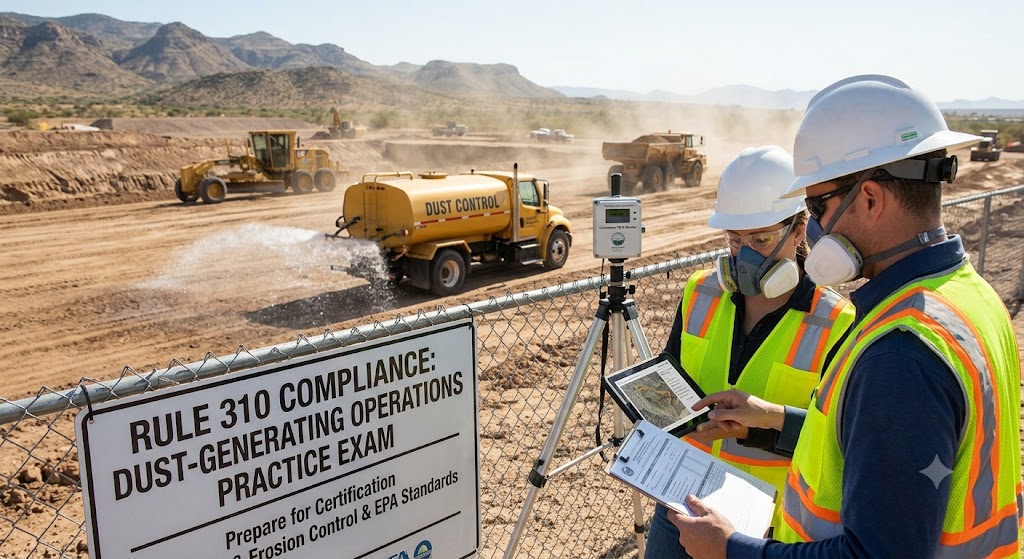
Additional Information
What the Course Entails and Exam Details
The course and subsequent exams focus heavily on the specific requirements of fugitive dust control regulations. You will delve into understanding precisely when a Dust Control Permit is required and how to complete one accurately.
Key areas include selecting and implementing appropriate Best Management Practices (BMPs) for various activities like trackout control, bulk material handling, and open storage piles. The curriculum also covers mandatory recordkeeping procedures and the specific opacity standards used to measure visual emissions from your site.
What to Expect in the Final Exam
While official testing formats can vary slightly depending on the regulating agency, candidates should generally expect a multiple-choice exam administered either in a supervised classroom setting or through a secured online testing portal. The exam is typically timed, often allowing approximately 60 to 90 minutes for completion.
A passing score is generally around 70-80%. Questions will test both your knowledge of the specific rule language and your ability to apply those regulations to real-world construction scenarios. You will need to identify correct BMPs for given situations and demonstrate proficiency in understanding recordkeeping compliance.
How to Study and Exam Centers
Effective study strategies involve thoroughly reviewing the actual text of Rule 310 and associated guidance documents provided by your local environmental quality department.
Utilizing comprehensive practice exams is crucial for familiarizing yourself with the question format and identifying knowledge gaps. Official exam centers are often managed by the county or state environmental division that enforces the regulation. In many cases, authorized training providers or local construction trade associations also host certification workshops and proctor the final exam.
Job Opportunities from the Course
Earning this certification demonstrates specialized knowledge highly valued in the construction and environmental compliance sectors. Potential job opportunities and career paths unlocked by mastering dust control regulations include:
Environmental Compliance Inspector
Construction Site Superintendent
Dust Control Coordinator
Safety, Health, and Environmental (SHE) Specialist
Environmental Project Manager
Compliance Officer for developers and general contractors
Erosion and Sediment Control Specialist
Frequently Asked Questions
Reviews
5.0
Based on 0 reviews
Leave a Review
No reviews yet. Be the first to review!