
Royal Life Saving Society (RLSS) Lifeguard Practice Exam
$69.00
- Buy to unlock unlimited access to all Quiz questions.
- After purchase you can print a PDF of the whole quiz at any point. The PDF will contain the questions and the correct answers.
About this Exam
The Royal Life Saving Society (RLSS) Lifeguard certification is the industry standard for individuals seeking to work as professional lifesavers. This comprehensive program equips candidates with the essential knowledge, physical skills, and judgement required to supervise aquatic environments and respond effectively to emergencies. It is designed for strong swimmers and responsible individuals committed to ensuring the safety of patrons in swimming pools, water parks, and similar aquatic facilities.
Ready to test your knowledge?
Buy Now to Access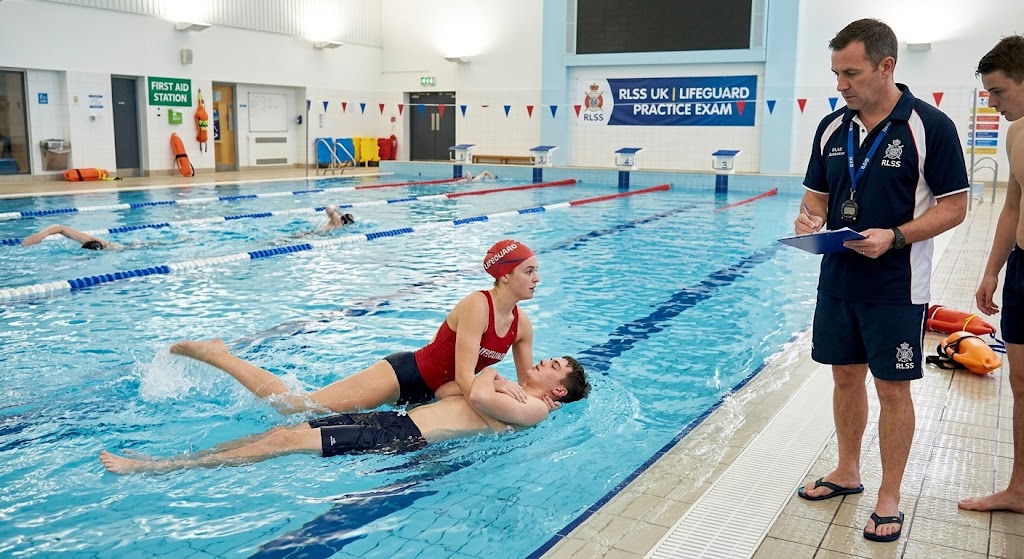
Additional Information
What the Course Entails and Exam Details
The RLSS NPLQ course covers a wide range of essential topics through theoretical learning, practical skills sessions, and fitness training. Candidates will delve into:
The Lifeguard, Health, and Safety: Understanding the role and responsibilities of a lifeguard, including health and safety legislation, pool operations, and team dynamics.
Managing Supervision: Techniques for effective pool scanning, identifying potential hazards, and maintaining a safe swimming environment.
Intervention and Rescue: Learning rescue skills for a variety of situations, including land-based rescues, water-based rescues, and management of spinal injuries.
Cardiopulmonary Resuscitation (CPR) and First Aid: Master life-saving techniques such as CPR for adults, children, and infants, as well as essential first aid for common pool-side injuries.
Automated External Defibrillator (AED): Training on the use of an AED in response to a cardiac arrest.
The final examination assesses candidates on both their theoretical knowledge and practical competence.
What to Expect in the Final Exam
The final NPLQ assessment consists of multiple components, and candidates must demonstrate proficiency in all areas to achieve the qualification. The exam typically includes:
Theory Assessment: A multiple-choice question paper covering all modules of the NPLQ syllabus. Candidates must achieve a passing score, usually around 75-80%, to proceed.
Practical Assessment (Pool-based): Demonstrating rescue skills, spinal injury management, and fitness. This includes a timed swim, a tow, and a rescue from the pool floor.
Practical Assessment (First Aid and CPR): Proving competence in First Aid and CPR, including the use of an AED.
The assessment is conducted by an independent RLSS UK assessor, ensuring a fair and standardized evaluation. There are no fixed time limits for the entire assessment, but specific timed elements, like the rescue swim, must be completed within designated times.
How to Study and Exam Centers
Preparation is key to succeeding in the RLSS NPLQ. Utilize the official RLSS NPLQ Candidate Manual as your primary study resource. Take advantage of the practice questions provided in this practice exam and on the RLSS website. Practice your practical skills with fellow candidates or under the guidance of a qualified trainer. Ensure your fitness levels meet the requirements for the timed rescue swims.
NPLQ courses are held at leisure centers, swimming pools, and training centers approved by RLSS UK. These physical centers provide the necessary pool facilities and training equipment. You can find course listings and contact details for approved training providers on the RLSS UK website. The assessments are conducted at these authorized locations by RLSS UK Assessors.
Job Opportunities from the Course
A qualification from RLSS UK opens doors to a diverse range of employment opportunities in the leisure and aquatics industry. Common job roles include:
Pool Lifeguard
Beach Lifeguard
Open Water Lifeguard
Leisure Attendant
Swimming Instructor (NPLQ is often a prerequisite)
Duty Manager (with experience)
Center Manager (with experience)
Frequently Asked Questions
Reviews
5.0
Based on 0 reviews
Leave a Review
No reviews yet. Be the first to review!