
Road Safety Professional Practice Test
$69.00
- Buy to unlock unlimited access to all Quiz questions.
- After purchase you can print a PDF of the whole quiz at any point. The PDF will contain the questions and the correct answers.
About this Exam
Become a leader in creating safer transportation systems by achieving the Certified Road Safety Professional (RSP) designation. This certification validates your proficiency in identifying safety issues, analyzing crash data, and implementing effective, science-based countermeasures. It is designed for a multidisciplinary group of professionals, including transportation planners, traffic engineers, law enforcement officers, public health officials, and safety advocates. By demonstrating a comprehensive understanding of road safety principles, you can significantly advance your career. Preparing with a dedicated practice test is an essential step toward achieving this valuable credential and making a tangible impact on public safety.
Ready to test your knowledge?
Buy Now to Access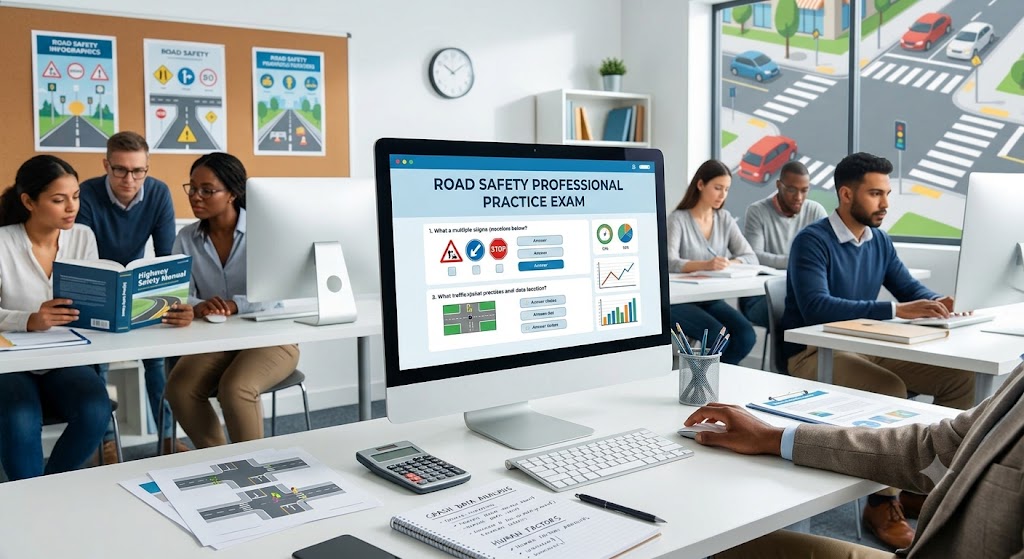
Additional Information
What the Course Entails and Exam Details
The Certified Road Safety Professional program covers a wide array of critical road safety topics. Candidates will dive deep into principles of traffic physics, human factors impacting driver behavior, and the engineering of safer road infrastructure. The curriculum typically includes conducting road safety audits, understanding traffic control devices, and analyzing high-crash locations to develop effective interventions. The primary aim is to equip professionals with the knowledge to reduce fatalities and serious injuries on the road network through data-driven strategies and multidisciplinary collaboration.
What to Expect in the Final Exam
The final Certified Road Safety Professional exam is a rigorous assessment, usually delivered in a computer-based format. It consists primarily of multiple-choice questions that require not just recall, but the application of complex road safety principles to realistic scenarios. Depending on the specific level of certification (e.g., RSP Level 1 or Level 2), candidates are generally given 3 to 4 hours to complete around 100 to 150 questions. The questions are designed to test problem-solving abilities and decision-making skills. A passing score, which is typically set around 70% or higher, is required to demonstrate the level of expertise necessary to hold the designation.
How to Study and Exam Centers
Effective preparation for the Road Safety Professional exam involves a combination of studying primary reference materials, attending relevant courses, and practical experience. A core component of your study strategy should include the use of an official or highly recommended Road Safety Professional Practice Test. These practice tests are invaluable for understanding the exam format, identifying areas where you need further study, and building testing stamina. You should also deeply study key documents such as the Highway Safety Manual and other relevant design and policy guides. Once prepared, candidates can schedule their exam at authorized testing centers globally, often provided through widely accessible proctoring networks like Pearson VUE, or via designated physical locations approved by the certifying organization.
Job Opportunities from the Course
Earning the Certified Road Safety Professional credential unlocks numerous opportunities across public and private sectors. Certified individuals are in high demand as organizations seek validated expertise to address growing road safety challenges. Here are some key career paths and job titles this certification can facilitate:
Road Safety Auditor: Leading independent, multi-disciplinary teams to assess the safety performance of roads at different stages of development and operation.
Traffic Operations Engineer: Designing and managing traffic control systems and analyzing operations to improve both flow and safety.
Transportation Planner: Integrating road safety principles into long-term transportation infrastructure and policy development.
Road Safety Coordinator/Manager: Overseeing safety programs within government agencies or non-profit organizations focused on traffic injury prevention.
Highway Safety Engineer: Designing and implementing infrastructure improvements, like safer intersections and roadside treatments, to reduce crash severity.
Accident Reconstruction Specialist: Analyzing crash scenes and data to understand contributing factors and prevent future incidents.
Traffic Safety Researcher: Conducting studies and data analysis to develop new insights into traffic safety trends and countermeasure effectiveness.
Frequently Asked Questions
Reviews
5.0
Based on 0 reviews
Leave a Review
No reviews yet. Be the first to review!