
Risk Management in Health Care Institutions Practice Test
$69.00
- Buy to unlock unlimited access to all Quiz questions.
- After purchase you can print a PDF of the whole quiz at any point. The PDF will contain the questions and the correct answers.
About this Exam
The Risk Management in Health Care Institutions Practice Test is a comprehensive preparatory tool designed for current and aspiring healthcare administrators, quality assurance officers, clinical leaders, and risk managers. This practice exam validates your understanding of critical strategies used to identify, assess, and mitigate risks within complex medical environments. By mastering this content, you ensure a solid foundation in maintaining patient safety, regulatory compliance, and institutional stability, preparing you for official certification or advanced roles in the field.
Ready to test your knowledge?
Buy Now to Access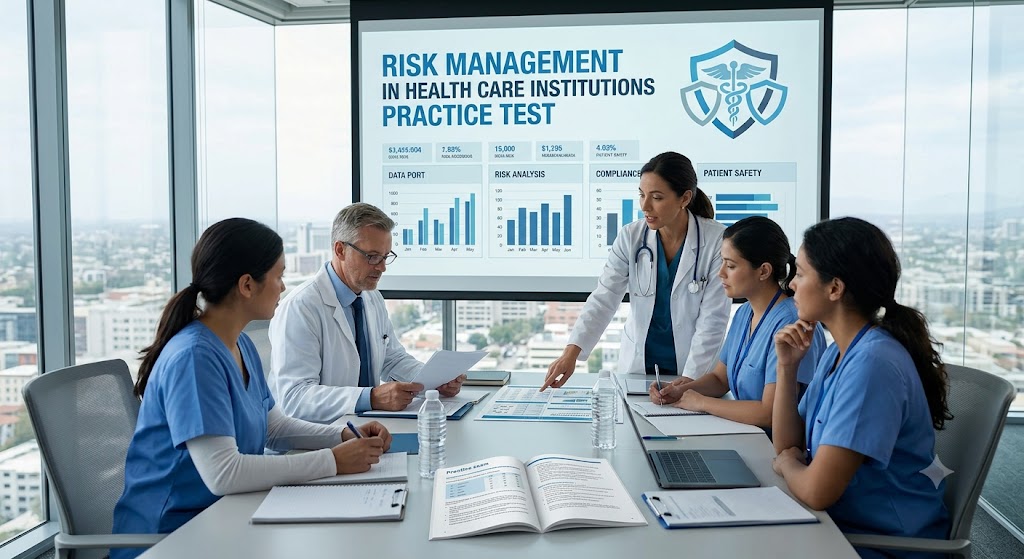
Additional Information
What the Course Entails and Exam Details
This examination evaluates competency across multiple domains crucial to modern healthcare operations. The syllabus covers the proactive identification of clinical risks, root cause analysis (RCA) of adverse events, patient safety indicators, and compliance with major healthcare regulations such as HIPAA, OSHA, and CMS guidelines. Test-takers must demonstrate knowledge of legal and ethical considerations in medicine, enterprise risk management (ERM) frameworks, data-driven decision-making, and techniques for improving healthcare quality. These core topics form the foundation of institutional safety and financial viability.
What to Expect in the Final Exam
The final exam is typically delivered in a computerized format consisting of multiple-choice questions designed to test both knowledge recall and the practical application of risk management principles. To pass, candidates generally need to achieve a score of at least 70–75%. The timed test usually allocates approximately 90–120 minutes, demanding efficient time management and a decisive approach to complex scenarios. Expect real-world vignettes that require you to select the most appropriate risk mitigation strategy under pressure, adhering to standard industry practices and legal frameworks.
How to Study and Exam Centers
Effective preparation is key to success on this high-stakes exam. Start by thoroughly reviewing standard healthcare administration textbooks and the official certification body’s study guide. We recommend allocating several weeks for structured study, utilizing a combination of flashcards for vocabulary and comprehensive practice tests to identify weak areas. Actively practicing with mock questions under timed conditions simulates the true test environment, building endurance and confidence. The final exam is often administered through secure online proctoring portals, physical Pearson VUE testing centers, or authorized healthcare educational institutions. Verify your specific exam center options during registration.
Job Opportunities from the Course
Mastering the principles of risk management in health care opens the door to numerous high-impact career paths.
Hospital Risk Manager: Spearheading safety initiatives and mitigation strategies across departments.
Healthcare Compliance Officer: Ensuring the institution adheres to all state, federal, and accreditation laws.
Director of Quality Improvement: Developing and implementing programs to enhance patient care and safety outcomes.
Patient Safety Officer: Focusing specifically on reducing medical errors and improving systemic patient care processes.
Medical Practice Administrator: Managing the operational and regulatory aspects of private or group practices.
Frequently Asked Questions
Reviews
5.0
Based on 0 reviews
Leave a Review
No reviews yet. Be the first to review!