
Rigging Practices Test Practice
$69.00
- Buy to unlock unlimited access to all Quiz questions.
- After purchase you can print a PDF of the whole quiz at any point. The PDF will contain the questions and the correct answers.
About this Exam
The Rigging Practices Test is a crucial assessment designed for individuals seeking certification or qualification in the field of material lifting and handling. This comprehensive exam validates an individual’s knowledge of safe rigging procedures, equipment inspection, load calculations, and OSHA regulations. It is primarily intended for construction workers, rigger trainees, crane operators, and site supervisors who are responsible for planning and executing safe lifting operations.
Ready to test your knowledge?
Buy Now to Access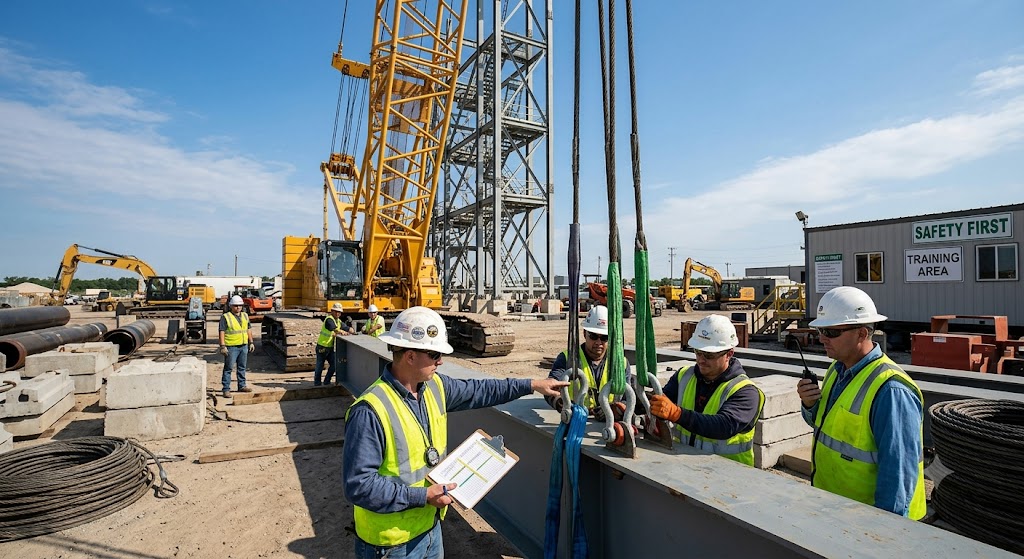
Additional Information
What the Course Entails and Exam Details
This examination covers a wide spectrum of essential rigging concepts and practical skills. Core topics typically include a deep dive into rigging hardware, such as slings (wire rope, chain, synthetic), shackles, hooks, and eye bolts. Candidates must demonstrate proficiency in selecting the correct equipment based on the load weight and rigging configuration. Additionally, the exam evaluates understanding of lifting principles, including center of gravity, load angles, and hitch types (choker, basket, vertical). A significant portion of the assessment focuses on safety regulations (OSHA 1926.251 and 1926.1400), signaling methods, and equipment inspection criteria.
What to Expect in the Final Exam
The final exam is usually presented in a multiple-choice format, designed to efficiently test a broad range of theoretical knowledge and practical problem-solving skills. Depending on the specific certifying body (such as NCCCO or various industry training providers), the test may consist of 50 to 100 questions. A passing score typically requires achieving 70% to 80?curacy. The time limit for the exam generally ranges from one to two hours. In some cases, a practical, hands-on rigging assessment may also be required, which would evaluate your ability to physically inspect, select, and attach rigging equipment correctly.
How to Study and Exam Centers
Effective preparation for the Rigging Practices Test involves a combination of study strategies. Utilize study guides, flashcards, and online practice exams to reinforce key concepts and familiarize yourself with the question types. Hands-on practice under the supervision of a qualified rigger is invaluable for mastering practical skills and equipment recognition. Many professional training schools, construction companies, and industry organizations offer preparatory courses that include both classroom instruction and practical training. For the final exam, you will likely need to register through authorized testing centers, which may include dedicated facilities (e.g., Pearson VUE), industry organizations (like NCCCO), specific physical training locations, or authorized heavy equipment schools.
Job Opportunities from the Course
Successfully passing the Rigging Practices Test and obtaining the associated qualification opens up numerous career paths in industries dependent on heavy lifting and construction. Some specific job titles and roles include:
Rigger (Levels I, II, or Advanced)
Crane Operator
Heavy Equipment Operator
Construction Laborer
Safety Inspector
Ironworker
Site Supervisor / Lifting Supervisor
Material Handler
Maintenance Technician (Industrial)
Offshore Oil Rigger
Frequently Asked Questions
Reviews
5.0
Based on 0 reviews
Leave a Review
No reviews yet. Be the first to review!