
Rigging and Hoisting Practice Exam
$69.00
- Buy to unlock unlimited access to all Quiz questions.
- After purchase you can print a PDF of the whole quiz at any point. The PDF will contain the questions and the correct answers.
About this Exam
The Rigging and Hoisting Practice Exam is an essential tool designed for individuals preparing for certification in the material handling and construction industries. This practice exam caters to aspiring riggers, crane operators, and safety supervisors who need to demonstrate proficiency in safely securing and moving heavy loads. The certification itself validates a candidate's knowledge of rigging gear, hitch configurations, load weight calculations, and essential safety protocols, ensuring they can perform their duties without risking personnel or equipment.
Ready to test your knowledge?
Buy Now to Access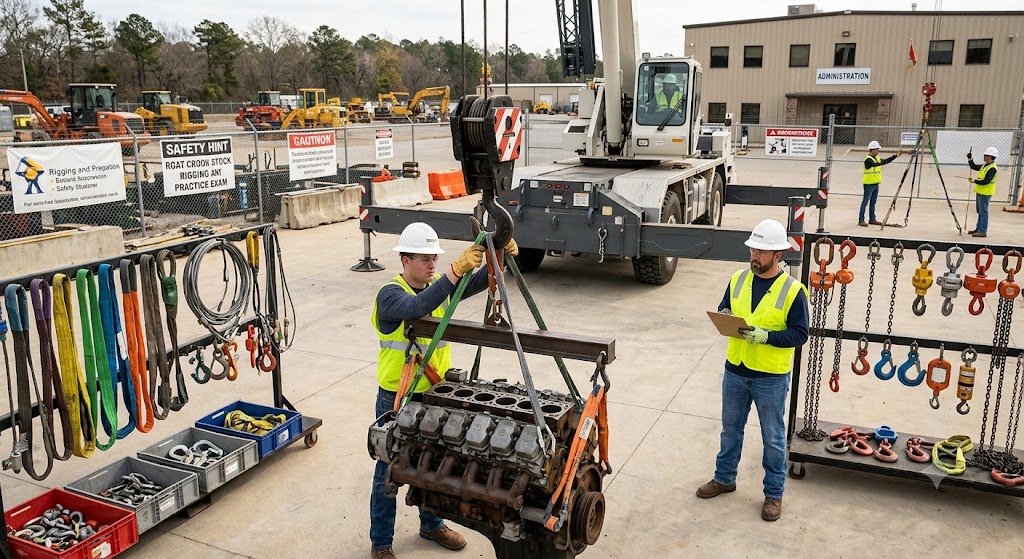
Additional Information
What the Course Entails and Exam Details
This course provides a comprehensive overview of the theoretical concepts and practical skills required for rigging operations. Key topics include determining load weights and center of gravity, selecting appropriate rigging hardware (such as slings, shackles, and eye bolts), understanding hitch capacities, and utilizing various hoisting equipment like cranes and hoists. The curriculum covers signaling and communication standards, inspection procedures for rigging gear, and strict adherence to OSHA and ASME safety regulations to prevent accidents on the job site.
What to Expect in the Final Exam
The final certification exam typically consists of two distinct components: a written test and a practical evaluation. The written portion generally features multiple-choice questions that assess theoretical knowledge and problem-solving abilities related to load calculations and rigging principles. Candidates usually have a specified time limit (e.g., 90 to 120 minutes) to complete this section. A minimum passing score, often around 70% or higher, is required. The practical section requires candidates to demonstrate hands-on rigging and signaling skills under the observation of a certified examiner.
How to Study and Exam Centers
Effective preparation is key to success on both portions of the Rigging and Hoisting Exam. Start by reviewing the official study guides and reference materials provided by the certifying body (such as NCCCO or similar organizations). Focus on memorizing load charts, mastering mathematical formulas for load distribution, and practicing different knots and hitch configurations. Taking multiple practice exams, like this one, helps identify weak areas and builds confidence. Written exams may be administered at Pearson VUE testing centers, authorized schools, or via secure online proctoring portals. The practical exam is typically held at specialized training facilities or authorized field locations with the necessary crane and rigging equipment.
Job Opportunities from the Course
Earning a rigging and hoisting certification significantly enhances career prospects in construction, manufacturing, and logistics. This credential unlocks numerous opportunities, including:
Certified Rigger (Level I and II)
Crane Operator
Signalperson
Lift Director
Assembly and Rigging Technician
Construction Foreman/Supervisor
Industrial Maintenance Mechanic
Safety Inspector/Coordinator
Frequently Asked Questions
Reviews
5.0
Based on 0 reviews
Leave a Review
No reviews yet. Be the first to review!