
Residential Wireman Electrical Practice Exam
$69.00
- Buy to unlock unlimited access to all Quiz questions.
- After purchase you can print a PDF of the whole quiz at any point. The PDF will contain the questions and the correct answers.
About this Exam
Embark on a rewarding career path in the electrical trade with the Residential Wireman Electrical Practice Exam. This resource is meticulously crafted for aspiring electricians aiming to specialize in residential wiring. Whether you are an apprentice looking to solidify your knowledge or a professional preparing for licensure, this practice exam serves as a critical stepping stone. It evaluates your understanding of essential electrical concepts, safety protocols, and the National Electrical Code (NEC) as they apply to one- and two-family dwellings. By simulating the actual exam experience, it equips you with the confidence and competence needed to succeed.
Ready to test your knowledge?
Buy Now to Access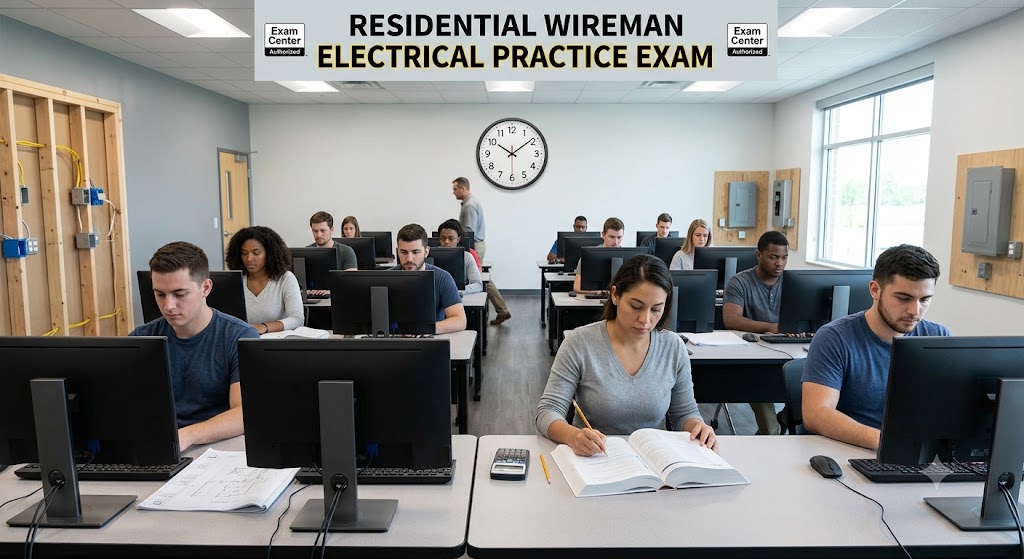
Additional Information
What the Course Entails and Exam Details
The path to becoming a residential wireman involves mastering a comprehensive curriculum. This practice exam covers the pivotal areas outlined in standard residential electrical courses, ensuring you are well-prepared for real-world scenarios. Key topics include:
NEC Dwelling Unit Requirements: In-depth knowledge of code regulations specific to residential properties.
Calculations: Sizing conductors, determining load requirements for circuits, and calculating service and feeder loads.
Wiring Methods and Materials: Correct application and installation of cables, conduits, and boxes.
Service Equipment: Understanding panelboards, overcurrent protection, and grounding systems.
Lighting and Receptacles: Codes for placement, switching, and specialized circuits (GFCI/AFCI).
Blueprint Reading: Interpretation of residential electrical plans and symbols.
Safety Standards: OSHA regulations and safe work practices in a residential environment.
The exam itself typically consists of multiple-choice questions that require both recall of facts and the application of code rules to practical problems.
What to Expect in the Final Exam
Knowing what to expect on test day can significantly reduce anxiety and improve performance. While specific formats can vary by state or local jurisdiction, most Residential Wireman licensing exams adhere to these general guidelines:
Format: The exam is predominantly multiple-choice. Some versions may be computer-based, while others are paper-and-pencil.
Time Limit: You will typically be given a specific time frame, often between three to four hours, to complete the exam.
Passing Score: Most jurisdictions require a minimum score of 70% to pass.
Code Book: Many exams are "open-book," allowing you to use the current National Electrical Code (NEC) book. However, you must be extremely proficient in navigating the code, as the time constraint is a significant factor.
Proctoring: The exam is strictly proctored to ensure integrity, requiring proper identification and prohibiting external resources other than the code book and perhaps a non-programmable calculator.
How to Study and Exam Centers
Effective studying requires a strategic approach. Leverage this practice exam as a core tool. Here are proven strategies:
Master the NEC: Since the exam is heavily based on the National Electrical Code, spend significant time learning its structure and how to quickly locate relevant sections, especially those pertaining to residential dwellings.
Simulate the Test: Take this practice exam under timed conditions, using only allowed resources, to build pacing and stamina. Review every answer, especially the ones you got wrong, to understand the rationale.
Focus on Calculations: Many students struggle with electrical calculations. Dedicate extra study time to mastering formulas for load and conductor sizing.
Use Visual Aids: Create flashcards for key definitions, formulas, and critical code articles. Reviewing residential blueprints can also reinforce symbol recognition and layout rules.
Exam Centers: The final licensing exam is administered through various channels. Common options include:
State or Local Licensing Boards: Often, you must register directly with the governmental body overseeing electrical licensing in your area.
Third-Party Testing Services: Many jurisdictions utilize companies like Pearson VUE or PSI for exam administration. These services have numerous physical testing centers locations.
Authorized Schools and Training Facilities: Some approved apprenticeship programs or technical colleges may host the exam.
Always check with your specific local or state authority to identify the exact procedure and authorized testing locations.
Job Opportunities from the Course
Obtaining your Residential Wireman license significantly expands your career horizons within the electrical industry. This credential demonstrates specialized competence, making you attractive to employers focused on home construction and renovation. Potential career paths and job titles include:
Residential Wireman (specializing in wiring new homes and apartments)
Residential Service Electrician (diagnosing and repairing electrical issues in existing homes)
Electrical Leadperson/Foreman (supervising crews on residential projects)
Electrical Contractor (starting your own business focused on residential work, additional business licensing may be required)
Multifamily Dwelling Electrician
PV (Solar) Installer (combining residential wiring skills with renewable energy systems)
Electrical Inspector (working for a municipality, inspecting residential installations)
Frequently Asked Questions
Reviews
5.0
Based on 0 reviews
Leave a Review
No reviews yet. Be the first to review!