
Residential Child and Youth Care Professional (RCYCP) Certification Practice Exam
$69.00
- Buy to unlock unlimited access to all Quiz questions.
- After purchase you can print a PDF of the whole quiz at any point. The PDF will contain the questions and the correct answers.
About this Exam
The Residential Child and Youth Care Professional (RCYCP) certification is a comprehensive, nationally recognized credential designed for individuals who provide direct, therapeutic care to children and youth within residential programs. This certification validates the essential skills and knowledge required to foster positive development, manage complex behaviors, and support the well-being of young people in various settings, including group homes, emergency shelters, residential treatment centers, and juvenile justice facilities. It is an invaluable asset for those dedicated to making a meaningful impact on the lives of vulnerable youth by ensuring they receive high-quality, trauma-informed care and guidance.
Ready to test your knowledge?
Buy Now to Access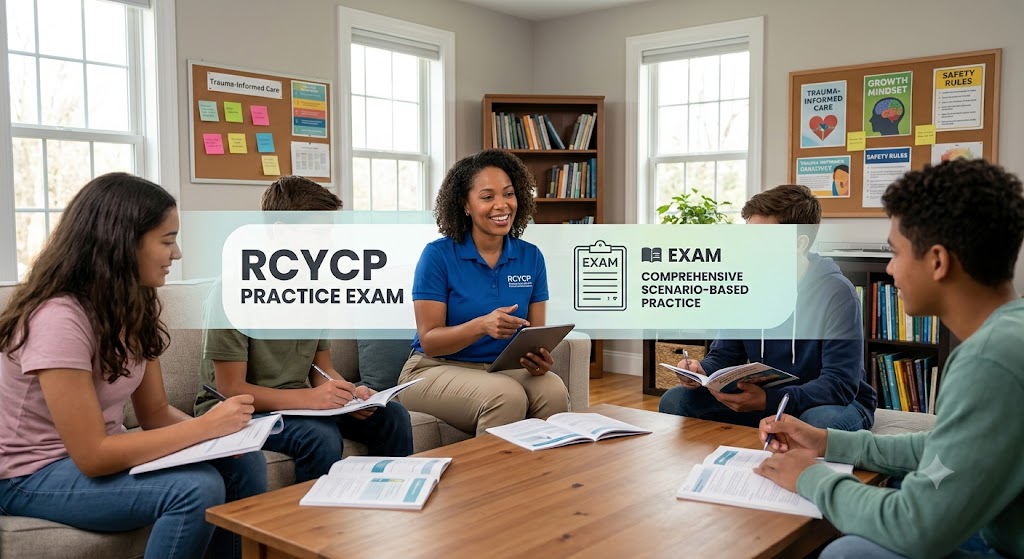
Additional Information
What the Course Entails and Exam Details
The RCYCP course is structured to provide a deep understanding of core competencies, typically spanning several foundational modules. These topics are essential for building a therapeutic environment and include: an introduction to the role and ethics of a residential practitioner; understanding child and adolescent growth and development; effective communication and relationship-building strategies; life skills development and positive behavioral support; critical health, safety, and nutritional standards; understanding the impact of trauma on youth and trauma-informed practices; and navigating legal and ethical issues in residential care. The certification exam itself is designed to test a candidate's ability to apply these principles in practical, scenario-based situations, rather than just recall facts. The exam is typically composed of multiple-choice questions, which are heavily scenario-driven. Candidates might be presented with a complex situation involving a youth in a residential setting and must select the best course of action based on RCYCP principles and best practices. While exact details like the total number of questions can vary slightly depending on the specific certifying body (such as the National Resource Center for Youth Services or a state-specific board), the exam will strictly adhere to testing these core curriculum areas.
What to Expect in the Final Exam
The RCYCP final exam is a professional, standardized test that requires focused preparation. Students can expect a series of multiple-choice questions that are specifically designed to evaluate critical thinking and problem-solving abilities within the context of residential child and youth care. The exam is often scenario-based, requiring candidates to read a detailed situation and choose the most effective, ethical, and therapeutic intervention from the given options. The passing score requirement is typically high, often around 80%, reflecting the need for practitioners to possess a robust and reliable skillset. Time limits for the exam are generally around 2 hours, so it is important for test-takers to manage their time efficiently, aiming to answer every question. The exam is typically proctored, either in a physical testing center or through a secure online proctoring service, ensuring the integrity and standard of the certification. Candidates will be expected to follow all instructions carefully and submit their answers within the allotted time. The focus of the exam is not on memorization, but on the ability to interpret and apply the learned material to ensure the highest standard of care for children and youth.
How to Study and Exam Centers
The most effective way to prepare for the RCYCP practice exam is a multi-faceted approach. First, master the core curriculum: thoroughly study the provided textbook or training materials, focusing on understanding the intent and practical application of each module, especially in relation to scenario-based questions. Second, use targeted practice methods: take advantage of practice exams, sample questions, and flashcards that simulate the scenario-based format of the actual test. This helps build familiarity with the question types and develops the critical thinking skills needed. Focus on 'why' an answer is correct, rather than just 'which' one it is. The RCYCP exam is administered through authorized exam centers and online platforms. Students often take the exam through the online portals of the specific board or educational institute that approved their training (e.g., the Institute for Innovation and Implementation at the University of Maryland for certain state programs, or the National Resource Center for Youth Services at the University of Oklahoma). Physical testing locations may include approved training provider agencies or state board offices. It is crucial to confirm the specific registration process, fee structure, and authorized testing methods with your training provider or certifying body to ensure a seamless exam experience.
Job Opportunities from the Course
Earning the Residential Child and Youth Care Professional (RCYCP) certification opens a clear path to a fulfilling career in direct care. This credential is often either a prerequisite or highly preferred for many rewarding roles, including:
Residential Child and Youth Care Worker
Youth Care Worker
Youth Support Specialist
Residential Counselor
Group Home Staff
Youth Mentor
Youth Advocate
Child Care Worker
Direct Support Professional
House Parent
Frequently Asked Questions
Reviews
5.0
Based on 0 reviews
Leave a Review
No reviews yet. Be the first to review!