
Registered Polysomnographic Technologist Practice Exam
$69.00
- Buy to unlock unlimited access to all Quiz questions.
- After purchase you can print a PDF of the whole quiz at any point. The PDF will contain the questions and the correct answers.
About this Exam
The Registered Polysomnographic Technologist™ (RPSGT) is the premier credential for healthcare professionals globally who specialize in the clinical assessment and treatment of sleep disorders. This certification, administered by the Board of Registered Polysomnographic Technologists (BRPT), is designed for allied health professionals who possess a deep understanding of sleep architecture and pathophysiology. To become RPSGT certified, candidates must demonstrate their mastery through education and significant clinical experience before attempting the comprehensive exam, which validates their ability to independently perform complex sleep studies, provide therapeutic interventions, and deliver high-quality patient care.
Ready to test your knowledge?
Buy Now to Access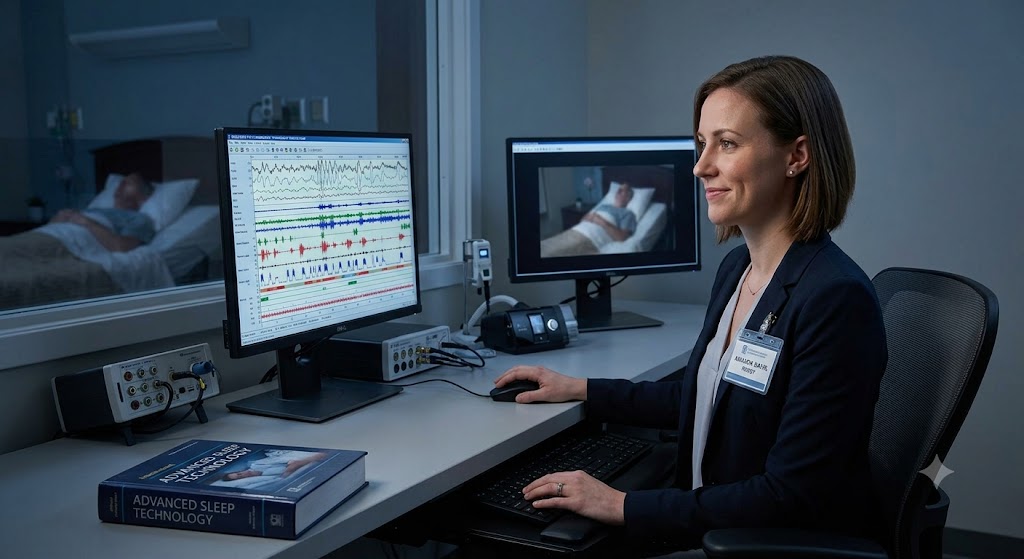
Additional Information
WHAT THE COURSE ENTAILS AND EXAM DETAILS
The core areas covered in the RPSGT certification program are structured to build an advanced skillset in polysomnography. Prospective technologists must achieve competency in the following primary domains:
Clinical Overview and Patient Support: Understanding patient history, physical assessments, providing comprehensive education to patients and caregivers, and fostering compliance with sleep therapies.
Sleep Study Preparation and Performance: Mastering technical preparation, including appropriate montage selection, precise electrode application, equipment calibration, and ensuring overall safety and data integrity during the study.
Scoring, Reporting, and Data Verification: Developing expertise in analyzing multi-channel sleep data to accurately score sleep stages (N1, N2, N3, REM), respiratory events, arousals, movements, and cardiac events across different age groups (adult, pediatric, infant).
Treatment and Intervention: Proficiency in administering various therapeutic interventions, most notably Positive Airway Pressure (PAP) titration (CPAP, BiPAP, ASV), oxygen therapy, and identifying alternative treatment options.
WHAT TO EXPECT IN THE FINAL EXAM
The official RPSGT credentialing examination is a computer-based, multiple-choice test. While the content is demanding, understanding the structure helps manage expectations:
Exam Format: The test consists of a total of 175 multiple-choice questions.
Scored vs. Unscored: Of these 175 questions, only 150 count toward your final score. The remaining 25 questions are pretest items that are not explicitly identified and are used to gather statistical data for future exam development.
Time Limit: Candidates are given a maximum of 3 hours to complete the entire exam.
Passing Score: The exam is scored using a scaled scoring method. Raw scores (the number of correct answers) are converted to a scaled score that ranges from 200 to 500. To pass, you must achieve a scaled score of at least 350.
HOW TO STUDY AND EXAM CENTERS
Success on the RPSGT exam requires a dedicated, structured study plan. Here are actionable strategies to help you prepare effectively:
Utilize Official Resources: Start with the BRPT’s own Candidate Handbook, which provides the most accurate and up-to-date information on exam content.
Comprehensive Study Guides: Invest in high-quality study guides and reference textbooks. Many candidates find success using resources that include large question banks and detailed explanations for every answer, allowing you to identify your strengths and weaknesses.
Consistent Practice: Form study groups or find a study partner. Regular practice with sample questions is crucial for building speed and reinforcing your knowledge. Focus heavily on both adult and pediatric scoring standards (AASM standards are the benchmark).
Exam Registration and Center: The final exam must be taken at an authorized testing center. After your application is approved by the BRPT, you will receive an authorization-to-test email. You will then schedule your exam time and location through Pearson VUE, which manages the vast network of professional, proctored testing centers globally.
JOB OPPORTUNITIES FROM THE COURSE
Earning your RPSGT credential is a major milestone that unlocks numerous specialized career paths within the rapidly growing field of sleep medicine. Potential job opportunities include:
Registered Polysomnographic Technologist (Sleep Technologist)
Lead Sleep Technologist (Supervisor/Manager)
Sleep Scoring Technologist (Remote or In-Lab)
Sleep Lab Coordinator or Administrator
DME (Durable Medical Equipment) Specialist for Sleep Apnea Therapy
Clinical Sleep Educator
Frequently Asked Questions
Reviews
5.0
Based on 0 reviews
Leave a Review
No reviews yet. Be the first to review!