
Registered Cardiovascular Invasive Specialist (RCIS) Practice Test
$69.00
- Buy to unlock unlimited access to all Quiz questions.
- After purchase you can print a PDF of the whole quiz at any point. The PDF will contain the questions and the correct answers.
About this Exam
Embarking on a career as a Registered Cardiovascular Invasive Specialist (RCIS) places you at the heart of dynamic, life-saving cardiac care. This certification, recognized globally, validates your expertise in assisting physicians during complex diagnostic and interventional cardiovascular procedures. The RCIS credential is designed for dedicated professionals like cardiac catheterization laboratory technologists, nurses, and other allied health specialists who play a crucial role in the diagnosis and treatment of heart and vascular conditions. It signifies your advanced knowledge and commitment to excellence in a highly specialized, fast-paced medical environment.
Ready to test your knowledge?
Buy Now to Access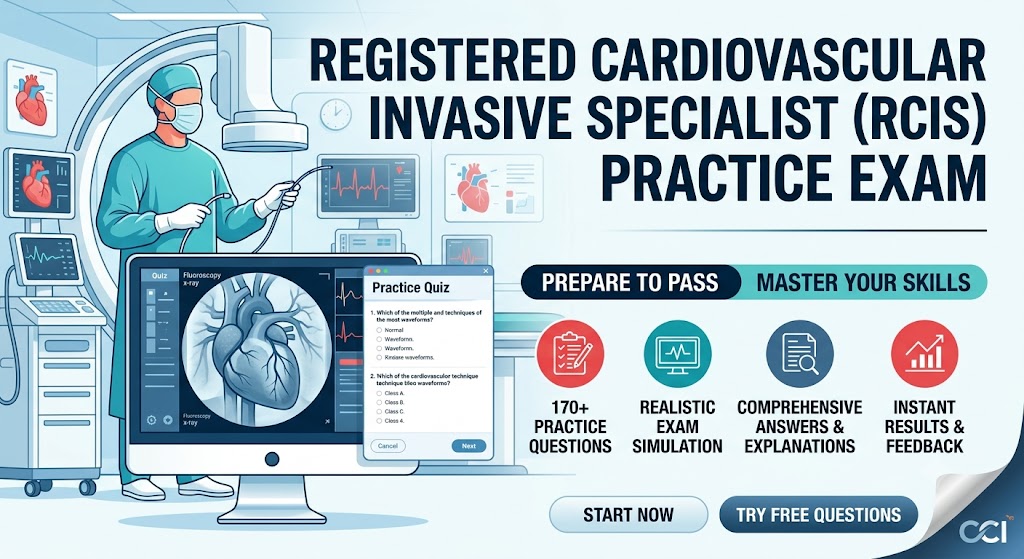
Additional Information
What the Course Entails and Exam Details
While the specific curriculum may vary depending on the educational program or study material you choose, a comprehensive RCIS practice course or study guide typically covers several essential domains. These include:
Cardiovascular Physiology and Hemodynamics: Understanding the mechanics of the heart, blood pressure, and related wave forms.
Pharmacology: Master the classifications, indications, and dosages of medications used in invasive cardiology.
Equipment and Technology: Proficiency in operating fluoroscopy systems, intravascular ultrasound (IVUS), dynamic equipment, and monitoring tools.
Interventional Procedures: Knowledge of techniques and protocols for percutaneous coronary intervention (PCI), angiography, and structural heart procedures.
Electrophysiology: Fundamental understanding of cardiac rhythms, pacing, and basic mapping.
Patient Care and Assessment: Managing patient vitals, identifying complications, and ensuring safety in the cath lab.
Infection Control and Safety Protocols: Adhering to sterile techniques and reducing risks during invasive procedures.
What to Expect in the Final Exam
The actual RCIS certification exam is a challenging assessment designed to test your comprehensive knowledge. Here’s what you can generally expect:
Format: The exam typically consists of multiple-choice questions (often around 170 to 200 questions).
Time Limit: Candidates are usually given several hours to complete the examination (around 3 to 4 hours).
Passing Score: The passing score criteria are set by the awarding body (Cardiovascular Credentialing International - CCI) and are generally calculated using a standardized scoring model.
Rules: The exam is proctored, and specific identification and security protocols must be followed.
How to Study and Exam Centers
Preparation is paramount for the RCIS exam. Success requires a dedicated study plan:
Use Comprehensive Study Guides: Utilize official CCI study materials, recommended textbooks, and specialized RCIS practice exams to simulate the test environment.
Create Flashcards and Diagrams: Visualize complex anatomical structures, waveforms, and drug classifications to reinforce memory.
Form Study Groups: Collaborating with peers can provide diverse perspectives and motivate you.
Time Management: Develop a structured schedule that allocates sufficient time for each core area.
Exam Centers: The RCIS examination is typically administered through authorized testing centers like Pearson VUE, which have locations globally. Once you are approved to take the exam by CCI, you will schedule your appointment through the Pearson VUE website or portal. Some institutions or specific educational programs may also offer the exam as an authorized testing site.
Job Opportunities from the Course
Earning your RCIS certification unlocks diverse and rewarding career paths within the expanding field of invasive cardiology. Key job opportunities include:
Cardiac Catheterization Laboratory Technologist
Cardiovascular Invasive Specialist
RCIS-Certified Technologist
Electrophysiology Lab Specialist
Vascular Technologist (in a multi-modality lab)
Cardiac Interventionist Assistant
Cath Lab Manager (with advanced experience)
Educational Instructor in Cardiovascular Technology
Frequently Asked Questions
Reviews
5.0
Based on 0 reviews
Leave a Review
No reviews yet. Be the first to review!