
Pulmonary System Practice Problems with Answers
$69.00
- Buy to unlock unlimited access to all Quiz questions.
- After purchase you can print a PDF of the whole quiz at any point. The PDF will contain the questions and the correct answers.
About this Exam
This comprehensive practice exam is specifically designed for students and professionals seeking to master the complexities of the human respiratory system.
Whether you are preparing for a medical licensing board, a respiratory therapy certification, or an advanced nursing examination, these practice problems provide a rigorous and effective way to test your knowledge.
The exam focuses on the mechanics of breathing, gas exchange, acid-base balance, and the underlying principles of pulmonary function testing.
It serves as an essential tool for identifying knowledge gaps and building the confidence required to excel in actual high-stakes testing scenarios.
Ready to test your knowledge?
Buy Now to Access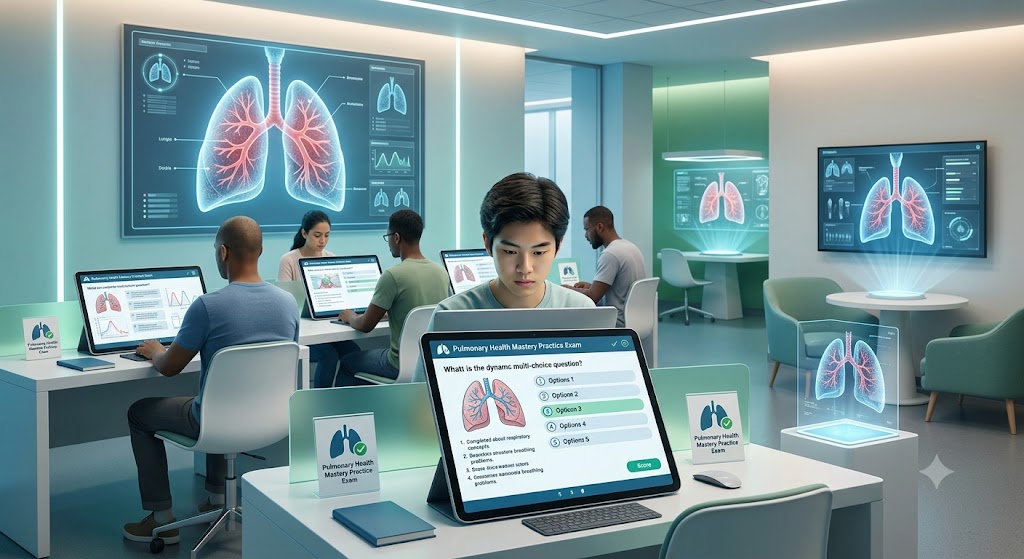
Additional Information
What the Course Entails and Exam Details
The Pulmonary Physiology Exam Practice covers a broad spectrum of critical topics within the respiratory sciences.
Students will be tested on detailed anatomical structures of the lungs and airways, from the trachea down to the alveoli.
Core conceptual areas include the dynamics of ventilation, lung compliance, and resistance to airflow.
The practice exam dives deeply into the processes of diffusion, gas transport in the blood, and the regulation of respiration by the brainstem and peripheral chemoreceptors.
Additionally, candidates must demonstrate an understanding of common pulmonary diseases, including asthma, chronic obstructive pulmonary disease (COPD), and restrictive lung conditions, and interpret relevant diagnostic data.
What to Expect in the Final Exam
This practice exam mimics the structure of final certification assessments, typically consisting of approximately 100 multiple-choice questions.
Candidates are usually given a strict time limit, such as 2 hours, to complete all sections.
To pass, a minimum score of 75% is typically required, although specific thresholds may vary slightly by licensing body.
Questions will range from direct recall of factual information to complex, scenario-based problems requiring the application of multiple physiological principles.
The electronic format ensures a consistent and timed testing experience that accurately reflects the pressure of the actual examination.
How to Study and Exam Centers
Effective preparation requires a multi-faceted approach involving both theoretical study and practical application.
Start by thoroughly reviewing core textbooks and lecture materials focused on pulmonary anatomy and physiology.
Utilize these practice problems systematically, answering each question before checking the provided detailed answers and rationales.
Create a consistent study schedule, dedicating specific blocks of time to each key area of the syllabus.
The final official exams are typically proctored and administered at professional testing facilities, such as Pearson VUE or Prometric centers, located in major cities worldwide.
Additionally, some academic institutions and specialized training schools act as authorized testing centers for their students.
Job Opportunities from the Course
Mastering the material in the Pulmonary Physiology Exam Practice opens the door to numerous vital roles across the healthcare sector.
These include:
Licensed Respiratory Therapist
Certified Pulmonary Function Technologist (CPFT)
Critical Care Nurse Specialist
Pulmonary Rehabilitation Coordinator
Polysomnographic (Sleep) Technologist
Cardiopulmonary Sales Representative
Clinical Research Associate in Respiratory Medicine
Respiratory Educator in Academic Settings
Frequently Asked Questions
Reviews
5.0
Based on 0 reviews
Leave a Review
No reviews yet. Be the first to review!