
PSEB Senior Secondary Practice Test & Exam Prep | India
$69.00
- Buy to unlock unlimited access to all Quiz questions.
- After purchase you can print a PDF of the whole quiz at any point. The PDF will contain the questions and the correct answers.
About this Exam
The PSEB Senior Secondary (Class 12) examination is a critical academic milestone conducted by the Punjab School Education Board for students across the state of Punjab, India. This comprehensive assessment signifies the completion of school education and serves as a gateway to higher studies, professional courses, and various career opportunities. It is designed for students enrolled in Class 12 who have completed their prescribed coursework in diverse streams such as Science, Commerce, or Humanities. Achieving success in this examination requires diligent preparation, a thorough understanding of the syllabus, and consistent practice.
Ready to test your knowledge?
Buy Now to Access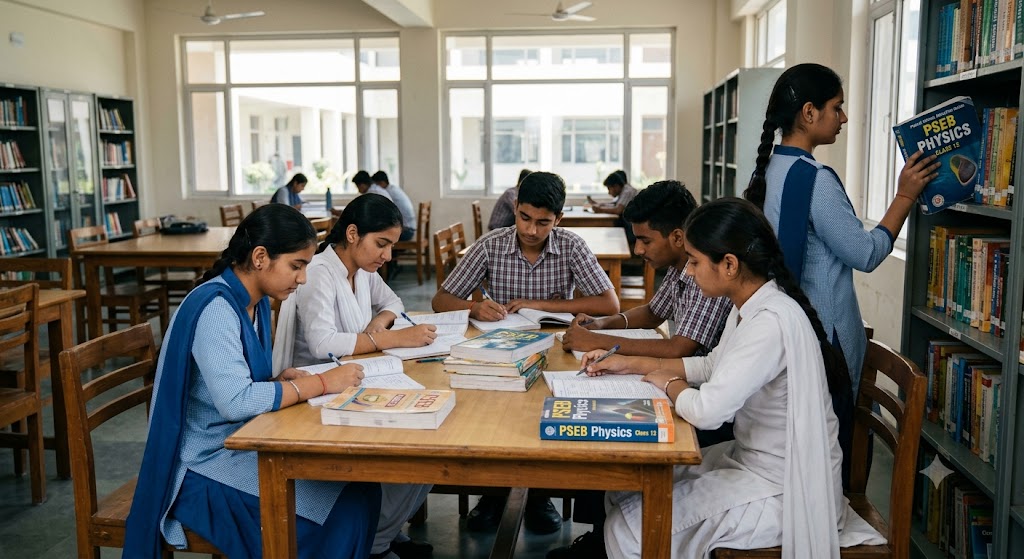
Additional Information
What the Course Entails and Exam Details
The PSEB Senior Secondary curriculum covers a wide spectrum of subjects tailored to different academic streams. In the Science stream, core subjects typically include Physics, Chemistry, Biology, Mathematics, and English. The Commerce stream encompasses subjects like Accountancy, Business Studies, Economics, and Mathematics/Computer Science. The Humanities stream offers a broad range of options including History, Political Science, Sociology, Psychology, Geography, and Elective Languages. All students are generally required to take English and Punjabi as compulsory language subjects. The syllabus for each subject is detailed and designed to build a strong foundational knowledge necessary for subsequent academic pursuits.
What to Expect in the Final Exam
The final PSEB Senior Secondary examinations are primarily descriptive written tests conducted annually, typically between February and March. Each theory paper is usually of three hours' duration and covers the entire syllabus prescribed for that subject. For subjects with practical components, such as Science streams and Computer Applications, separate practical examinations are conducted alongside the written assessments. Evaluation also includes internal assessment marks based on projects, assignments, and periodic tests. To successfully pass, students must obtain a minimum percentage (usually 33%) in each individual subject, including theory and practical exams separately, as well as an overall aggregate score.
How to Study and Exam Centers
Effective preparation for the PSEB Class 12 exams involves a structured study plan and the use of reliable resources. Students are strongly advised to thoroughly master the topics covered in their prescribed PSEB textbooks, as the examinations are strictly based on this curriculum. Practicing with previous years' question papers and PSEB model test papers is invaluable for understanding the exam pattern, question types, and time management strategies. Regular revision and seeking clarification on difficult concepts from teachers are essential.
The PSEB Senior Secondary examinations are conducted in-person at designated examination centers established in authorized schools across various districts in Punjab. Students receive their admit cards through their respective schools, which specify the exact location of their allotted exam center and the detailed examination schedule.
Job Opportunities from the Course
Successfully clearing the PSEB Senior Secondary examination opens numerous academic and career pathways for students. While many opt for higher education, completing Class 12 fulfills the minimum eligibility criteria for several entry-level job opportunities:
Clerical Posts in Government Sectors: Eligibility for Lower Division Clerk (LDC), Data Entry Operator, and clerical roles in various state government departments.
Indian Armed Forces: Opportunity to join the Army, Navy, or Air Force in non-commissioned officer roles (e.g., Soldiers, Sailors, Airmen) through relevant recruitment exams.
State Police Services: Eligibility for Constable recruitment in the Punjab Police and other state police forces.
Banking Sector: Candidates can apply for clerical staff positions in various public and private sector banks.
Railways: Opportunities for positions such as Ticket Collector, Junior Clerk, and other Group C posts in the Indian Railways.
Private Sector Roles: Entry-level positions in diverse fields such as retail, customer service, administration, and hospitality that require a high school qualification.
Higher Education Eligibility: This certificate is mandatory for securing admission into various undergraduate degree courses (B.A., B.Sc., B.Com, BBA, BCA) and professional programs (Engineering, Medical, Law) in universities and colleges across India.
Frequently Asked Questions
Reviews
5.0
Based on 0 reviews
Leave a Review
No reviews yet. Be the first to review!