
Professionalism and Regulatory Compliance Practice Test
$69.00
- Buy to unlock unlimited access to all Quiz questions.
- After purchase you can print a PDF of the whole quiz at any point. The PDF will contain the questions and the correct answers.
About this Exam
The Professionalism and Regulatory Compliance Practice Test is a crucial preparation tool designed for professionals in industries where adherence to ethical standards, legal regulations, and industry-specific policies is essential. This typically includes fields such as finance, healthcare, legal services, human resources, and corporate management. The test assesses an individual's understanding of the principles, laws, and ethical guidelines that govern professional conduct and business operations within their respective sectors, helping them demonstrate their commitment to integrity and compliance.
Ready to test your knowledge?
Buy Now to Access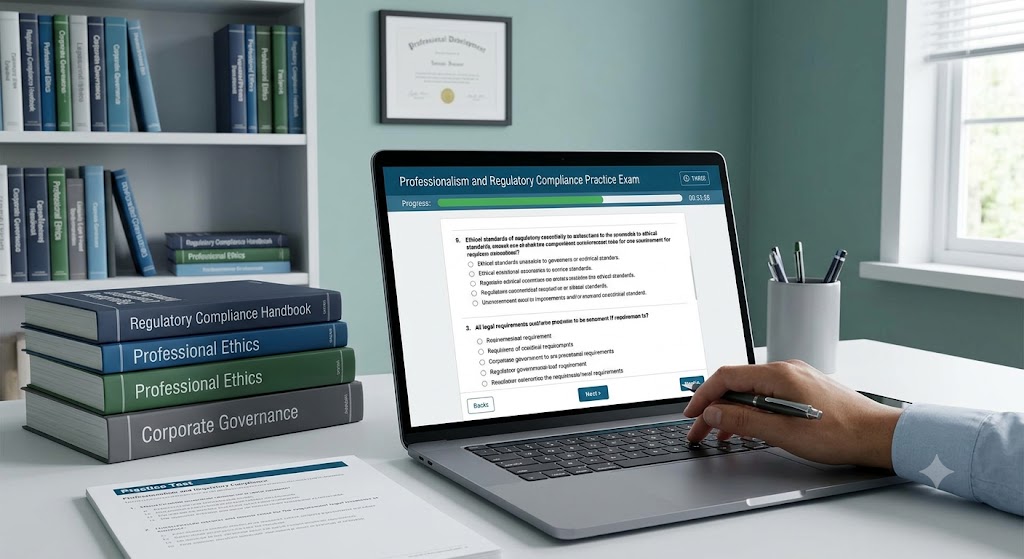
Additional Information
What the Course Entails and Exam Details
The corresponding course or study program for this exam delves deeply into relevant regulations, ethical frameworks, and best practices. Core topics covered often include ethical decision-making, managing conflicts of interest, understanding anti-money laundering (AML) protocols, adhering to data privacy and security laws (such as GDPR or HIPAA), maintaining professional competence, and navigating complex regulatory landscapes. The course equips candidates with the knowledge and skills necessary to operate within established legal and ethical boundaries effectively.
What to Expect in the Final Exam
The final exam assessing professionalism and regulatory compliance typically takes the form of a comprehensive multiple-choice examination. It is a timed test, often requiring candidates to answer 50 to 100 questions within a specified duration, such as 90 minutes to two hours. To pass, candidates generally need to achieve a score of 70% or higher. Some exams may incorporate scenario-based questions that test the practical application of regulatory knowledge and ethical principles to real-world situations.
How to Study and Exam Centers
To prepare effectively, candidates should engage with authorized study materials, review relevant legislation and industry codes of conduct, and utilize comprehensive practice exams like this one to identify knowledge gaps and familiarize themselves with the test format. Creating flashcards for key definitions and participating in study groups or forums can also be highly beneficial. The actual exam is administered in various settings, including secure online proctoring platforms for remote testing, dedicated professional testing centers like Pearson VUE or Prometric, or specific facilities managed by certifying bodies and industry associations.
Job Opportunities from the Course
Successfully completing a program and exam focused on professionalism and regulatory compliance can open doors to numerous career paths. This certification enhances credibility and employability, making candidates attractive to organizations that prioritize compliance and ethical standards. Some specific job opportunities and career paths this unlocks include:
Compliance Officer
Risk Manager
Ethics and Compliance Specialist
Human Resources Manager
Internal Auditor
Legal Compliance Assistant
Regulatory Affairs Specialist
Operations Manager in Regulated Industries
Healthcare Administrator
Financial Advisor
Frequently Asked Questions
Reviews
5.0
Based on 0 reviews
Leave a Review
No reviews yet. Be the first to review!