
Phlebotomy Practice Test OLD
$69.00
- Buy to unlock unlimited access to all Quiz questions.
- After purchase you can print a PDF of the whole quiz at any point. The PDF will contain the questions and the correct answers.
About this Exam
Embarking on a career in phlebotomy is an exciting step into the vital world of healthcare. The [Phlebotomy Practice Test OLD] serves as a crucial milestone for aspiring phlebotomists, validating their knowledge and skills essential for safely and effectively collecting blood samples. This certification exam is meticulously designed for individuals seeking to become certified phlebotomy technicians, confirming their competence in this specialized field. The practice exam helps candidates assess their readiness and identify areas for further study before taking the actual certification test.
Ready to test your knowledge?
Buy Now to Access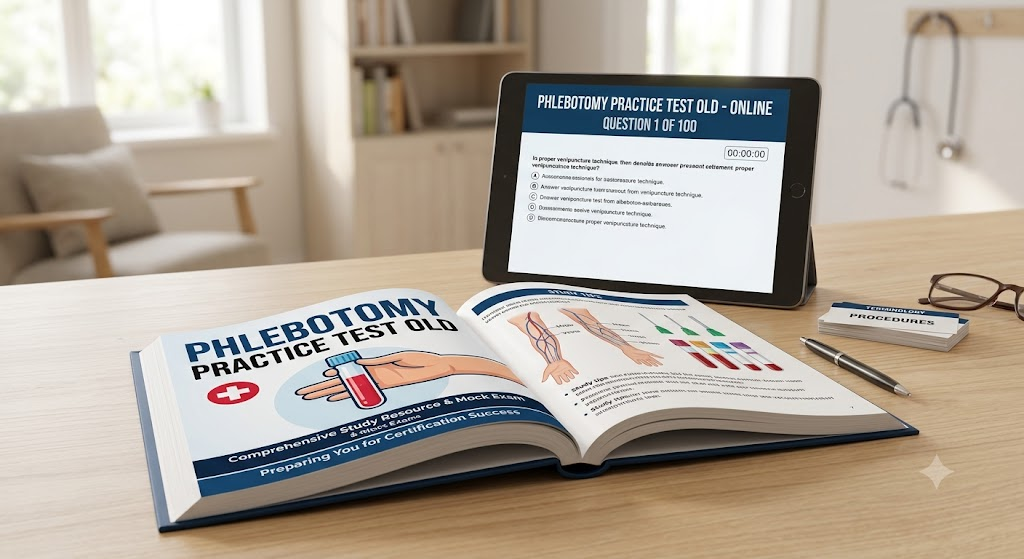
Additional Information
What the Course Entails and Exam Details
Preparation for the phlebotomy certification typically involves comprehensive coursework and practical training, which the [Phlebotomy Practice Test OLD] aims to evaluate. While this specific practice exam validates knowledge, a standard phlebotomy curriculum covers extensive material. Core topics encompass a deep understanding of the circulatory system and relevant medical terminology. Students master the selection and safe usage of various phlebotomy equipment, including needles, tubes, and antiseptics. Rigorous training on patient identification, preparation, and communication ensures professional interaction. Crucially, the program covers venipuncture and dermal puncture techniques, ensuring proficiency in diverse scenarios. Furthermore, candidates learn precise procedures for specimen handling, processing, and transportation, all while adhering to strict safety protocols, infection control measures, and legal/ethical guidelines within healthcare settings.
What to Expect in the Final Exam
When sitting for the [Phlebotomy Practice Test OLD], you can anticipate a comprehensive assessment designed to simulate real-world certification exams. This exam typically consists of multiple-choice questions meticulously crafted to test your theoretical knowledge across the broad range of topics covered in phlebotomy training. Expect approximately 100-120 questions, covering everything from anatomy to safety protocols and practical application. Candidates are usually allocated around 2-3 hours to complete the examination, allowing sufficient time to thoughtfully consider each question. Achieving a passing score, often around 70-80%, demonstrates your proficiency and readiness for the next steps in your phlebotomy journey. Be sure to arrive early at the designated testing location (if applicable) or log in early for online options, bring valid identification, and adhere to all specific rules regarding electronic devices and other belongings during the test session.
How to Study and Exam Centers
Effectively preparing for the [Phlebotomy Practice Test OLD] requires a dedicated study approach. Leverage the value of practice questions and mock exams, mirroring the format and difficulty level you will encounter, as your core strategy. Create or utilize flashcards to master medical terminology, equipment identification, and critical procedures. Regularly review comprehensive study guides and textbooks, ensuring a thorough grasp of the curriculum. Active study techniques, such as summarizing concepts or explaining them to others, significantly enhance retention. Form study groups with peers for collaborative learning and discussion. Furthermore, while theoretical, visual aids and diagrams can reinforce understanding of anatomy and techniques. Regarding exam centers, the availability and location can vary. This practice test might be offered directly through approved phlebotomy schools, specific testing services, or even accessible via legitimate online platforms dedicated to exam preparation. Carefully check with your training provider or the official [Phlebotomy Practice Test OLD] administrators for the most accurate and current information on how and where to register for and take the exam.
Job Opportunities from the Course
Successfully completing your phlebotomy training and performing well on assessments like the [Phlebotomy Practice Test OLD] opens the door to numerous rewarding career paths within the expanding healthcare industry. With this foundational certification preparation under your belt, you'll be well-positioned for roles including:
Certified Phlebotomy Technician (CPT)
Hospital Phlebotomist
Clinic or Laboratory Phlebotomist
Mobile Phlebotomist
Donor Phlebotomy Technician
Blood Bank Phlebotomist
Clinical Lab Assistant
Medical Assistant (with phlebotomy proficiency)
Research Phlebotomist
Good luck with your studies and preparing for this important step in your healthcare career!
Frequently Asked Questions
Reviews
5.0
Based on 0 reviews
Leave a Review
No reviews yet. Be the first to review!