
Phlebotomy CPT Practice Test Chapter 4 Quiz
$69.00
- Buy to unlock unlimited access to all Quiz questions.
- After purchase you can print a PDF of the whole quiz at any point. The PDF will contain the questions and the correct answers.
About this Exam
Welcome to your preparation resource for the Phlebotomy Certified Phlebotomy Technician (CPT) exam. This practice test focuses specifically on Chapter 4 content, helping you review and solidify your knowledge in crucial areas like advanced venipuncture techniques, blood collection procedures, and safety protocols. Whether you're a student nearing the end of your course or a healthcare professional seeking certification, this quiz provides a valuable opportunity to assess your understanding and identify areas that need further study. Mastering this chapter is essential for demonstrating your competence and commitment to safe and effective patient care as a future Certified Phlebotomy Technician.
Ready to test your knowledge?
Buy Now to Access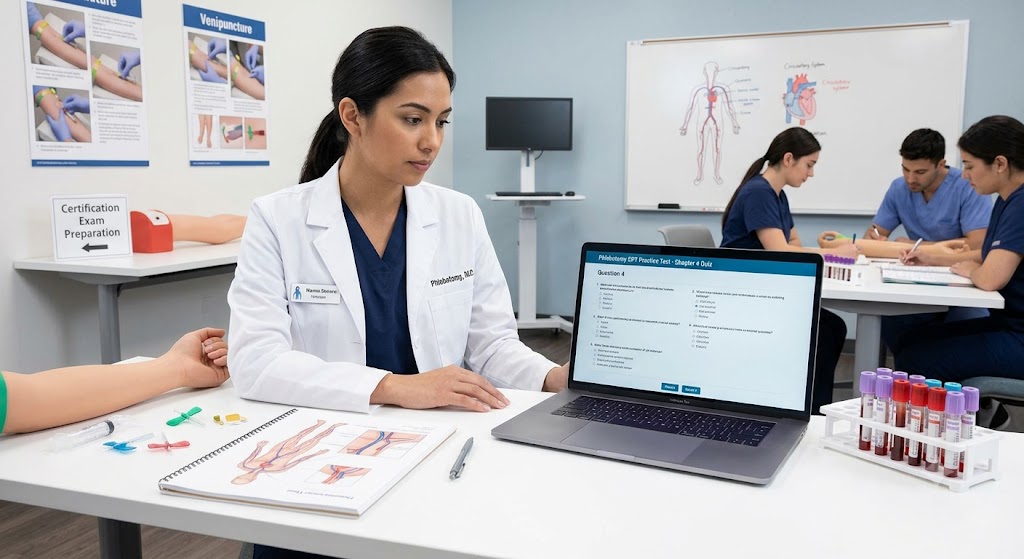
Additional Information
What the Course Entails and Exam Details
A phlebotomy course typically covers a broad range of topics necessary for drawing blood safely and effectively. This includes in-depth knowledge of anatomy and physiology, particularly the circulatory system, vein selection, and identifying suitable puncture sites. You'll learn essential venipuncture techniques (using both straight and butterfly needles), skin puncture methods (like fingersticks), proper collection equipment use and handling, and infection control procedures. Specific focus in Chapter 4 likely includes topics such as drawing from difficult veins, handling complications during procedures, understanding blood components and laboratory tests, and adhering to strict safety and quality assurance guidelines. The practice quiz mirrors the style of the final exam questions to help you become comfortable with the format and test-taking strategies.
What to Expect in the Final Exam
The final Phlebotomy CPT exam generally consists of multiple-choice questions designed to evaluate your theoretical knowledge and practical understanding. The number of questions varies by certifying body but commonly ranges from 100 to 120 questions. You will typically be given 2 to 3 hours to complete the test. A passing score is usually set around 70% to 80%, depending on the specific examination. Some certification programs may also include a practical skills component that assesses your ability to perform a standard venipuncture safely and correctly under supervision. The exam is typically administered electronically at authorized testing centers or online through secure platforms.
How to Study and Exam Centers
Effective study strategies for the CPT exam involve a combination of theoretical review and practical practice. Utilize study guides, textbook materials, flashcards for key terms and procedures, and repeatedly take practice quizzes like this Chapter 4 quiz to reinforce your knowledge. Pay close attention to topics covered in each chapter and review any errors you make. Working in study groups can also be beneficial, and practicing venipuncture techniques on training dummies or willing (and safe) volunteers, under proper supervision, helps develop hands-on skills. To register for and take the official CPT exam, you will need to apply through a national certification organization such as the National Healthcareer Association (NHA), the American Society for Clinical Pathology (ASCP), or the American Medical Technologists (AMT). These organizations provide lists of authorized testing centers, which may include physical facilities or secure online proctoring options.
Job Opportunities from the Course
Upon successfully passing the Phlebotomy CPT exam and obtaining certification, you will be qualified for various roles within the healthcare field. Common job titles include:
Certified Phlebotomy Technician (CPT)
Phlebotomist
Laboratory Assistant (often with phlebotomy duties)
Medical Assistant (with phlebotomy skills)
Patient Care Technician (PCT)
Blood Donor Phlebotomist
These roles are available in a variety of healthcare settings, such as:
Hospitals
Clinics
Diagnostic Laboratories
Blood Donation Centers
Research Facilities
Home Health Care Agencies
Physician Offices
This certification is a significant step toward a rewarding career in healthcare, demonstrating your proficiency in a critical skill set and increasing your employability.
Frequently Asked Questions
Reviews
5.0
Based on 0 reviews
Leave a Review
No reviews yet. Be the first to review!