
Phlebotomy CPT Practice Test Chapter 2 Quiz
$69.00
- Buy to unlock unlimited access to all Quiz questions.
- After purchase you can print a PDF of the whole quiz at any point. The PDF will contain the questions and the correct answers.
About this Exam
Welcome, aspiring medical professionals! The Certified Phlebotomy Technician (CPT) exam is your gateway to a vital and dynamic career in healthcare. This certification validates your proficiency in the critical skill of drawing blood—a fundamental aspect of diagnostics, treatment, and patient care. Phlebotomy involves much more than just a quick poke; it requires technical skill, knowledge of anatomy and physiology, strict adherence to safety and ethical guidelines, and excellent communication abilities to interact effectively and compassionately with patients who might be anxious.
This certification is designed for individuals who want to work as specialized professionals in hospitals, clinics, blood donation centers, and various medical environments, and who have either completed a relevant educational program or gained significant on-the-job experience.
Ready to test your knowledge?
Buy Now to Access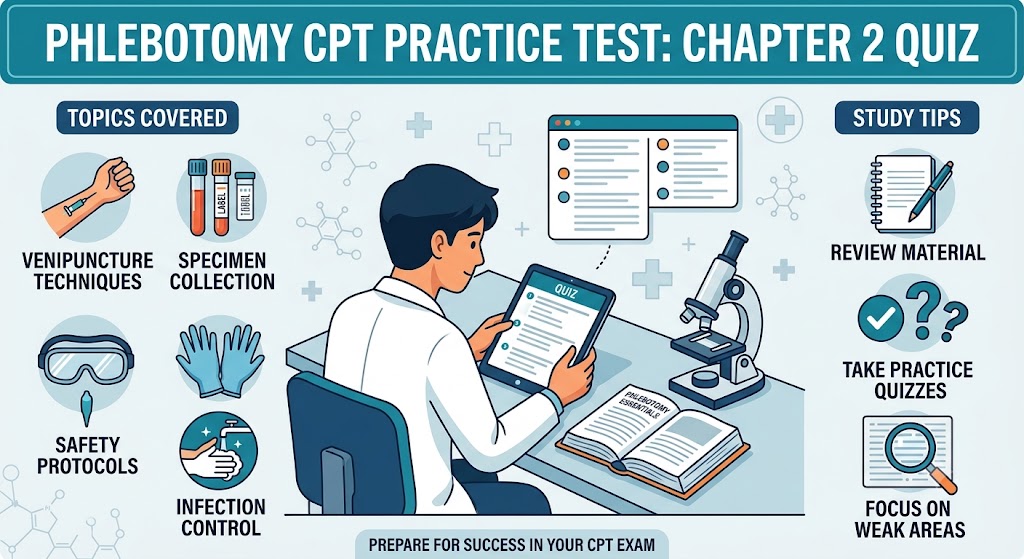
Additional Information
What the Course Entails and Exam Details
Preparing for the CPT exam involves mastering a comprehensive curriculum. Your course or training will have covered:
Anatomy and Physiology: An in-depth understanding of the circulatory system, vein location, and how different bodily systems interact, all critical for successful and safe blood draws.
Phlebotomy Techniques: Practical training in various blood collection methods, including venipuncture (drawing from veins), capillary sticks (drawing from capillaries in the fingers or heels for infants), and arterial blood gas collection (though often less central on the CPT, it is covered). You will also learn about different types of tubes and additives, how to select the right collection site, and how to handle and process the collected samples.
Infection Control and Safety Protocols: Extensive knowledge of Standard Precautions, proper handling of biohazardous materials, sterilization techniques, and emergency procedures is absolutely paramount.
Medical Terminology: Basic medical language, particularly related to the circulatory system and laboratory procedures.
Legal and Ethical Considerations: Familiarity with patient rights, confidentiality, and relevant regulations like HIPAA (Health Insurance Portability and Accountability Act), along with ethical guidelines for phlebotomists.
Practice Quizzes and Tests: Integral to any good course, practice assessments like the Phlebotomy CPT Practice Test Chapter 2 Quiz you might be taking, are crucial. They test your knowledge on specific chapters, provide immediate feedback, and help you gauge your readiness, allowing you to focus your study efforts.
The CPT exam itself is a standardized test that assesses your knowledge across these domains. It is not typically tied directly to any single "course" but rather to the completion of a phlebotomy education program from an accredited institution or substantial practical experience.
What to Expect in the Final Exam
While the exact details can vary slightly depending on the specific certification board (such as the NHA, ASCP, or others), the CPT final exam is generally structured as follows:
Exam Format: The test is almost exclusively multiple-choice, often administered electronically. Questions are designed to evaluate both theoretical knowledge and situational application. It may include questions on scenario-based situations to assess practical problem-solving.
Passing Score: A passing score is defined by each certification board. It is crucial to check the specific requirements of the organization you are testing through (e.g., NHA’s requires a specific score on their scale).
Time Limit: You will typically have a set amount of time to complete the entire exam. While generous, it's wise to manage your time effectively and not spend too long on any single question. For the NHA’s exam, for example, it’s 2 hours.
Exam Content: The exam is segmented into various content domains (e.g., Safety and Compliance, Patient Preparation, Routine Blood Collections, etc.), with a specific number of questions in each area based on its importance in the profession.
Registration and Rules: You will need to register for the exam in advance, pay the necessary fees, and provide proof of eligibility (completion of a program or experience). Strict rules usually apply, such as no cell phones, limited breaks, and secure testing environments. Many organizations allow you to choose between in-person testing at a physical center or an online, remotely-proctored exam (more common with organizations like the NHA).
How to Study and Exam Centers
Preparation is the absolute key to success. Here are actionable strategies:
Utilize a Structured Study Plan: Break down the material into manageable sections and create a realistic study schedule. Don’t try to cram everything at once.
Master the Core Material: Thoroughly review your course notes, textbooks, and any official study guides provided by the certification board.
Engage with Diverse Study Resources: Use study guides, flashcards (physical or digital), practice tests, and online modules to reinforce learning and identify areas where you need more focus. Remember the Phlebotomy CPT Practice Test Chapter 2 Quiz? These targeted quizzes, whether chapter-specific or comprehensive, are invaluable for testing your understanding and timing.
Hands-on Practice: While not on the multiple-choice final, your practical skills are validated separately (often during your program externship). Ensure you have ample opportunity to practice and receive feedback on your technique, as a strong practical foundation reinforces theoretical knowledge.
Identify Your Strengths and Weaknesses: Regularly assess your performance on practice quizzes to understand your knowledge gaps and adjust your study plan accordingly.
Simulate Exam Conditions: For final practice exams, take them in a quiet environment, free from distractions, and strictly follow the time limits to get a real feel for the exam experience.
Exam Centers and Formats:
The Certified Phlebotomy Technician exam is typically offered in multiple formats and locations:
In-Person Testing Centers: Most certification organizations partner with established testing networks like Pearson VUE or Prometric. These secure centers are located worldwide, offering controlled environments. After scheduling your exam through the certifying body's website, you would select a physical center close to you.
Online, Remotely Proctored Exams: This convenient option allows you to take the exam from the comfort of your own home using a computer with a webcam and a stable internet connection. However, strict protocols are still in place, including an online proctor who monitors you throughout the exam to ensure security and integrity. You must have a compatible device and meet specific system requirements.
Job Opportunities from the Course
Earning your CPT certification is a tremendous achievement that unlocks significant job opportunities within the healthcare field. Employers recognize the standardized quality and knowledge that a certified professional brings, which can lead to:
Increased Job Prospects: More job openings specifically require or strongly prefer CPT-certified individuals, widening your career horizon.
Higher Earning Potential: Certified phlebotomists often command higher starting salaries and have better opportunities for advancement compared to non-certified phlebotomists.
Clearer Career Path: This certification provides a solid foundation from which you can specialize or transition into other healthcare roles.
Job Opportunities:
Upon successfully passing the CPT exam, you will be eligible for various exciting and rewarding positions, such as:
Certified Phlebotomy Technician
Phlebotomist
Laboratory Assistant
Medical Assistant
Specimen Collector
Dialysis Phlebotomist
Mobile Phlebotomist
Donor Phlebotomist
Frequently Asked Questions
Reviews
5.0
Based on 0 reviews
Leave a Review
No reviews yet. Be the first to review!