
PALS Chapter 3 Basic Life Support Practice Test 2026
$69.00
- Buy to unlock unlimited access to all Quiz questions.
- After purchase you can print a PDF of the whole quiz at any point. The PDF will contain the questions and the correct answers.
About this Exam
The Pediatric Advanced Life Support (PALS) certification, particularly the content covered in Chapter 3, "Basic Life Support (BLS)," is a cornerstone of emergency medical care for healthcare providers treating infants and children. This practice test is specifically designed for medical professionals—including doctors, nurses, paramedics, and respiratory therapists—who are preparing for their official American Heart Association (AHA) PALS certification or renewal in 2026. This comprehensive review focuses on mastering the fundamental skills needed to stabilize a pediatric patient in respiratory or cardiac arrest before advanced life support can be administered.
Ready to test your knowledge?
Buy Now to Access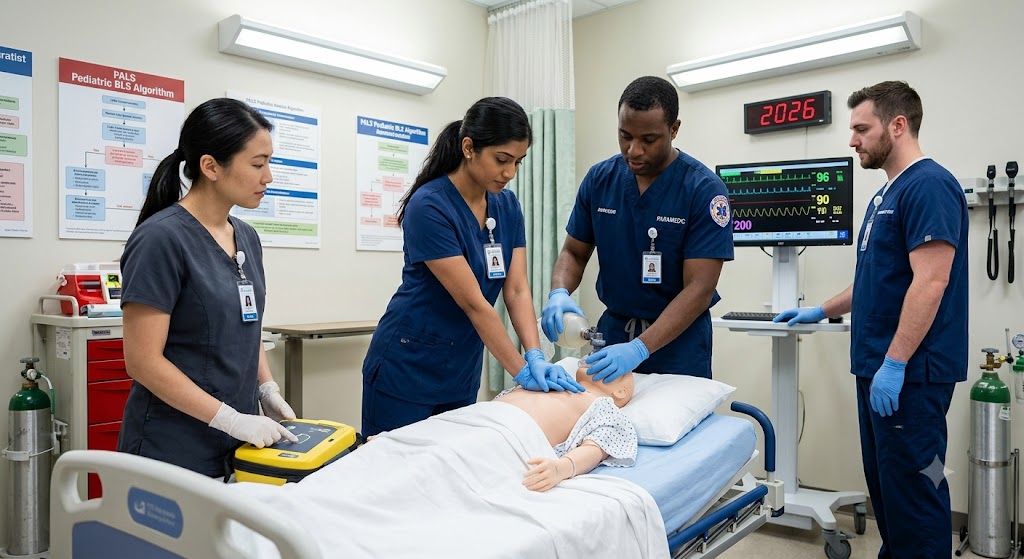
Additional Information
What the Course Entails and Exam Details
The PALS Chapter 3 practice exam focuses intensely on the critical BLS algorithms and skills tailored for pediatric patients. It covers key concepts, including:
Recognizing the signs of respiratory and cardiac arrest in infants and children.
The proper sequence for Pediatric Basic Life Support (Verify scene safety, Check responsiveness, Activate emergency response).
Performing high-quality CPR, including correct compression depth and rate for infants versus children, and the appropriate compression-to-ventilation ratios (15:2 for two rescuers, 30:2 for single rescuer).
Correct operation of an Automated External Defibrillator (AED) with pediatric pads.
Techniques for relieving foreign body airway obstruction (choking) in responsive and unresponsive pediatric victims.
This practice exam is a crucial tool to reinforce learning from the AHA PALS Provider Manual.
What to Expect in the Final Exam
While this is a practice exam, the official PALS certification exam consists of multiple-choice questions designed to test your cognitive understanding of the PALS algorithms and protocols, including the BLS foundational knowledge covered in Chapter 3.
The official AHA PALS exam typically requires a passing score of 84% or higher. It is usually a timed exam, and successful completion is mandatory for receiving your PALS provider card. Remember, this practice test simulates the format and content of the real written exam to build your confidence and readiness.
How to Study and Exam Centers
To effectively prepare for both Chapter 3 BLS and the overall PALS certification, healthcare providers should:
Thoroughly review the official American Heart Association (AHA) PALS Provider Manual (2020 Guidelines, as updated for 2026).
Utilize this and other online PALS practice tests to identify knowledge gaps and get comfortable with the multiple-choice format.
Memorize the pediatric BLS flowcharts and treatment algorithms.
Attend a mandatory in-person PALS provider course led by an AHA-certified instructor. This course includes essential hands-on skills practice and a practical skills evaluation.
To find authorized PALS training and testing centers, search the official American Heart Association website’s course locator or contact local hospitals, medical schools, and emergency medical services (EMS) training facilities. Many institutions offer PALS training directly to their staff.
Job Opportunities from the Course
Obtaining and maintaining PALS certification is often a mandatory requirement for healthcare professionals working in settings that involve the care of critically ill or injured children. This certification unlocks or enhances job opportunities for:
Pediatricians and Pediatric Residents
Emergency Room Nurses
Pediatric Intensive Care Unit (PICU) Nurses
Neonatal Intensive Care Unit (NICU) Nurses
Respiratory Therapists
Paramedics and Advanced EMTs
Pediatric Anesthesiologists
Urgent Care Physicians and Staff
Frequently Asked Questions
Reviews
5.0
Based on 0 reviews
Leave a Review
No reviews yet. Be the first to review!