
PALS Chapter 10: Cardiac Arrest Practice Test
$69.00
- Buy to unlock unlimited access to all Quiz questions.
- After purchase you can print a PDF of the whole quiz at any point. The PDF will contain the questions and the correct answers.
About this Exam
Welcome to your dedicated resource for mastering the PALS (Pediatric Advanced Life Support) Chapter 10: Cardiac Arrest Practice Test. This examination is designed for healthcare providers, including physicians, nurses, paramedics, and other emergency responders, who care for critically ill children. PALS focuses on recognizing and treating the unique physiological needs of pediatric patients to improve survival outcomes in life-threatening situations. Understanding the cardiac arrest algorithms is a core competency, making this chapter a crucial milestone in your certification journey. This practice test helps you solidify that knowledge in a supportive, educational environment.
Ready to test your knowledge?
Buy Now to Access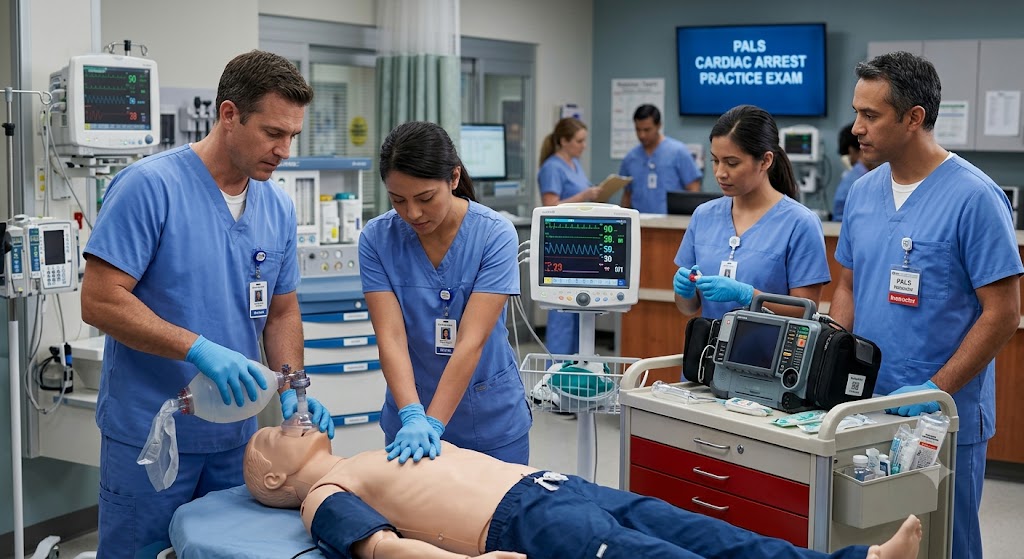
Additional Information
What the Course Entails and Exam Details
The PALS course covers an extensive array of pediatric care topics, including recognizing and treating respiratory failure, shock, and arrhythmias, with Chapter 10 focusing specifically on managing cardiac arrest. Through this practice test, you will refine your ability to swiftly differentiate between various cardiac arrest rhythms—including ventricular fibrillation (VF), pulseless ventricular tachycardia (pVT), asystole, and pulseless electrical activity (PEA). You will also test your proficiency in delivering high-quality cardiopulmonary resuscitation (CPR) with pediatric-specific compressions and ventilations. Mastering these concepts is essential to your success in the final certification exam.
What to Expect in the Final Exam
The final PALS certification exam typically includes a standardized, written portion alongside a practical skill evaluation. The multiple-choice section usually consists of approximately 50 questions, assessing your critical thinking and application of the entire PALS curriculum. To earn your certification, a minimum passing score of 84% is generally required. The practical evaluation—the "Mega Code" simulation—challenges you to lead a team through a dynamic pediatric emergency, demonstrating your mastery of algorithms, communication, and decision-making in real-time. Preparing with practice tests like this helps you approach both portions of the final exam with confidence.
How to Study and Exam Centers
Effective study involves combining textbook learning with practical application. Begin by thoroughly reviewing the official PALS Provider Manual from the American Heart Association (AHA). Actively test your knowledge with numerous practice questions like those found here to reinforce key concepts. Form a study group with peers to practice running through the cardiac arrest algorithms aloud and simulating scenarios with medical equipment. Understanding the rationales behind each step is as vital as memorization. PALS certification and exams are typically administered at authorized AHA Training Centers, often located within hospitals, universities, and specialized medical training facilities. Use the AHA's "Find a Course" online tool to locate a testing center near you.
Job Opportunities from the Course
A current PALS certification is an indispensable requirement for many healthcare positions that involve pediatric patient populations. Holding this certification unlocks various critical and rewarding career paths.
Some common roles include:
Pediatric Emergency Physician
PICU (Pediatric Intensive Care Unit) Nurse
NICU (Neonatal Intensive Care Unit) Nurse
Pediatric Nurse Practitioner
Paramedic
Emergency Medical Technician (EMT)
Pediatric Anesthesiologist
Respiratory Therapist (specializing in pediatric care)
Pediatric Hospitalist
Flight Nurse or Paramedic
Frequently Asked Questions
Reviews
5.0
Based on 0 reviews
Leave a Review
No reviews yet. Be the first to review!